
A yard of wood chips typically weighs between 300 to 700 pounds, depending on the type of wood, its moisture content, and how tightly it’s packed. This variation is crucial to grasp when planning landscaping projects or ordering bulk materials.
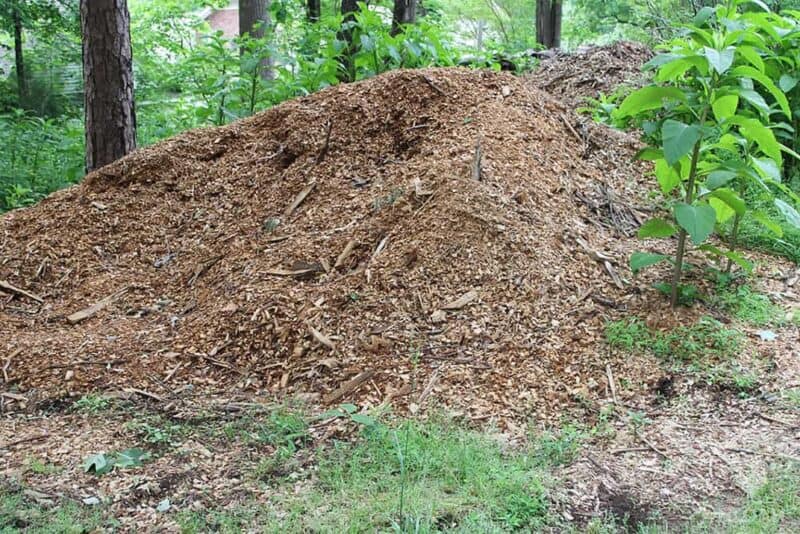
Image Source: www.newlifeonahomestead.com
Deciphering Wood Chip Weight: A Comprehensive Guide
When embarking on any landscaping endeavor that involves wood chips, a fundamental question arises: “How much does a yard of wood chips weigh?” This isn’t a simple yes or no answer. The weight can fluctuate quite a bit, influenced by several key factors. Knowing this information is vital for several reasons. It helps with budgeting, transportation planning, and ensuring you order the correct amount of material for your project. Let’s dive deep into what determines the weight of a cubic yard of wood chips.
The Core Factors Influencing Wood Chip Weight
Several elements contribute to the variability in wood chip density. Understanding these will help you make informed decisions.
1. Wood Type: The Species Matters
Different types of wood have inherent density differences. Hardwoods like oak and maple are denser than softwoods like pine and fir. This means a cubic yard of oak chips will generally weigh more than a cubic yard of pine chips.
- Hardwoods: Tend to be heavier due to their more compact cellular structure.
- Softwoods: Are lighter because their wood cells are less dense.
When you purchase wood chips, you might get a mix of species depending on the source. Arborists, for example, often chip whole trees, resulting in a blend of bark, branches, and leaves from various tree types. Sawmills might produce chips primarily from one species.
2. Moisture Content: The Unseen Weight
This is arguably the biggest variable. Freshly chipped wood can hold a significant amount of water. The wetter the wood chips, the heavier they will be. Conversely, seasoned or dried wood chips will be considerably lighter.
- Freshly Chipped: Can contain 30-50% moisture by weight.
- Seasoned/Dried: Moisture content can drop to 15-25%.
Imagine picking up a wet sponge versus a dry one – the difference in weight is substantial. Wood chips behave similarly. If you’re buying chips directly after they’ve been processed, expect them to be heavier. If they’ve been left to dry for a while, they’ll be lighter.
3. Chip Size and Processing: Surface Area and Air Pockets
The way wood chips are processed also affects their weight per cubic yard.
- Finer Chips: Tend to pack more tightly, reducing air pockets and increasing density.
- Larger, Irregular Chips: Can create more air space between them, making a cubic yard lighter.
The presence of bark, leaves, and small twigs within the mix also influences the overall wood chip density. A pure wood chip product might have a different weight than a mix containing bark or other organic matter.
4. Compaction: How Tightly They’re Packed
When wood chips are delivered or stored, they are often in a loose state. Over time, or with pressure, they can settle and compact. This reduces the amount of air space between the chips.
- Loose Fill: Will have a lower weight per cubic yard.
- Compacted: Will have a higher weight per cubic yard.
This is why a full truckload might settle down a bit after a few days.
Quantifying the Weight: Cubic Yard to Ton Conversion
So, how do we translate these factors into actual numbers? We need to look at the cubic yard to ton conversion for wood chips.
How Many Cubic Feet in a Yard of Wood Chips?
First, it’s important to clarify what “a yard of wood chips” usually refers to. In landscaping and bulk material sales, this almost always means a cubic yard.
- A cubic yard is a measure of volume.
- It’s a cube with sides measuring 3 feet by 3 feet by 3 feet.
- Therefore, one cubic yard contains 27 cubic feet (3 ft x 3 ft x 3 ft = 27 cu ft).
When you order “a yard” of wood chips, you’re ordering a volume of 27 cubic feet.
Estimating Weight: Wood Chip Density in Practice
Given the variables, providing an exact weight is impossible without knowing the specific conditions. However, we can provide a typical range based on average wood chip density.
Here’s a general guideline for the weight of a cubic yard of wood chips:
| Wood Chip Type | Approximate Weight per Cubic Yard (lbs) | Approximate Weight per Cubic Yard (tons) | Notes |
|---|---|---|---|
| Dry Softwood Chips | 300 – 450 lbs | 0.15 – 0.23 tons | Lighter, less moisture, airy texture |
| Dry Hardwood Chips | 400 – 600 lbs | 0.20 – 0.30 tons | Denser hardwoods, less moisture |
| Moist Softwood Chips | 400 – 550 lbs | 0.20 – 0.28 tons | Freshly chipped or recently exposed to rain |
| Moist Hardwood Chips | 500 – 700 lbs | 0.25 – 0.35 tons | Denser, heavier when wet |
| Bark Mulch (Shredded) | 400 – 600 lbs | 0.20 – 0.30 tons | Often a mix of bark and wood, can vary significantly |
| Mixed Wood Chips | 400 – 650 lbs | 0.20 – 0.33 tons | Common mix from tree services, includes bark and twigs |
Important Note: These are estimates. The actual weight can fall outside these ranges.
How Many Wood Chips Per Ton?
This question is the inverse of our primary query. If you need to know how many wood chips per ton, you can use the ranges above. For example, if a cubic yard of your chosen wood chips weighs approximately 500 pounds, then you would need two cubic yards to reach one ton (2000 lbs / 500 lbs/yard = 2 yards).
If you’re working with a supplier who sells by the ton, you need to be aware of the estimated weight per cubic yard they typically provide. A ton of dry softwood chips will cover a larger volume than a ton of moist hardwood chips.
Calculating Wood Chip Weight: Your Practical Toolkit
When you’re planning a landscaping project, you’ll often need to calculate how much material you need. This involves knowing your desired depth and the area you want to cover.
The Area Coverage Calculation
-
Measure Your Area: Calculate the square footage of the area you want to cover with wood chips.
- Square: Length (ft) x Width (ft) = Square Footage
- Rectangle: Length (ft) x Width (ft) = Square Footage
- Circle: π (pi, approximately 3.14) x Radius (ft)² = Square Footage
- Triangle: 0.5 x Base (ft) x Height (ft) = Square Footage
-
Determine Desired Depth: Most landscaping applications call for a depth of 2 to 4 inches. Convert this to feet:
- 2 inches = 2/12 feet = 0.167 feet
- 3 inches = 3/12 feet = 0.25 feet
- 4 inches = 4/12 feet = 0.333 feet
-
Calculate Cubic Feet Needed: Multiply your area (in square feet) by the desired depth (in feet).
- Cubic Feet = Square Footage x Depth (in feet)
-
Convert to Cubic Yards: Since there are 27 cubic feet in a cubic yard, divide your total cubic feet by 27.
- Cubic Yards = Cubic Feet / 27
Using a Mulch Weight Calculator
Many online resources offer a mulch weight calculator. These tools simplify the process. You typically input:
- The area to be covered (square feet).
- The desired depth (inches).
- The type of mulch or wood chips.
The calculator then estimates the number of cubic yards needed and, importantly, can often provide an estimated weight based on typical densities for the selected material. This is incredibly useful for budgeting and transport.
Example Calculation:
Let’s say you want to cover a garden bed that is 20 feet long and 10 feet wide with 3 inches of wood chips.
- Area: 20 ft x 10 ft = 200 sq ft
- Depth: 3 inches = 0.25 ft
- Cubic Feet: 200 sq ft x 0.25 ft = 50 cu ft
- Cubic Yards: 50 cu ft / 27 cu ft/yard ≈ 1.85 cubic yards
Now, to estimate the weight:
- If you’re using moist hardwood chips, which we estimated at 600 lbs per cubic yard:
- Estimated Weight = 1.85 cubic yards x 600 lbs/cubic yard = 1110 lbs (or about 0.56 tons).
Specific Material Weights: Bark Mulch and Shredded Wood
The term “wood chips” can sometimes be used broadly. Let’s consider more specific types.
The Weight of Bark Mulch Per Yard
Bark mulch, especially shredded bark mulch, can have a different density than pure wood chips. It often contains finer particles and can retain moisture differently.
- Weight of Bark Mulch Per Yard: Typically falls within the 400-600 pound range per cubic yard.
- Factors: Similar to wood chips, moisture content and bark particle size play a significant role. Finer shredded bark may pack more densely than larger, coarser pieces.
When ordering bark mulch, it’s always a good idea to ask the supplier about their typical wood chip density for that product.
Weight of Shredded Wood Mulch
Shredded wood mulch can range from fine to coarse. The processing method greatly influences its final wood chip density.
- Weight of Shredded Wood Mulch: Generally similar to other wood chips, ranging from 300 to 700 pounds per cubic yard.
- Fine Shredded: May be denser and heavier if packed.
- Coarse Shredded: May be lighter due to more air pockets.
The key takeaway is that “shredded” describes the form, not a specific species or moisture level, so the general rules for wood chip weight still apply.
Bulk Landscaping Material Weight: Beyond Wood Chips
It’s helpful to contextualize wood chip weight within the broader category of bulk landscaping material weight.
- Gravel/Crushed Stone: Significantly heavier, often ranging from 2,200 to 3,000 pounds per cubic yard, depending on the type of stone.
- Sand: Also quite heavy, usually in the 2,500 to 3,000 pound range per cubic yard.
- Topsoil: Varies widely based on composition and moisture, but can be anywhere from 1,800 to 2,800 pounds per cubic yard.
This comparison highlights why calculating wood chip weight is essential for planning – they are among the lighter bulk materials. This influences how much you can haul in a single trip and how they might affect soil structure and drainage.
How to Estimate Wood Chip Weight Without a Calculator
If you don’t have access to an online calculator or need a quick on-the-spot estimate, you can use the general ranges provided.
Practical Estimation Steps:
- Identify the Wood Type: Is it primarily hardwood or softwood?
- Assess Moisture: Does it look wet, damp, or dry? Freshly chipped is almost always wet.
- Consider Chip Size/Composition: Are they fine, coarse, or a mix with bark?
- Apply the Range: Use the table provided earlier as a reference. If you have moist hardwood chips, lean towards the higher end of the range (500-700 lbs/yard). If you have dry, fine softwood chips, aim for the lower end (300-450 lbs/yard).
Example: You’re ordering from a tree service. They typically chip a variety of trees (mixed wood) and it’s a warm, dry day, but the chips were processed yesterday. They likely still have some moisture. A reasonable estimate for weight of shredded wood mulch from this source might be around 500-600 pounds per cubic yard.
Why Does This Weight Matter?
Knowing the weight of your wood chips is crucial for several practical reasons:
1. Transportation Logistics
- Vehicle Capacity: If you’re hauling wood chips yourself, you need to know your truck or trailer’s payload capacity. A ton of wood chips is a significant weight, and exceeding your vehicle’s limits can be dangerous and damaging.
- Delivery Costs: Some suppliers charge based on weight, especially for larger bulk orders, while others charge by the cubic yard. Clarifying this upfront can save money.
2. Project Planning and Budgeting
- Material Quantity: Knowing the weight per yard helps you order the correct amount. Running out of material midway through a project is frustrating.
- Cost Estimation: If materials are priced by weight, your mulch weight calculator estimates become invaluable for accurate budgeting.
3. Storage and Handling
- Space Requirements: While volume is key for space, understanding the weight helps in assessing how much material you can safely stack or store in a particular area.
- Handling Equipment: For very large projects, knowing the weight might influence whether you need machinery like a skid steer to move the material.
Common Pitfalls to Avoid
When calculating wood chip weight, people often make a few common mistakes:
- Assuming a Fixed Weight: The biggest error is assuming all wood chips weigh the same. This ignores the significant impact of moisture.
- Confusing Volume and Weight: A cubic yard is a measure of volume. Weight is determined by density, which is influenced by many factors.
- Not Clarifying with Suppliers: Always ask your supplier for their typical weight-per-cubic-yard estimates for the product you’re buying. They have the most accurate data for their specific processing methods.
- Underestimating Moisture: Especially after rain or if the chips are freshly processed, moisture content can add considerably to the weight.
Frequently Asked Questions About Wood Chip Weight
Here are some common questions people have regarding the weight of wood chips:
Q1: If I order two cubic yards of wood chips, will it weigh double what one cubic yard weighs?
A1: In theory, yes, assuming the moisture content and composition are identical. However, in practice, slight variations in packing or moisture distribution can occur.
Q2: How can I make my wood chips lighter?
A2: You can’t change the inherent wood chip density of the material itself, but you can choose drier chips and avoid compacting them to maximize volume for a given weight. Letting them dry out can reduce their weight.
Q3: Does the color of the wood chips affect their weight?
A3: The natural color of the wood doesn’t directly affect its weight. Stained or dyed wood chips might have a very slight increase in weight due to the added dye, but this is generally negligible.
Q4: What is a good estimate for bagged mulch weight?
A4: Bagged mulch is usually sold in smaller quantities, typically 2 or 3 cubic feet. Their weight varies greatly, but a 2 cu ft bag might weigh anywhere from 15 to 30 pounds, depending on the factors we’ve discussed. This is why buying in bulk can be more economical for larger projects.
Q5: How do I calculate how many cubic feet in a yard of wood chips if I’m not sure it’s a cubic yard?
A5: A standard cubic yard is always 27 cubic feet. If you’re unsure of the measurement, it’s best to clarify with the supplier or measure the dimensions of the delivery area (length x width x height in feet) and multiply them together. Then divide that total by 27 to find the cubic yards.
By considering these factors and utilizing available tools, you can confidently determine how much a yard of wood chips weighs and ensure your landscaping projects are a success from start to finish.