
Lawn darts, also known as jeu de palets or dardo in some regions, is a classic outdoor game of skill and precision. The basic answer to “how do you play lawn darts?” is that players throw weighted darts at ground targets called hoops or rings, aiming to land their darts closest to the center of the hoop or within it. This article will delve into the intricacies of this engaging backyard dart game, offering comprehensive lawn dart instructions, crucial lawn dart rules, and expert tips and tricks to elevate your playing experience.
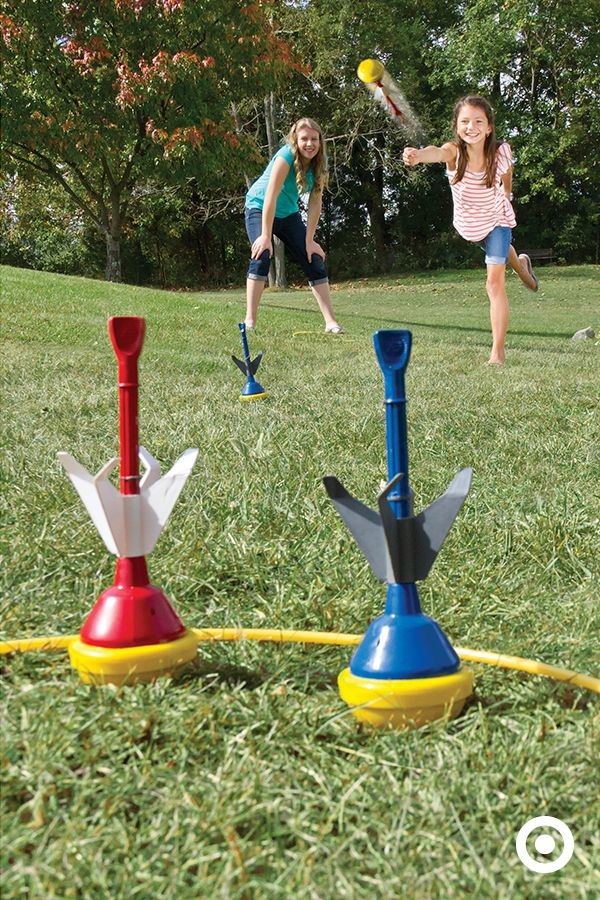
Image Source: hbhspe.weebly.com
The Allure of the Backyard Dart Game
Lawn darts offers a fantastic way to enjoy time outdoors, combining gentle physical activity with a satisfying mental challenge. It’s a game that can be enjoyed by families, friends, and even competitive groups. The satisfying thud of a well-thrown dart, the strategy involved in placement, and the friendly competition make it a perennial favorite for backyard gatherings. Whether you’re wondering how to play outdoor darts for the first time or looking to refine your technique, this guide has you covered.
Essential Lawn Dart Setup
A proper lawn dart setup is crucial for fair play and maximum enjoyment. The typical lawn dart setup involves two sets of hoops and a designated throwing line.
Key Components for Your Lawn Dart Setup:
- Darts: Most lawn dart sets come with four darts, usually two of one color and two of another. These are typically heavier and feature a blunted tip for safety, unlike traditional indoor darts.
- Hoops/Rings: You’ll need two targets. These are usually large, circular rings made of plastic or rubber, designed to lie flat on the grass.
- Throwing Line: A clearly defined line from which players must throw their darts. This can be a piece of rope, chalk, or simply an agreed-upon boundary.
Setting Up the Playing Field:
- Placement of Hoops: Position the two hoops on a flat, open area of your lawn. The distance between the hoops is important for gameplay. A standard distance is between 15 to 20 feet (approximately 4.5 to 6 meters). For younger players or a more casual game, you can shorten this distance. Ensure the hoops are placed at an equal distance from the throwing line.
- Defining the Throwing Line: Mark your throwing line. This should be positioned a set distance from the nearest hoop. Again, 15 to 20 feet is common. Ensure there is ample clear space behind the throwing line for players to step up and throw.
Deciphering the Lawn Dart Rules
Adhering to the lawn dart rules ensures a structured and fair game for everyone involved. While variations exist, the core principles remain consistent.
Standard Lawn Dart Rules:
- Teams: Lawn darts can be played individually or in teams of two. If playing in teams, partners stand at opposite hoops.
- Starting the Game: A coin toss or a simple agreement can determine which player or team starts.
- Objective: The primary objective is to score points by landing your darts within or closest to the target hoops.
- Throwing: Players stand behind the throwing line. Darts must be thrown underhand. A dart that is thrown overhand is typically considered a foul, and the throw does not count.
- Scoring: Points are awarded based on the proximity of the darts to the hoop.
Lawn Dart Scoring: The Nuances
Lawn dart scoring is where much of the strategy lies. Precise scoring can make or break your game.
Common Scoring Methods:
- In the Hoop: Landing a dart completely within the hoop often scores the most points. This is typically 3 points.
- Closest to the Hoop: The dart closest to the center of the hoop, but not necessarily inside it, scores points. This usually scores 1 point.
- Knocked-In Dart: If a player’s dart knocks an opponent’s dart out of the hoop or into a less advantageous position, this can sometimes negate the opponent’s score for that throw.
- Canceling Out: A common rule is that if one team scores with a dart inside the hoop and the other team scores with a dart closer to the center (but outside the hoop), the points cancel out. This encourages precise throws.
Example Scoring Table:
| Dart Position | Points Awarded |
|---|---|
| Dart fully inside the hoop | 3 points |
| Dart closest to the center (outside hoop) | 1 point |
| Dart hitting the hoop | 0 points (or a specific variation rule) |
| Dart landing outside hoop and further than opponent’s closest dart | 0 points |
Note: Always agree on the specific scoring rules before beginning the lawn dart game.
- Winning the Game: Most lawn dart games are played to a set score, such as 21 points. The first player or team to reach or exceed this score wins.
- Doubling Out: Some variations require players to score the exact number needed to win. If a throw would put them over the target score, they might have to re-throw or their score for that round is nullified.
Playing Lawn Darts: Mastering the Technique
Playing lawn darts effectively requires a combination of accuracy, power control, and strategic thinking. Here’s how to hone your skills:
Basic Throwing Technique:
- Stance: Stand with your feet shoulder-width apart, facing the target hoop. Distribute your weight evenly.
- Grip: Hold the dart firmly but not too tightly. Your dominant hand will be behind the dart.
- Aim: Focus on the center of the hoop. Visualize the dart traveling to its target.
- The Throw: Bring the dart back and throw it in a smooth, underhand motion. The arm movement should be similar to bowling a ball.
- Follow-Through: A good follow-through helps maintain accuracy and control.
Lawn Dart Strategy: Thinking Ahead
Beyond just hitting the hoop, effective lawn dart strategy involves outmaneuvering your opponents.
- Blocking: If an opponent has a dart close to the hoop, consider throwing your dart in a way that blocks their access to the scoring zone or even knocks their dart out of position.
- Proximity Control: Aim to land your darts as close as possible to the hoop, even if you can’t get them inside. This puts pressure on your opponent.
- Aggressive Play: If you’re trailing, don’t be afraid to take calculated risks to get darts inside the hoop for higher scores.
- Defensive Play: If you have a strong lead, play defensively. Focus on landing your darts close to the hoop to prevent your opponent from scoring significant points.
How to Play Outdoor Darts: Variations and Fun
While the core lawn dart game is straightforward, there are numerous ways to adapt and enhance the experience of playing lawn darts.
Common Lawn Dart Variations:
- Target Practice: Set up multiple hoops at different distances and assign different point values to each.
- Obstacle Course: Incorporate small, safe obstacles that players must throw around.
- Team Relay: In teams of two, players throw from opposite ends, with the score being cumulative.
- Progressive Distance: Start with hoops closer and gradually increase the distance as the game progresses.
The Importance of Safety: Safe Lawn Dart Alternatives
It’s crucial to acknowledge the history of lawn darts. Original lawn dart sets, with their sharp metal spikes, were banned in many countries due to serious injuries. Modern, safe lawn dart alternatives are widely available and designed for family-friendly fun.
What Are Safe Lawn Dart Alternatives?
These modern versions replace the dangerous metal spikes with blunted tips or entirely different concepts.
- Blunted Tip Lawn Darts: These sets feature darts with rubber or plastic tips designed to be much safer. They are weighted for stable flight but lack sharp points.
- Ring Toss Style Darts: Some games use darts that are more like rings or boomerangs that you aim to loop around stakes or pegs.
- Ring Toss Games: Classic ring toss games, where you toss rings onto pegs, are a fantastic alternative that offers a similar skill-based outdoor challenge.
- Beanbag Toss (Cornhole): While not a direct dart game, beanbag toss games like Cornhole provide a similar outdoor throwing and scoring experience.
Choosing Safe Lawn Dart Products:
When purchasing lawn darts, always prioritize safety. Look for products that are clearly labeled as safe for families and adhere to modern safety standards. Check reviews and product descriptions to ensure the tips are blunted and the materials are durable and non-toxic.
Frequently Asked Questions about Lawn Darts
Q1: What is the official distance for lawn darts?
A1: While there isn’t a single universally mandated “official” distance, a common and recommended distance for playing lawn darts is between 15 to 20 feet (approximately 4.5 to 6 meters) between the hoops and from the throwing line. This distance offers a good balance of challenge and accessibility for most players.
Q2: Can I play lawn darts on any surface?
A2: Lawn darts are designed to be played on grass. Playing on harder surfaces like concrete or pavement can damage the darts and hoops, and it’s also less safe. A flat, well-maintained lawn is ideal for the best lawn dart experience.
Q3: How do I win a game of lawn darts?
A3: Typically, you win by being the first player or team to reach a predetermined score, often 21 points. Some variations may require you to hit the exact winning score (doubling out), so it’s always good to clarify the winning condition before you start playing.
Q4: Are lawn darts safe?
A4: Traditional lawn darts with metal spikes were dangerous and have been banned in many places. However, modern lawn dart games use blunted tips made of rubber or plastic, making them significantly safer for backyard play. Always ensure you are using a safe, modern set.
Q5: What is the best strategy for playing lawn darts?
A5: Effective lawn dart strategy involves aiming to get your darts inside the hoop for higher points, but also playing defensively by blocking opponents or landing your darts close to the hoop to prevent them from scoring. Adapt your strategy based on your score and your opponent’s position.
By following these lawn dart instructions and tips, you’ll be well on your way to enjoying this classic outdoor game with skill and confidence. Remember to prioritize safety, agree on the rules before you play, and most importantly, have fun!