
Can you spread compost on your lawn? Absolutely! Spreading compost on your lawn is one of the best things you can do for greener grass and healthier soil. It’s a natural way to feed your lawn, improve its structure, and boost its ability to fight off pests and diseases. This guide will walk you through everything you need to know about compost top dressing for a vibrant, thriving lawn.
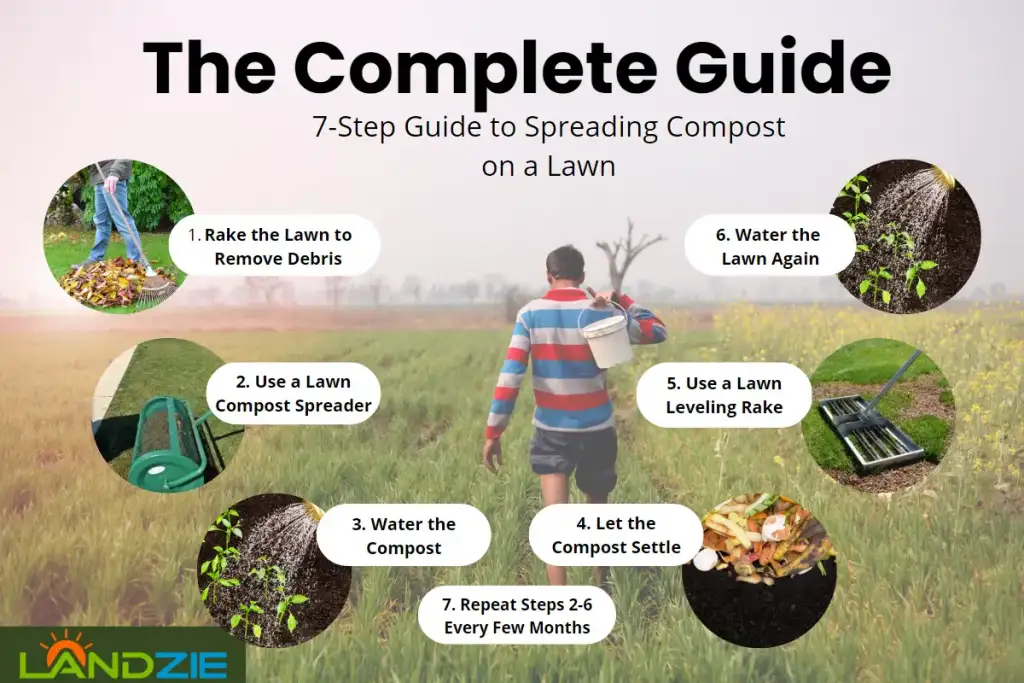
Image Source: landzie.com
Why Use Compost on Your Lawn? The Amazing Benefits of Compost on Lawn
Think of compost as a superfood for your soil. It’s a rich, dark material made from decomposed organic matter, like kitchen scraps and yard waste. When you add compost to your lawn, you’re not just adding fertilizer; you’re improving the very foundation of your lawn’s health.
Here are some key benefits:
- Improved Soil Structure: Compost helps bind soil particles together. This creates better aeration (more air in the soil) and drainage (water can flow through easily). For compacted soils, this is a game-changer, allowing grass roots to grow deeper and stronger.
- Enhanced Water Retention: While it improves drainage, compost also acts like a sponge, holding onto moisture. This means your lawn needs less frequent watering, saving you time and resources. Healthy soil with good water retention is vital for grass health, especially during dry spells.
- Nutrient Supply: Compost is packed with essential nutrients that grass needs to grow. It releases these nutrients slowly, providing a steady food source for your lawn. This makes it an excellent alternative or supplement to traditional lawn fertilization.
- Beneficial Microorganisms: Compost is teeming with a diverse population of bacteria, fungi, and other microbes. These tiny helpers break down organic matter, make nutrients available to plants, and can even suppress disease-causing organisms. This is a cornerstone of organic lawn care.
- pH Buffering: Compost can help balance your soil’s pH. Most grasses prefer a slightly acidic to neutral pH. Compost acts as a buffer, making it harder for the soil to become too acidic or too alkaline, which helps nutrients stay accessible to your grass.
- Weed Suppression: A thick, healthy lawn grown with compost is better at outcompeting weeds. By improving grass health, you naturally reduce space and resources for unwanted plants.
What is Compost Application?
Compost application refers to the process of spreading compost onto your lawn. This is often done as a top dressing, meaning a thin layer of compost is applied to the surface of the existing lawn. It’s a simple yet incredibly effective soil amendment practice.
Preparing Your Lawn for Compost Top Dressing
Before you start spreading, a little preparation goes a long way to ensure the compost can do its job effectively.
Step 1: Mow Your Lawn
Mow your lawn to a lower than usual height. This helps to clear away any thick thatch and allows the compost to reach the soil surface more easily. Don’t scalp the lawn, just trim it shorter.
Step 2: Rake and Aerate
If your lawn has a thick layer of thatch (a dense mat of dead and living grass stems and roots), it’s a good idea to dethatch it. A dethatcher or a sturdy garden rake can help remove this. Aerating the lawn before applying compost is also highly recommended. Aeration creates small holes in the soil, which further improves air circulation, water penetration, and allows the compost to work its way down into the root zone.
Step 3: Remove Debris
Rake up any leaves, twigs, rocks, or other debris from the lawn. You want a clean surface for the compost.
Choosing the Right Compost: The Power of Nutrient Rich Compost
Not all compost is created equal. For the best results, aim for a high-quality, nutrient rich compost.
- Matured Compost: Ensure your compost is fully aged or “finished.” This means it should be dark brown, crumbly, and smell earthy, not like manure or rotting material. Unfinished compost can sometimes contain weed seeds or harmful pathogens.
- Particle Size: A finer particle size is generally better for top dressing as it spreads more evenly and blends into the lawn. Compost that is too coarse might leave clumps.
- Source: Ideally, use compost made from a variety of organic materials. This ensures a broad spectrum of nutrients and beneficial microbes. Avoid compost made primarily from diseased plants or treated wood.
You can buy bagged compost from garden centers or bulk compost from local landscape suppliers. Making your own compost is also a fantastic option if you have the space and time.
How to Spread Compost on Your Lawn: Methods and Tools
There are several effective ways to spread compost, depending on the size of your lawn and the amount of compost you have. The goal is to apply a thin, even layer.
Method 1: The Shovel and Rake Method (For Smaller Lawns)
This is a straightforward method perfect for smaller yards or for those who don’t have specialized equipment.
- Divide and Conquer: Break down your lawn into manageable sections.
- Place Piles: Shovel small piles of compost onto each section. Don’t dump a massive pile in one spot.
- Spread with Rake: Use a stiff garden rake to spread the compost evenly across the surface. Aim for a layer that’s about ¼ to ½ inch thick. You should still be able to see about half of the grass blades through the compost layer.
- Level Out: Work the compost into any high or low spots. The rake helps to distribute it evenly and smooth out the surface.
Pros:
* Accessible for most homeowners.
* Good control over placement.
Cons:
* Can be labor-intensive for larger lawns.
* Achieving a perfectly uniform layer can be challenging.
Method 2: Using a Wheelbarrow and Shovel (Moderate Lawn Size)
Similar to the first method, but using a wheelbarrow makes transporting the compost easier.
- Transport: Use a wheelbarrow to move the compost closer to the areas you’ll be spreading.
- Distribute: Shovel compost in small, manageable amounts onto the lawn.
- Rake: Again, use a rake to spread the compost evenly. Work it into the grass and soil.
Pros:
* More efficient than carrying shovels of compost from the bulk source.
Cons:
* Still requires manual spreading and raking.
Method 3: Compost Spreader or Top Dresser (Larger Lawns or Efficiency)
For larger lawns or if you want a more professional finish, a compost spreader is the way to go. These tools are designed to distribute materials like compost, soil, and fertilizer evenly.
- Types of Spreaders:
- Drop Spreaders: These drop material in a precise pattern directly below the spreader. They are good for controlled application but can be slower for very large areas.
- Rotary (Broadcast) Spreaders: These spin a mechanism that throws material outwards in a wide arc. They cover large areas quickly and are often preferred for lawn applications.
- Loading the Spreader: Follow the manufacturer’s instructions for loading your chosen spreader. Don’t overfill it.
- Calibration: It’s crucial to calibrate your spreader to apply the correct amount of compost. You don’t want to smother your grass. Refer to the spreader’s manual or the compost bag for recommended settings.
- Spreading Technique:
- Start at the edge of your lawn.
- Walk at a consistent pace.
- Overlap your passes slightly to ensure even coverage.
- Make multiple passes in different directions (e.g., North-South, then East-West) for the most uniform application.
- Post-Spreading Rake: Even with a spreader, a light raking can help settle the compost and ensure it gets into the turf.
Pros:
* Fast and efficient for large areas.
* Achieves a more uniform layer.
Cons:
* Requires an initial investment in the spreader.
* Calibration is important to avoid over or under-application.
Method 4: Power Spreader / Spreader Box (Professional Results)
For very large areas or commercial applications, a power spreader or a spreader box attached to a tractor or ATV is used. These are similar in principle to broadcast spreaders but are powered and designed for much larger capacities.
Pros:
* Extremely efficient for vast expanses.
* Provides very even coverage.
Cons:
* Requires specialized, often expensive, equipment.
* May be overkill for most residential lawns.
How Much Compost Should You Apply?
The general recommendation for compost top dressing is to apply a thin layer, typically ¼ to ½ inch deep.
- For a ¼ inch layer: You’ll need about 1 cubic yard of compost for every 200 square feet of lawn.
- For a ½ inch layer: You’ll need about 1 cubic yard of compost for every 100 square feet of lawn.
It’s better to apply a thin layer regularly (annually or semi-annually) than to apply a very thick layer infrequently. A layer that’s too thick can smother the grass, blocking sunlight and air. You should still be able to see a good amount of the green grass blades after application.
When is the Best Time to Compost Lawn?
Timing is key for successful compost application. The ideal times are when your grass is actively growing and can benefit most from the nutrients and improved soil conditions.
Spring: The Early Bird Gets the Worm (and the Greenest Grass!)
- Benefits: Applying compost in early spring, after the last frost but before the peak of summer heat, is excellent. It provides nutrients to kick-start new growth and helps the lawn recover from winter. The soil is warming up, encouraging microbial activity.
- Considerations: Avoid applying if the ground is still waterlogged or frozen.
Fall: Preparing for Next Year’s Growth
- Benefits: Late summer or early fall is another prime time for compost application. This is when grass is still growing actively, allowing it to take up nutrients and strengthen its root system before winter dormancy. It also helps improve soil health for the following spring.
- Considerations: Aim to apply about 4-6 weeks before the ground freezes.
Summer: Use Caution
- Benefits: If your lawn is showing signs of stress, a light compost top dressing can provide a beneficial boost.
- Considerations: Apply only a very thin layer, and water it in well. Avoid heavy applications during extreme heat or drought, as the compost can dry out and potentially stress the grass further. If applying during summer, the best practice is to do it when a period of moderate temperatures and rainfall is expected.
Winter: Not Ideal
- Benefits: Applying compost in winter when the ground is frozen or covered in snow is generally not recommended. The nutrients won’t be available to the grass, and the compost can be washed away by melting snow.
How to Apply Compost to Grass: The Finishing Touches
Once the compost is spread, a few final steps ensure it integrates properly with your lawn.
Step 1: Rake Lightly
As mentioned earlier, a light raking helps to work the compost into the grass blades and the soil surface. It also helps break up any clumps and ensures a more even distribution.
Step 2: Water
Water your lawn thoroughly after applying compost. This helps to settle the compost into the turf, washes any residual material off the grass blades, and starts the process of integrating it into the soil. It also aids in the initial decomposition and nutrient release.
Step 3: Allow Time for Integration
Give the compost time to work its magic. As you mow, the grass clippings will also contribute to the soil’s health. Over time, the compost will break down further and meld with your existing soil.
What Compost Thickness is Too Much?
You might wonder, “What if I apply too much compost?” Applying too thick a layer of compost (more than ½ inch) can be detrimental to your lawn.
- Smothering Effect: A thick layer can block sunlight and air from reaching the grass blades and the soil surface. This can weaken or kill the grass.
- Moisture Retention Issues: While compost generally improves moisture management, a very thick layer can sometimes hold too much surface moisture, creating conditions for fungal diseases.
- Root Growth Impairment: Grass roots need to grow into the soil. If they are constantly in a thick layer of compost, they might not develop as strongly into the underlying soil structure.
If you accidentally apply too much, don’t panic. Lightly rake it in, and consider removing some if it’s extremely thick. For future applications, stick to the recommended thin layer.
Maintaining a Healthy Lawn with Compost
Spreading compost is a fantastic practice, but consistent organic lawn care involves more than just one-time applications.
- Regular Applications: Aim for a light compost top dressing once or twice a year, ideally in spring and fall.
- Overseeding: If your lawn has thin patches, overseeding after applying compost is an excellent strategy. The compost provides a nutrient-rich bed for new grass seed to germinate and establish.
- Mowing Practices: Continue with good mowing practices, like not cutting more than one-third of the grass blade at a time, and leaving grass clippings on the lawn (grasscycling) to return nutrients to the soil.
- Watering: Water deeply and less frequently to encourage deep root growth.
- Weed and Pest Control: A healthy, compost-fed lawn is naturally more resistant to weeds and pests. Focus on building soil health, and your grass will be more resilient.
Compost vs. Other Lawn Fertilizers
While synthetic lawn fertilization can provide a quick green-up, compost offers a more holistic approach to grass health and soil amendment.
| Feature | Compost | Synthetic Fertilizer |
|---|---|---|
| Nutrient Release | Slow and steady | Often fast, can lead to surge growth |
| Soil Improvement | Improves structure, water retention, aeration | Primarily feeds the plant, minimal soil benefit |
| Microbial Life | Enhances beneficial microbial populations | Can sometimes harm beneficial microbes |
| Sustainability | Eco-friendly, recycles organic matter | Can have environmental impacts (runoff) |
| Long-term Health | Builds long-term soil fertility and resilience | Can deplete soil over time if not managed |
| Cost | Can be cheaper if made at home; varies if bought | Varies, can be more expensive for ongoing use |
Using compost is a key component of organic lawn care, focusing on building healthy soil as the foundation for healthy plants. It’s a sustainable and environmentally friendly way to nourish your lawn.
Frequently Asked Questions (FAQ)
Q1: Can I spread compost on my lawn if I have overseeded?
A1: Yes, spreading compost over newly seeded areas is highly beneficial. The compost provides nutrients and moisture retention, creating an ideal environment for grass seed germination and establishment.
Q2: How often should I spread compost on my lawn?
A2: For most lawns, applying a thin layer of compost once or twice a year (spring and fall) is ideal.
Q3: What kind of compost is best for lawns?
A3: Look for finished, mature compost that is dark, crumbly, and smells earthy. A finer particle size is generally preferred for even spreading.
Q4: Will compost attract pests?
A4: Properly finished compost should not attract pests. If it smells bad or contains recognizable food waste, it may not be fully composted and could attract rodents or insects.
Q5: Can I spread compost when it’s very hot or dry?
A5: It’s best to avoid heavy applications during extreme heat or drought. If you must apply compost during dry periods, use a very thin layer and water it in thoroughly.
Q6: What are the signs my lawn needs compost?
A6: Signs include thin turf, poor water retention, compacted soil, reduced vigor, and susceptibility to pests or diseases.
Q7: Is compost a substitute for fertilizer?
A7: Compost acts as both a soil conditioner and a slow-release fertilizer. While it provides many essential nutrients, you may still occasionally need to supplement with specific fertilizers, especially if you have nutrient-deficient soil or are aiming for rapid growth for competitive sports. However, it significantly reduces the need for synthetic fertilizers.
Conclusion
Spreading compost on your lawn is a simple yet profound way to transform your turf. By improving soil structure, enhancing water retention, and providing a steady stream of nutrients, compost builds a resilient, healthy, and vibrant lawn. Whether you use a shovel and rake or a specialized spreader, the effort you invest in compost top dressing will pay dividends in greener grass and a more robust, sustainable landscape. Embrace organic lawn care and discover the power of nutrient rich compost for a truly beautiful and healthy lawn.