
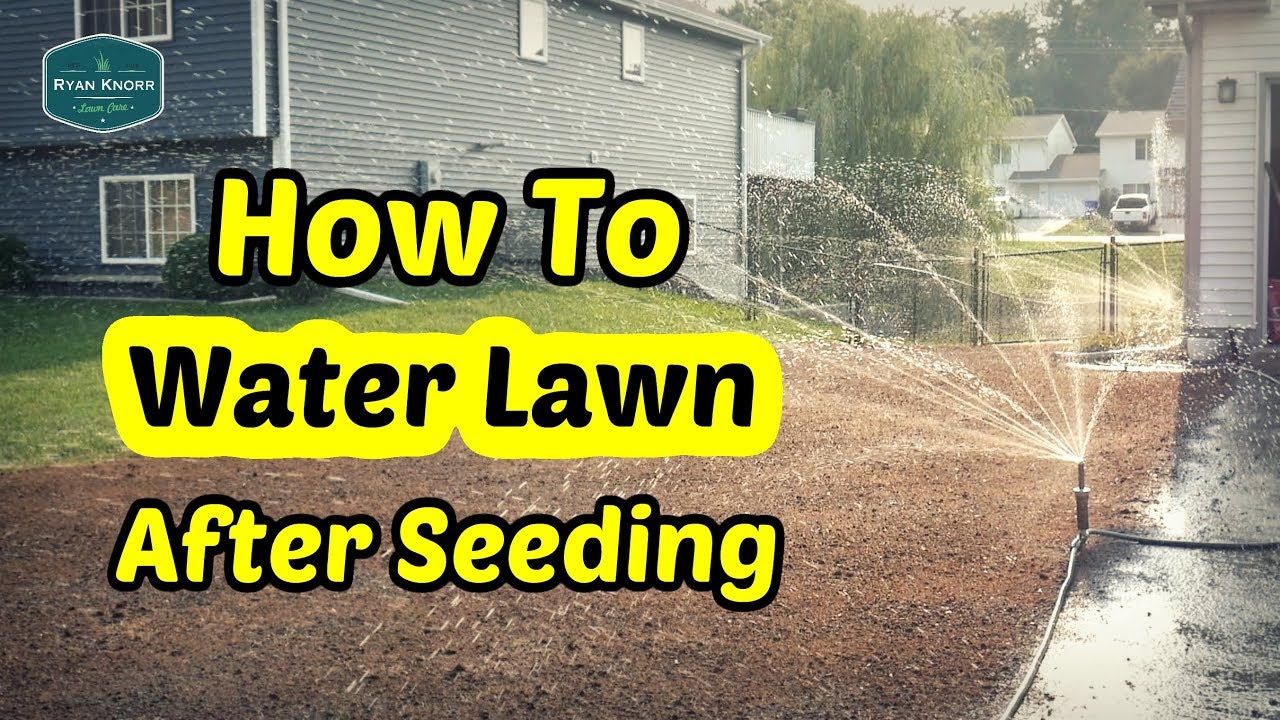
Image Source: i.ytimg.com
How Often To Water Lawn After Seeding: Secrets Revealed
The crucial question for any aspiring green thumb aiming for a lush lawn is: How often to water lawn after seeding? The answer is that newly seeded lawns require consistent moisture, typically needing watering multiple times a day, especially in the initial stages, to keep the top layer of soil consistently damp, but not waterlogged. This article will delve into the intricacies of watering new grass seed, providing a comprehensive guide to ensure your germination success. We’ll explore the ideal lawn seeding watering schedule, the best time to water new lawn, how much to water newly seeded lawn, watering frequency after seeding, the vital practice of keeping grass seed moist, the effectiveness of top watering lawn seed, the concept of shallow watering new grass, the overall importance of watering lawn seed, and how it differs from watering established vs new lawn.
The Critical Role of Moisture for Germination
Bringing a new lawn to life starts with seeds. These tiny powerhouses hold the potential for a vibrant, green carpet, but they are incredibly vulnerable during their initial growth phase. The primary factor dictating their success or failure is moisture. Think of it like a baby bird needing constant care; grass seeds need a gentle, consistent supply of water to sprout and establish.
Why Seedlings Need So Much Water
Newly sown grass seeds don’t have deep root systems. They rely on the moisture present in the top layer of soil. If this layer dries out, even for a short period, the delicate germinating seeds can shrivel and die. This is why keeping grass seed moist is paramount. It’s not about drenching the soil; it’s about maintaining a consistent, shallow level of dampness that encourages the seed to sprout and the young roots to begin their journey downwards.
Deciphering the Lawn Seeding Watering Schedule
Creating a successful lawn seeding watering schedule is more art than exact science, as it depends on several environmental factors. However, there are core principles to follow.
Initial Germination Phase (First 1-2 Weeks)
This is the most critical period. Your goal is to keep the top half-inch of soil consistently moist. This means frequent, light watering.
- Frequency: Expect to water at least two to three times a day, possibly more if conditions are hot and dry.
- Duration: Each watering session should be short, just enough to moisten the surface without creating puddles. A light misting is often ideal.
- Observation: The key is to observe the soil. If it looks dry or you can see the surface starting to lighten in color, it’s time to water again.
Seedling Establishment Phase (Weeks 2-4)
As the grass seedlings begin to emerge and grow taller, you can gradually adjust your watering. The goal shifts from keeping the surface moist to encouraging deeper root growth.
- Frequency: You can start to reduce the frequency of watering, perhaps to once or twice a day.
- Duration: Increase the duration of each watering session slightly, but still avoid saturation.
- Rationale: This encourages the young roots to seek out moisture deeper in the soil, leading to a more robust and drought-tolerant lawn.
Transition to Established Lawn Watering (Beyond 4 Weeks)
Once your grass is a few inches tall and looks well-established, you can begin transitioning to a more mature watering regimen.
- Frequency: Reduce watering to a few times a week.
- Duration: Water more deeply and less frequently. This promotes deep root growth.
- Observation: Water when the grass shows signs of stress, like a dull, bluish-gray color or footprints remaining visible after walking on it.
The Best Time to Water a New Lawn
Timing is everything, especially when it comes to nurturing fragile new grass. The best time to water new lawn is generally in the early morning.
Morning Watering Advantage
- Reduced Evaporation: Watering in the early morning, between 6 AM and 10 AM, minimizes water loss due to evaporation. The sun is not yet at its peak, and temperatures are cooler.
- Photosynthesis Kickstart: The moisture allows the grass blades to absorb water and nutrients, preparing them for the day ahead and maximizing photosynthesis.
- Disease Prevention: While keeping the seed moist is crucial, allowing the grass to dry off during the day helps prevent fungal diseases. Morning watering allows ample time for this drying process before evening dew or potential rain.
What to Avoid
- Midday Watering: This is the least efficient time. The sun is strong, and much of the water will evaporate before it can be absorbed by the seeds or young roots.
- Evening Watering: While seemingly a good idea to keep the grass moist overnight, evening watering can leave the grass blades wet for extended periods. This creates an ideal environment for fungal diseases to thrive.
How Much to Water Newly Seeded Lawn: The Gentle Approach
The question of how much to water newly seeded lawn is often where new gardeners stumble. Overwatering can be just as detrimental as underwatering.
The “Damp, Not Drowning” Principle
- Shallow Watering New Grass: The key is shallow watering new grass. The goal is to keep the top layer of soil consistently moist, like a wrung-out sponge. You don’t want standing water or saturated soil.
- Visual Cues: Look at the soil. It should appear dark and damp. If it’s drying out and lightening in color, water. If you see puddles forming, you’re watering too much or too long.
- Sprinkler Type: Using a sprinkler that produces a fine mist or a gentle spray is ideal. Avoid sprinklers that shoot out large, forceful streams, as these can dislodge the seeds.
Measuring Moisture
While visual cues are important, you can also gauge moisture by gently probing the soil with your finger or a trowel.
- If the soil is dry an inch down, you need to water.
- If it’s saturated or muddy, you’ve overdone it.
Watering Frequency After Seeding: A Dynamic Approach
The watering frequency after seeding is not a fixed number; it’s a dynamic process that adapts to your specific environment.
Factors Influencing Frequency
- Temperature: Hotter days mean more frequent watering.
- Wind: Windy conditions increase evaporation, requiring more frequent watering.
- Soil Type: Sandy soils drain faster and will need watering more often than clay soils.
- Sun Exposure: Areas that receive full sun will dry out quicker than shaded areas.
- Seed Type: Different grass seed varieties have slightly different moisture needs.
Adapting Your Schedule
- Initial Stage: As mentioned, multiple light waterings daily are typical.
- As Seed Sprouts: Once you see germination (tiny green shoots), you can slowly reduce frequency, but ensure the soil remains moist.
- Deeper Roots: As the grass grows and roots develop, you can water less often but more deeply.
The Art of Top Watering Lawn Seed
Top watering lawn seed is the most common and effective method for germinating new grass. It involves applying water to the surface of the soil.
Why Top Watering Works
- Direct Moisture Delivery: It delivers moisture directly to where the seeds are located.
- Minimal Disruption: Gentle top watering, especially with a fine spray, is less likely to wash away the seeds compared to heavy watering.
Techniques for Effective Top Watering
- Gentle Spray: Use a sprinkler with a fine mist setting.
- Even Coverage: Ensure all areas are watered, avoiding dry spots.
- Short, Frequent Bursts: Prioritize keeping the surface consistently damp.
Shallow Watering New Grass: The Foundation of Success
Shallow watering new grass is a core principle that underpins successful lawn seeding.
The Rationale
- Encouraging Shallow Roots: While it might seem counterintuitive, very frequent, shallow watering in the initial stages encourages the very first roots to develop close to the surface.
- Preventing Deep, Weak Roots: If you were to water deeply from the start, you might encourage roots to go deep too quickly before the seedling has the energy reserves to support such growth, potentially leading to weaker plants.
The Transition
As the grass grows, you’ll gradually shift to deeper watering to encourage those roots to explore further down, making the lawn more resilient.
The Importance of Watering Lawn Seed
Let’s reiterate the importance of watering lawn seed. Without consistent moisture, the germination process simply cannot occur.
- Activation: Water is the trigger that signals the seed to break dormancy and begin to grow.
- Nutrient Transport: Water helps dissolve and transport essential nutrients from the soil to the developing seedling.
- Cell Elongation: Moisture is vital for cell division and elongation, allowing the root and shoot to emerge.
- Preventing Desiccation: Young seedlings are fragile and can quickly dry out and die if the soil moisture is not maintained.
Watering Established vs New Lawn: A World of Difference
It’s crucial to recognize the significant difference between watering established vs new lawn. They have vastly different needs and require distinct approaches.
| Feature | Watering New Lawn | Watering Established Lawn |
|---|---|---|
| Frequency | Multiple times a day (initially) | 1-3 times per week |
| Duration | Short, light bursts | Longer, deeper watering sessions |
| Moisture Level | Consistently moist top layer (top 1/2 inch) | Moist soil several inches down |
| Goal | Germination and initial root establishment | Deep root development, plant health, drought tolerance |
| Sprinkler Type | Fine mist or gentle spray | More robust sprinklers, but still avoid excessive force |
| Key Focus | Keeping seeds and young roots hydrated | Encouraging deep roots, overall plant vigor |
| Risk of Over | Fungus, damping-off disease, shallow roots | Fungal diseases, encouraging shallow roots, water waste |
| Risk of Under | Seed death, failed germination, weak seedlings | Stress, browning, reduced growth, increased pest susceptibility |
Established Lawn Needs
Once your lawn is established, the goal shifts. You want to encourage deep root systems that can access water from further down in the soil. This makes the lawn more resilient to drought and heat. Deep watering, allowing the soil to dry out slightly between sessions, promotes this healthy root development.
Troubleshooting Common Watering Issues
Even with the best intentions, you might encounter problems. Here are a few common issues and how to address them:
Problem: Dry Patches Appearing
- Cause: Uneven sprinkler coverage, wind drift, or shallow watering that isn’t reaching all the seeds.
- Solution: Adjust your sprinkler heads for better coverage. Water more frequently and for slightly longer durations in those specific areas. Ensure you’re not letting the surface dry out completely between waterings.
Problem: Yellowing Grass Seedlings
- Cause: This can be tricky. It could be overwatering (leading to root rot and nutrient uptake issues) or underwatering (stress).
- Solution: Assess your watering schedule. If the soil is constantly soggy, reduce frequency and duration. If it’s dry, increase. Ensure your soil has good drainage.
Problem: Fungal Growth or “Damping Off”
- Cause: Overwatering, especially in humid or cool conditions, coupled with poor air circulation, can lead to fungal diseases. “Damping off” is when young seedlings rot at the soil line.
- Solution: Reduce watering frequency. Water only in the morning. Ensure there’s good air circulation around the new lawn. Avoid over-application of fertilizers initially.
Essential Tools for New Lawn Watering
Having the right tools can make a significant difference in your success.
- Oscillating Sprinkler: These are excellent for covering rectangular areas with a gentle, sweeping motion, ideal for top watering lawn seed.
- Impact Sprinkler: Choose one with an adjustable pattern and distance to avoid excessive force.
- Hose-End Sprinkler: Many types are available, from fan sprayers to impact heads. Look for models that allow for fine control.
- Soaker Hoses: These can be beneficial for consistently delivering moisture directly to the soil without disturbing the seeds, especially in smaller areas or along edges.
- Rain Gauge: While not strictly for watering, it helps you gauge rainfall and adjust your watering schedule accordingly.
Frequently Asked Questions (FAQ)
Q1: How long do I need to water multiple times a day?
A: Typically, you’ll need to water multiple times a day for the first 1-2 weeks, or until you see consistent germination across your seeded area. After that, you can gradually reduce the frequency.
Q2: Can I water my new lawn at night?
A: It’s generally best to avoid watering at night. Watering in the early morning allows the grass to dry during the day, reducing the risk of fungal diseases.
Q3: What if it rains? Do I still need to water?
A: If you receive a good soaking rain (at least half an inch), you can likely skip your watering for that day. However, always check the soil moisture. Light drizzles may not be enough to penetrate the soil deeply, and you might still need to supplement with watering.
Q4: My grass seed looks like it’s washing away. What should I do?
A: This is a sign that your watering is too forceful. Switch to a sprinkler with a very fine mist or spray. If seeds have already washed to one area, you might need to gently rake them back into place and water very lightly.
Q5: How do I know if I’m watering too much?
A: Signs of overwatering include a consistently soggy or muddy soil surface, pooling water, and a yellowing or wilting appearance of the grass seedlings (which can be counterintuitive but is a sign of root suffocation or disease).
By following these guidelines and paying close attention to the needs of your new lawn, you’ll be well on your way to achieving a beautifully seeded and thriving green space. Remember, patience and consistent, gentle care are your greatest allies.