
So, how much does a yard of gravel weigh? Generally, a yard of gravel weighs between 1,400 and 1,700 pounds, but this can change based on the type of gravel.
Planning a landscaping project or a construction job often involves ordering gravel. You might need it for a driveway, a garden path, or as a base for a patio. When you order gravel, it’s usually sold by the cubic yard. But what does that really mean in terms of weight? Knowing the gravel weight per cubic yard is crucial for several reasons. It helps you determine if your truck or trailer can handle the load, ensures you order enough material without overpaying, and assists in planning for the foundation’s stability. This guide will help you figure out the weight of a yard of gravel weight, making your project planning much smoother.
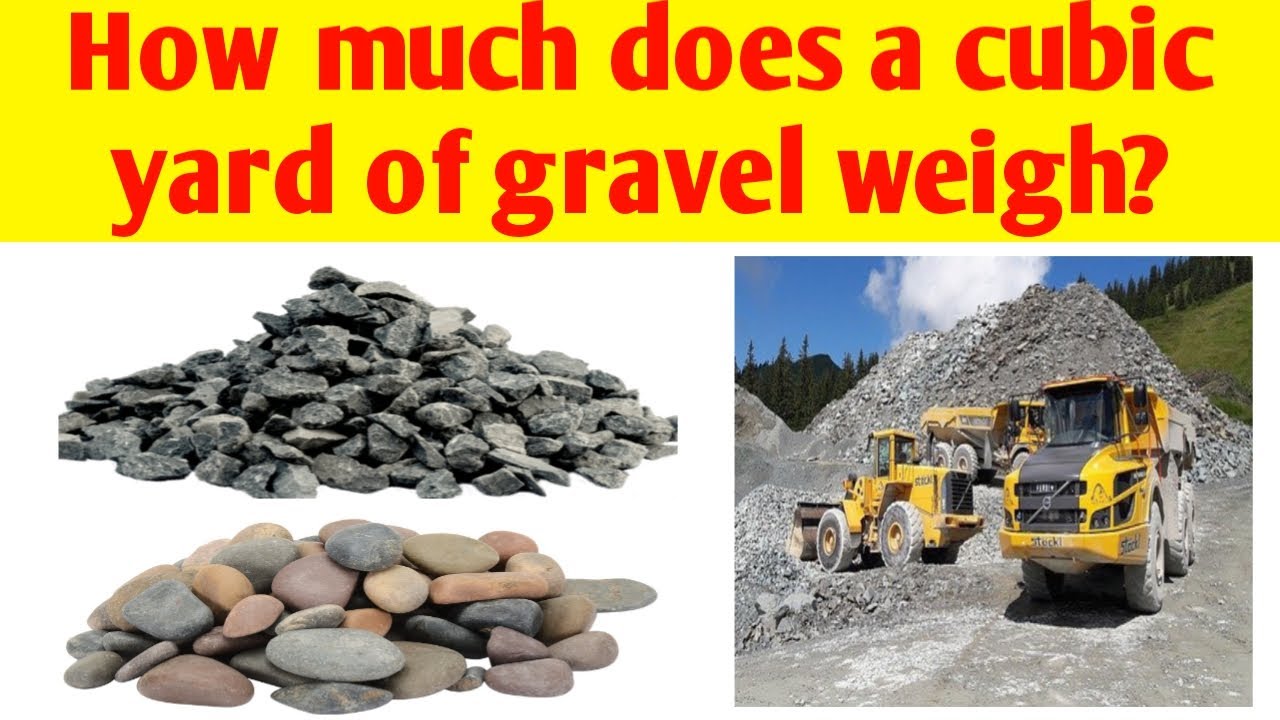
Image Source: i.ytimg.com
Estimating Gravel Weight: The Basics
Before diving into specific types, let’s grasp the core idea behind estimating gravel weight. The weight of gravel isn’t fixed; it’s a range because gravel isn’t just one thing. It’s a collection of small stones. The exact weight depends on:
- Type of Stone: Different rocks have different densities.
- Size of Stones: Smaller stones pack more tightly than larger, irregular ones.
- Moisture Content: Wet gravel is heavier than dry gravel.
- Shape of Stones: Smooth, rounded stones will leave more air pockets than angular, crushed ones, affecting density.
Therefore, when we talk about aggregate weight per cubic yard, we’re usually giving an average. This is why suppliers often provide a range.
Why Knowing the Weight Matters
- Transportation: Can your vehicle haul it? A standard pickup truck bed might hold 1 to 2 cubic yards of gravel. Exceeding its weight capacity can be dangerous and damage your vehicle.
- Budgeting: While often sold by volume, understanding the weight helps compare prices if suppliers offer both volume and weight options.
- Project Specifications: Some projects, like road bases or foundation support, have specific weight requirements for the materials used to ensure proper load-bearing capacity.
- Ordering Accuracy: Preventing under- or over-ordering saves time and money.
Factors Influencing Gravel Weight
Let’s break down what makes one yard of gravel weigh more or less than another.
Stone Type and Density
The fundamental factor is the type of rock the gravel is made from. Each rock type has a specific density, which is its mass per unit volume.
- Granite: Often used in gravel, granite is dense.
- Limestone: Another common gravel material, limestone is typically less dense than granite.
- Sandstone: Generally lighter than granite or limestone.
- Basalt: A volcanic rock, often quite dense.
These densities are key to understanding gravel density per yard.
Size and Shape of Aggregate
Gravel isn’t uniform. It comes in various sizes, from fine pea gravel to larger riprap.
- Crushed Gravel (Angular): When rocks are crushed, they create angular pieces. These pieces tend to interlock better, reducing air pockets and increasing the weight per cubic yard compared to rounded stones of the same material.
- Rounded Gravel (Smooth): Natural river or beach gravel is rounded. These stones don’t pack as tightly, leaving more space for air, which means less weight in the same volume.
Moisture Content
This is a big variable. Gravel, especially crushed stone, can absorb water.
- Dry Gravel: Lighter.
- Damp Gravel: Heavier.
- Saturated Gravel: The heaviest.
When you buy gravel, it might be delivered with some moisture, which will increase its weight. The gravel volume to weight conversion needs to account for this.
Typical Gravel Weights: A Closer Look
Now, let’s get to the numbers. The gravel weight per cubic yard can vary significantly. Here’s a breakdown of common gravel types and their approximate weights.
Crushed Stone Gravel
This is perhaps the most common type for construction and landscaping. It’s made by crushing larger rocks. Its angular shape helps it compact well.
- Typical Weight: 1,400 to 1,700 pounds per cubic yard.
- Why the Range? This range accounts for different types of crushed stone (like granite or limestone) and varying degrees of fines (smaller particles) mixed in. A denser stone like granite will be at the higher end, while limestone might be closer to the lower end.
Pea Gravel
This is a type of rounded gravel, typically 1/4 to 1/2 inch in size. It’s often used for decorative purposes, pathways, and around pools.
- Typical Weight: 1,500 to 1,650 pounds per cubic yard.
- Why this weight? Even though it’s rounded, the smaller size allows for relatively tight packing, contributing to its substantial weight.
River Rock/Fieldstone Gravel
These are naturally rounded stones, often larger than pea gravel. They are used for decorative landscaping, dry creek beds, and drainage.
- Typical Weight: 1,700 to 1,900 pounds per cubic yard.
- Why heavier? While rounded, river rock is often denser than crushed stone, and the larger sizes can lead to less void space when packed.
Decomposed Granite (DG)
This isn’t exactly gravel in the same sense as larger stones, but it’s often referred to as such. It’s granite that has weathered into small particles, often with a sandy texture. It’s popular for pathways and patios because it hardens when compacted and watered.
- Typical Weight: 1,800 to 2,000 pounds per cubic yard.
- Why so heavy? The fine particle size and the natural density of granite contribute to its high weight.
Gravel Mixes (e.g., Crusher Run, Base Material)
These mixes often contain crushed stone, sand, and fines. They are designed for excellent compaction and load-bearing capacity.
- Typical Weight: 1,600 to 1,800 pounds per cubic yard.
- Why? The mix of sizes and fines helps to fill voids, creating a dense and stable material.
Table: Approximate Gravel Weights Per Cubic Yard
Here’s a handy table summarizing the weights. Remember, these are estimates.
| Gravel Type | Approximate Weight (lbs/cubic yard) | Key Characteristics |
|---|---|---|
| Crushed Stone | 1,400 – 1,700 | Angular, good for compaction, various stone types |
| Pea Gravel | 1,500 – 1,650 | Rounded, small size (1/4″ – 1/2″) |
| River Rock/Fieldstone | 1,700 – 1,900 | Rounded, larger sizes, decorative |
| Decomposed Granite (DG) | 1,800 – 2,000 | Fine particles, compacts to a hard surface |
| Gravel Mixes (Base) | 1,600 – 1,800 | Blend of stone, sand, and fines, high compaction |
How Many Pounds in a Yard of Gravel?
To answer the question directly: how many pounds in a yard of gravel? You can expect anywhere from 1,400 to 2,000 pounds per cubic yard, depending heavily on the type and composition of the gravel.
Calculating Gravel Weight for Your Project
Having the general numbers is useful, but how do you get a more precise idea for your specific needs?
Using a Gravel Weight Calculator
Many online resources offer a gravel weight calculator. These tools typically ask you to input:
- The Type of Gravel: Select from a dropdown menu (e.g., crushed stone, pea gravel).
- The Volume: Enter the number of cubic yards you need.
- Optional: Moisture Factor: Some calculators may allow you to adjust for moisture.
This is a quick way to get an estimate.
Manual Gravel Volume to Weight Conversion
If you don’t have access to a calculator, you can do a rough calculation yourself.
- Find the Density: Look up the specific gravity or density of the particular stone type you’re interested in. (This is harder for consumers to find readily).
- Convert to Weight: A common shortcut is to use the average densities. For instance, if you know your gravel is primarily crushed limestone, you might use an average of 1,500 lbs/yd³.
Let’s say you need to calculate the weight for 10 cubic yards of crushed stone that weighs an average of 1,550 lbs/yd³.
- Total Weight = Volume (in cubic yards) × Weight per Cubic Yard
- Total Weight = 10 yd³ × 1,550 lbs/yd³ = 15,500 lbs
Factors to Consider for Your Calculation:
- Project Depth: If you’re laying gravel at a specific depth, you’ll need to calculate the volume first.
- Volume (cubic feet) = Length (ft) × Width (ft) × Depth (ft)
- Convert cubic feet to cubic yards: Volume (cubic yards) = Volume (cubic feet) / 27 (since there are 27 cubic feet in a cubic yard).
- Compaction: Gravel compacts. When you install it, especially for driveways or bases, it will settle. The weight you calculate is for loose gravel. The weight in place after compaction might be slightly higher per cubic yard if more fines settle in. However, for ordering purposes, the loose volume to weight conversion is standard.
Understanding Bulk Gravel Weight
When you buy gravel in bulk, you’re buying it without packaging, directly from a quarry or supplier. This is generally more economical for larger quantities. The term bulk gravel weight refers to the weight of gravel sold in large quantities, typically by the cubic yard or ton.
Cubic Yard vs. Ton
Suppliers may sell gravel by the cubic yard or by the ton (2,000 pounds). This is where knowing the gravel density per yard becomes critical for converting between these units.
- If a supplier sells by the cubic yard: You use the weight per cubic yard figures (e.g., 1,500 lbs/yd³).
- If a supplier sells by the ton: You’ll need to estimate how many cubic yards a ton will cover.
Let’s say you need 20 tons of crushed stone that weighs approximately 1,500 lbs per cubic yard.
- Convert tons to pounds: 20 tons × 2,000 lbs/ton = 40,000 lbs.
- Calculate cubic yards needed: 40,000 lbs / 1,500 lbs/yd³ ≈ 26.7 cubic yards.
This gravel volume to weight conversion is essential for accurate ordering.
Practical Applications and Considerations
Knowing the weight of gravel is more than just an academic exercise; it has real-world implications for your projects.
Driveway Construction
A gravel driveway typically needs a base layer and a top layer.
- Base Layer: Often uses crushed stone or crusher run for stability and compaction. This layer needs to be dense and heavy to support vehicle weight. You’ll need to calculate how many cubic yards of gravel are required for the desired depth and width, then determine its weight. For example, a driveway 100 ft long, 10 ft wide, with a 6-inch (0.5 ft) base layer:
- Volume = 100 ft × 10 ft × 0.5 ft = 500 cubic feet
- Volume = 500 / 27 ≈ 18.5 cubic yards.
- If using crushed stone averaging 1,500 lbs/yd³, the weight is 18.5 yd³ × 1,500 lbs/yd³ = 27,750 lbs. This is over 13 tons! This helps explain why heavy-duty trucks are often used for hauling.
- Top Layer: Could be decorative gravel, like pea gravel or river rock.
Landscaping and Garden Paths
For pathways, you might use pea gravel or decomposed granite. The weight calculation helps ensure you have enough material to create a comfortable walking surface of the desired depth.
- A path 50 ft long, 3 ft wide, and 3 inches (0.25 ft) deep:
- Volume = 50 ft × 3 ft × 0.25 ft = 37.5 cubic feet
- Volume = 37.5 / 27 ≈ 1.4 cubic yards.
- If using pea gravel at 1,600 lbs/yd³, the weight is 1.4 yd³ × 1,600 lbs/yd³ = 2,240 lbs. This is manageable for many standard pickup trucks.
Foundation and Backfill
In construction, gravel is used for drainage around foundations and as backfill. The weight and density are critical for structural integrity. Soil and gravel weight comparisons are important here, as gravel is generally denser than most soils.
Erosion Control
Larger gravel and decorative stones are used for bank stabilization and erosion control. Their weight helps them resist being washed away by water.
Frequently Asked Questions (FAQ)
Here are some common questions related to gravel weight and volume.
Q1: Does the supplier’s weight versus volume pricing matter?
A1: Yes. Always compare the price per cubic yard and the price per ton. If you know the typical gravel weight per cubic yard for the type you need, you can convert one price to the other for a true comparison. For example, if gravel is $30/yd³ and weighs 1,500 lbs/yd³, then a ton costs $30/yd³ * (1500 lbs/yd³ / 2000 lbs/ton) = $22.50/ton.
Q2: How much gravel can a standard pickup truck carry?
A2: A standard half-ton pickup truck can typically carry about 1/2 to 1 cubic yard of gravel, depending on the density of the gravel and the truck’s payload capacity. It’s crucial to check your truck’s specific payload limit and the estimated weight of the gravel you plan to haul. Overloading is dangerous.
Q3: Is gravel sold by weight or volume?
A3: Most landscaping suppliers sell gravel by the cubic yard (volume). Many construction material suppliers or quarries may sell by the ton (weight) or cubic yard. It’s best to clarify with your supplier.
Q4: How does moisture affect gravel weight?
A4: Moisture significantly increases gravel weight. Gravel can absorb water, especially crushed stone with fines. A yard of dry gravel can weigh considerably less than a yard of saturated gravel. Suppliers usually deliver gravel with a natural moisture content, so be aware that the delivered weight might be higher than if the gravel were perfectly dry.
Q5: What is the difference between gravel density per yard and specific gravity?
A5: Specific gravity is a ratio of the density of a substance to the density of water. For most common rocks like granite or limestone, their specific gravity is around 2.5 to 2.7. This means the rock is 2.5 to 2.7 times denser than water. To get gravel density per yard, you’d use this specific gravity in calculations involving the density of water (approximately 62.4 lbs/ft³ or 2000 lbs/yd³ for saturated density).
Q6: How do I accurately estimate my gravel needs?
A6: Measure your project area accurately (length, width). Determine the desired depth of the gravel. Use the formula: Volume (cubic feet) = Length × Width × Depth. Convert cubic feet to cubic yards by dividing by 27. Then, multiply the cubic yards by the estimated gravel weight per cubic yard for the type of gravel you’re using. Always round up slightly to account for settling and uneven spreading.
Conclusion: Weighing Your Options
Knowing the weight of a yard of gravel weight is essential for successful project planning. By considering the type of gravel, its density, and moisture content, you can make informed decisions about ordering, transportation, and budget. Whether you’re using a gravel weight calculator or performing your own gravel volume to weight conversion, having this knowledge empowers you to tackle your projects with confidence, ensuring you have the right amount of the right material to get the job done right. Remember that aggregate weight per cubic yard is an estimate, so consulting with your local supplier for their specific product’s characteristics is always a good practice.