
A single cubic yard of mulch, when applied at the standard depth of 3 inches, will cover approximately 108 square feet. Figuring out how much mulch do I need can feel tricky, but by knowing this, you can accurately estimate your landscape mulch quantity.
Applying mulch to your garden beds is a fantastic way to improve soil health, retain moisture, and suppress weeds. It also gives your landscape a polished, finished look. But before you head to the garden center, you need to know exactly how much mulch to buy. Buying too little means extra trips and potentially higher costs. Buying too much leads to wasted product and a cluttered garage. This guide will help you master mulch calculation per square foot and determine your garden mulch volume with confidence.
Image Source: assets.gardeners.com
Deciphering Cubic Yard Coverage
So, how much mulch does a cubic yard cover? Let’s break it down. A cubic yard is a unit of volume. It represents a cube that is three feet long, three feet wide, and three feet high.
When we talk about covering an area with mulch, we’re really talking about its depth. Most gardening experts recommend a mulch depth of about 2 to 4 inches. This range is ideal for moisture retention and weed suppression without smothering plants. For our calculations, we’ll focus on the most common and recommended depth: 3 inches.
The Math Behind the Coverage
To figure out mulch coverage per cubic yard, we need to convert our measurements to a consistent unit, typically feet.
- A cubic yard is 3 feet x 3 feet x 3 feet = 27 cubic feet.
- We want to cover an area in square feet to a depth of 3 inches.
- First, convert the depth from inches to feet: 3 inches / 12 inches/foot = 0.25 feet.
Now, we can calculate the volume of mulch needed for a specific area at that depth.
Area (sq ft) x Depth (ft) = Volume (cubic ft)
We know one cubic yard is 27 cubic feet. So, to find out how many square feet a cubic yard covers at a 3-inch depth:
Volume (cubic ft) / Depth (ft) = Area (sq ft)
27 cubic feet / 0.25 feet = 108 square feet
This is why we say one cubic yard of mulch covers about 108 square feet when applied at a 3-inch depth.
Your Mulch Estimating Toolkit
To help you with your mulch estimating, here are some essential tools and knowledge:
The Ideal Mulch Depth Guide
Choosing the right mulch depth is crucial for plant health and effective weed control.
- Too Thin (Less than 2 inches): Won’t effectively suppress weeds or retain much moisture. It also looks sparse and might blow away easily.
- Just Right (2-4 inches): This is the sweet spot. It provides excellent weed suppression, moisture retention, and temperature regulation for the soil. For most organic mulches like bark chips or shredded wood, 3 inches is the benchmark.
- Too Thick (More than 4 inches): Can suffocate plant roots by limiting oxygen and moisture penetration. It can also create a home for pests and harbor fungal diseases. For very coarse mulches, this might be less of an issue, but it’s generally best to err on the side of caution.
Using a Mulch Coverage Calculator
For busy gardeners, a mulch coverage calculator is an invaluable tool. These online calculators simplify the process by asking for your area dimensions and desired depth, then instantly telling you how many cubic yards you need.
Typically, you’ll input:
- Length of the area to be mulched.
- Width of the area to be mulched.
- Desired depth of mulch (usually in inches).
The calculator then performs the necessary calculations to provide your landscape mulch quantity. Many reputable garden supply websites offer free mulch calculation tool options.
Simple Mulch Calculation per Square Foot
If you don’t have access to a calculator, you can do the math yourself.
-
Measure Your Area:
- For rectangular or square beds: Measure the length and width in feet. Multiply these numbers together to get the square footage (Length x Width = Square Footage).
- For irregular shapes: Break the area down into smaller, manageable shapes (rectangles, squares, triangles). Calculate the square footage of each shape and add them together.
- For circular beds: Measure the diameter of the circle in feet. Divide the diameter by two to get the radius. Use the formula: π (pi, approximately 3.14) x radius² = Square Footage.
-
Determine Desired Depth:
- Decide on your ideal mulch depth guide (2-4 inches). Convert this to feet by dividing by 12. For 3 inches, it’s 0.25 feet.
-
Calculate Total Volume Needed:
- Multiply your total square footage by the desired depth in feet. This gives you the total volume needed in cubic feet.
- Total Volume (cubic ft) = Area (sq ft) x Depth (ft)
-
Convert to Cubic Yards:
- Since mulch is sold in cubic yards, divide your total cubic feet by 27 (the number of cubic feet in a cubic yard).
- Cubic Yards Needed = Total Volume (cubic ft) / 27
Example Calculation
Let’s say you have a garden bed that is 10 feet long and 5 feet wide, and you want to apply mulch at a 3-inch depth.
- Area: 10 feet x 5 feet = 50 square feet
- Depth: 3 inches = 0.25 feet
- Total Volume: 50 sq ft x 0.25 ft = 12.5 cubic feet
- Cubic Yards: 12.5 cubic feet / 27 cubic feet/yard ≈ 0.46 cubic yards
Since you can’t buy 0.46 cubic yards, you’d likely round up and buy 1 cubic yard to be safe and account for settling or potential thin spots.
Factors Affecting Mulch Coverage
While the 108 sq ft per cubic yard (at 3 inches) is a solid starting point, several factors can influence how far your cubic yard of mulch actually spreads:
Mulch Type and Consistency
Different types of mulch have varying densities and particle sizes.
- Wood Chips/Bark: These are common and generally provide good coverage. Coarser chips might settle less than finer ones, so you might need slightly more of a coarser product to achieve the same visual depth.
- Shredded Bark/Wood: Tends to be more compact and can settle more than larger chips.
- Pine Needles (Pine Straw): While great for certain applications, pine straw is lighter and doesn’t compact as much as wood products. You might need more to achieve a comparable depth.
- Compost/Soil Amendments: If you’re using compost as a mulch, its consistency will vary widely. Finer composts might settle more than coarser ones.
Settling and Compaction
Once applied, mulch will settle over time. Rain, wind, and the natural decomposition process all contribute to mulch compacting. This means that an area you covered to 3 inches might settle to 2 inches within a few months.
It’s wise to buy slightly more mulch than your initial calculation suggests to account for this settling. If your calculation comes out to exactly 1 cubic yard, consider getting 1.25 or 1.5 cubic yards to ensure you have enough for the long haul and can maintain that ideal depth. This is part of effective mulch estimating.
Existing Mulch Layer
If you’re topping up an existing mulch bed, you’ll need less than if you’re starting from scratch. Measure the current depth and decide if you want to add a full 3 inches or just replenish it to that level.
Application Technique
How you spread the mulch also plays a role. Aim for an even layer. If you’re too heavy-handed in some spots and too light in others, your coverage will be inconsistent, and you might run out sooner than expected.
Quantifying Your Garden Mulch Volume
Let’s get practical with how to measure and apply.
Calculating for Different Depths
The rule of thumb is 108 sq ft for 3 inches. But what about other depths?
| Desired Depth (Inches) | Depth (Feet) | Sq Ft Covered per Cubic Yard |
|---|---|---|
| 2 | 0.167 | 162 |
| 3 | 0.25 | 108 |
| 4 | 0.333 | 81 |
As you can see from the table, applying mulch thinner means one cubic yard of mulch will go further. Applying it thicker uses up the yard much faster.
Practical Application Tips
- Start with a clean bed: Remove weeds and debris before applying new mulch.
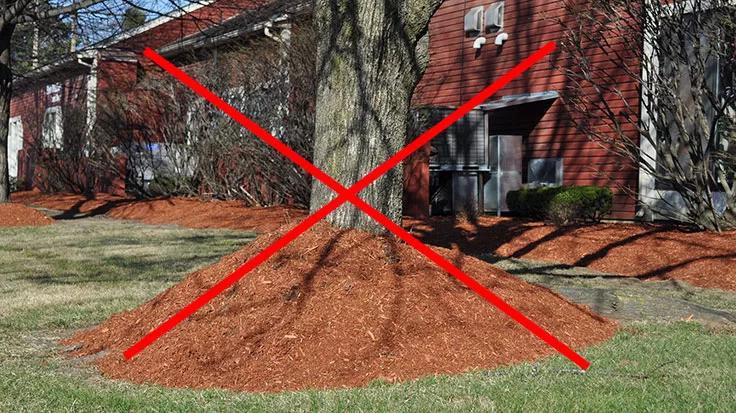
- Keep mulch away from plant stems and trunks: Leave a small gap (about an inch) around the base of plants to prevent rot and discourage pests.
- Spread evenly: Use a rake to distribute the mulch uniformly.
- Consider purchasing slightly extra: As mentioned, settling and uneven application can reduce your effective coverage. It’s better to have a little left over than to run out mid-project.
Common Mulch Coverage Scenarios
Let’s look at some typical garden sizes and how much mulch they’ll require.
Small Flower Beds
- Scenario: Two flower beds, each 4 feet by 8 feet.
- Area per bed: 4 ft x 8 ft = 32 sq ft
- Total Area: 32 sq ft x 2 beds = 64 sq ft
- Depth: 3 inches (0.25 ft)
- Volume Needed: 64 sq ft x 0.25 ft = 16 cubic feet
- Cubic Yards: 16 cubic feet / 27 cubic feet/yard ≈ 0.59 cubic yards
- Recommendation: Buy 1 cubic yard.
Large Shrub Borders
- Scenario: A border area that is 50 feet long and 4 feet wide.
- Area: 50 ft x 4 ft = 200 sq ft
- Depth: 3 inches (0.25 ft)
- Volume Needed: 200 sq ft x 0.25 ft = 50 cubic feet
- Cubic Yards: 50 cubic feet / 27 cubic feet/yard ≈ 1.85 cubic yards
- Recommendation: Buy 2 cubic yards.
Tree Rings
- Scenario: A circular tree ring with a diameter of 6 feet.
- Radius: 6 ft / 2 = 3 feet
- Area: π x (3 ft)² = 3.14 x 9 sq ft = 28.26 sq ft
- Depth: 3 inches (0.25 ft)
- Volume Needed: 28.26 sq ft x 0.25 ft = 7.065 cubic feet
- Cubic Yards: 7.065 cubic feet / 27 cubic feet/yard ≈ 0.26 cubic yards
- Recommendation: Buy 1 cubic yard (as it’s the smallest quantity typically sold, and it’s good to have extra for other small areas or settling).
Frequently Asked Questions (FAQ)
Q: What is the standard depth for applying mulch?
A: The standard and most recommended depth for applying mulch is 2 to 4 inches. For most common mulches like wood chips or shredded bark, 3 inches is the ideal depth for weed suppression, moisture retention, and plant health.
Q: How do I calculate the square footage of my garden bed?
A: For rectangular or square beds, multiply the length by the width (e.g., 10 ft x 5 ft = 50 sq ft). For irregular shapes, divide the area into smaller geometric shapes, calculate the square footage of each, and add them together. For circular beds, calculate the area using the formula π x radius², where the radius is half the diameter.
Q: Can I use a different mulch depth than 3 inches?
A: Yes, you can. If you apply mulch at 2 inches, one cubic yard will cover more area (about 162 sq ft). If you apply it at 4 inches, it will cover less area (about 81 sq ft). Always refer to the mulch depth guide and your specific needs.
Q: How much mulch do I need for a 12×12 foot area?
A: For a 12×12 foot area (144 sq ft) at a 3-inch depth (0.25 ft):
Volume needed = 144 sq ft x 0.25 ft = 36 cubic feet.
Cubic yards = 36 cubic feet / 27 cubic feet/yard = 1.33 cubic yards.
It’s recommended to buy 1.5 cubic yards to account for settling and ensure complete coverage.
Q: My mulch seems to be settling quickly. What should I do?
A: Mulch naturally settles over time. If it settles faster than expected, it might be due to the type of mulch (finer materials settle more) or heavy rainfall. It’s a good idea to top up your beds annually or as needed to maintain the recommended depth.
Q: Does the type of mulch affect how much it covers?
A: Yes, the type and consistency of mulch can affect coverage. Coarser materials might not compact as much as finer ones, meaning a cubic yard might cover a slightly larger area for the same visual depth. Lighter materials like pine straw also behave differently than dense wood chips.
By following these guidelines and using the simple calculations or a mulch coverage calculator, you can confidently determine the landscape mulch quantity you need for a beautiful and healthy garden. Happy mulching!