
How much is one yard of mulch? The cost of one yard of mulch typically ranges from $20 to $60, depending on the type of mulch, whether it’s purchased in bags or in bulk, and your location. This guide will help you decipher the cost of mulch per yard and make informed decisions for your landscaping projects. We’ll delve into mulch prices by volume, offer insights into mulch calculation for landscaping, and compare mulch bag vs bulk cost.
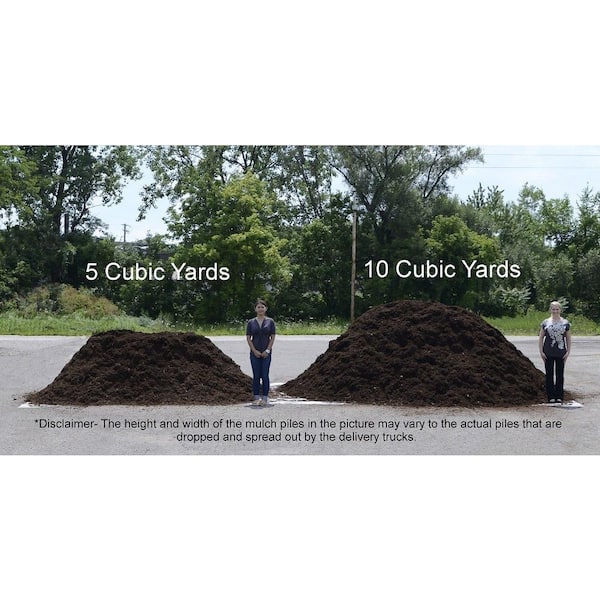
Image Source: images.thdstatic.com
Deciphering Mulch Costs: What Influences the Price?
The price of mulch isn’t a fixed number. Several factors play a role in determining how much you’ll pay for a yard of this essential landscaping material. Let’s break down the key influencers:
Type of Mulch
The most significant factor affecting the cost of mulch per yard is its type. Different materials have varying production costs, availability, and aesthetic appeal, all of which contribute to the final price.
Organic Mulches
Organic mulches are derived from natural materials that decompose over time, enriching the soil.
- Wood Mulches (Shredded Bark, Chips, Nuggets): These are very popular and come in various forms.
- Shredded Bark Mulch: Often made from pine or cedar, this mulch is attractive and decomposes slowly. Prices can range from $25 to $50 per cubic yard. Cedar tends to be on the higher end due to its natural insect-repelling properties.
- Wood Chips: A coarser option, wood chips are generally more budget-friendly, typically costing between $20 and $40 per cubic yard. They offer good weed suppression and moisture retention.
- Cypress Mulch: Known for its longevity and resistance to decay, cypress mulch can be more expensive, often falling in the $35 to $60 per cubic yard range. However, its sustainability is sometimes debated.
- Hardwood Mulch: Often a byproduct of the lumber industry, hardwood mulch is durable and available in various colors. Expect prices from $25 to $45 per cubic yard.
- Shredded Leaf Mulch: This is one of the most economical organic options, often costing $20 to $35 per cubic yard. It decomposes quickly and is excellent for soil improvement.
- Straw or Hay Mulch: While often used in vegetable gardens for weed suppression and moisture retention, straw or hay mulch typically costs between $15 and $30 per cubic yard. It’s important to note that hay can contain seeds that may sprout.
- Compost: While not strictly a mulch in the decorative sense, compost is often used as a top dressing and soil amendment. Its cost can vary widely, from $20 to $70 per cubic yard, depending on the source and quality.
Inorganic Mulches
Inorganic mulches do not decompose and are often chosen for their long-lasting appearance and specific benefits.
- Stone and Gravel: These are a more permanent landscaping solution.
- River Rock and Decorative Gravel: Prices can range from $50 to $150 per cubic yard, depending on the type, size, and color of the stone. These are excellent for pathways, drainage, and creating a clean, modern look.
- Crushed Stone: Typically less expensive than decorative gravel, crushed stone can cost between $30 and $70 per cubic yard. It’s functional for pathways and as a base layer.
- Rubber Mulch: Made from recycled tires, rubber mulch is durable and comes in various colors. It can range from $50 to $120 per cubic yard. While it doesn’t decompose or attract pests, it can have an odor and may not be ideal for vegetable gardens.
Purchase Volume: Bags vs. Bulk
The way you buy mulch significantly impacts the mulch bag vs bulk cost.
Mulch Bags
Mulch is commonly sold in bags, usually containing 2 to 3 cubic feet of material.
- Convenience: Bags are easy to transport and handle for smaller projects.
- Cost per Unit: While convenient, buying in bags is generally more expensive per cubic yard than buying in bulk. A typical bag of mulch might cost between $3 and $8.
- Calculating Bag Needs: To figure out how many bags you need, you first need to calculate the volume of mulch required (we’ll cover this later). Then, divide your total cubic yardage by the cubic feet per bag, and multiply by 27 (since there are 27 cubic feet in a cubic yard).
- Example: If you need 4 cubic yards and bags contain 2 cubic feet: (4 cubic yards * 27 cubic feet/cubic yard) / 2 cubic feet/bag = 54 bags.
- Cost: 54 bags * $5/bag = $270.
Bulk Mulch
Buying mulch in bulk means purchasing it by the cubic yard, usually delivered directly to your home.
- Cost Savings: This is almost always the more economical option for larger landscaping projects. You can often save 20-50% per cubic yard by buying in bulk.
- Delivery Fees: Keep in mind that mulch delivery cost can add to the overall expense, though it’s often a flat fee or based on distance.
- Quantity: Bulk orders typically start at around 1 cubic yard, with many suppliers offering discounts for larger quantities.
- Cost Comparison Example: If you need 4 cubic yards and bulk mulch costs $35 per cubic yard: 4 cubic yards * $35/cubic yard = $140 (plus potential delivery fees).
Geographical Location
Typical mulch prices can vary significantly based on your region. Factors like local availability of raw materials, transportation costs, and local market demand all play a role. For instance, mulch made from locally sourced wood or bark might be cheaper in a forested area than in a desert region.
Seasonality and Demand
Like many landscaping materials, mulch prices can fluctuate slightly depending on the season. Demand is highest in the spring and fall when most people are actively gardening and refreshing their landscapes. Prices might be slightly lower in the off-season (late fall and winter).
Quality and Processing
The quality of the mulch itself also influences its price.
- Screening: Mulch that has been finely screened to remove oversized pieces and debris will generally cost more than coarser, unscreened mulch.
- Coloring: Dyed mulches (e.g., red, black, brown) can sometimes be slightly more expensive than natural-colored mulches due to the cost of the dye. However, the color is usually long-lasting and visually appealing.
- Source Material: Mulch made from premium materials like cedar or cypress will command higher prices than basic hardwood mulch.
Calculating Your Mulch Needs: A Practical Guide
Before you can determine how much mulch do I need, you must calculate the volume required for your specific landscaping areas. This is where a mulch estimator can be very helpful, or you can do it yourself.
The Importance of Depth
The ideal depth for mulch application is typically 2 to 3 inches. Too little mulch won’t provide adequate weed suppression or moisture retention, while too much can suffocate plant roots.
Step-by-Step Mulch Calculation
-
Measure the Area:
- Rectangular/Square Beds: Measure the length and width of the bed in feet.
- Circular Beds: Measure the diameter of the circle in feet.
- Irregular Shapes: Break down the area into smaller, manageable geometric shapes (rectangles, squares, triangles) and measure each one.
-
Calculate the Area in Square Feet:
- Rectangular/Square Beds: Area = Length × Width
- Circular Beds: Area = π × (Radius)² (Remember, Radius = Diameter / 2)
- Irregular Shapes: Calculate the area of each section and add them together.
-
Determine the Desired Mulch Depth:
- Convert your desired depth from inches to feet. Divide the number of inches by 12.
- Example: 3 inches / 12 inches/foot = 0.25 feet.
- Convert your desired depth from inches to feet. Divide the number of inches by 12.
-
Calculate the Volume in Cubic Feet:
- Volume (cubic feet) = Area (square feet) × Depth (feet)
-
Convert Cubic Feet to Cubic Yards:
- Since mulch is typically sold by the cubic yard, you need to convert your total cubic feet. There are 27 cubic feet in 1 cubic yard.
- Volume (cubic yards) = Volume (cubic feet) / 27
Using a Mulch Estimator Tool
Many landscaping supply websites offer mulch estimator tools. You input the dimensions of your garden beds, and the tool automatically calculates the cubic yards needed. This is a quick and convenient way to get an accurate estimate.
Example Calculation:
Let’s say you have a rectangular garden bed that is 10 feet long and 4 feet wide, and you want to apply mulch 3 inches deep.
- Area: 10 ft × 4 ft = 40 square feet.
- Depth in Feet: 3 inches / 12 = 0.25 feet.
- Volume in Cubic Feet: 40 sq ft × 0.25 ft = 10 cubic feet.
- Volume in Cubic Yards: 10 cubic feet / 27 = 0.37 cubic yards.
For a small area like this, buying a few bags of mulch would likely be more practical than ordering a bulk delivery. However, for larger projects, this calculation is crucial for ordering the correct amount.
Comparing Mulch Prices: Bulk vs. Bags
Let’s revisit the mulch bag vs bulk cost comparison with some hypothetical numbers to illustrate the savings.
| Feature | Mulch in Bags (2 cu ft) | Bulk Mulch (per cubic yard) |
|---|---|---|
| Price per Bag | $4.00 | N/A |
| Price per Cubic Foot | $4.00 / 2 cu ft = $2.00 | N/A |
| Price per Cubic Yard | $2.00/cu ft * 27 cu ft = $54.00 | $35.00 |
| Savings per Yard | N/A | $19.00 |
| Delivery | No direct delivery fee, but requires your own transport. | Often a delivery fee ($50-$100 typically) |
In this example, buying mulch in bulk offers significant savings per cubic yard. Even with a $75 delivery fee, purchasing 4 cubic yards in bulk would cost:
(4 cubic yards * $35/cubic yard) + $75 delivery fee = $140 + $75 = $215
Buying the same amount in bags would cost:
4 cubic yards * $54/cubic yard = $216
In this scenario, bulk is slightly cheaper even with delivery. For larger quantities, the savings become even more pronounced.
Finding Cheap Mulch Options
If you’re on a tight budget, there are ways to find cheap mulch options:
Buy in Bulk
As discussed, this is the most effective way to reduce costs. Look for local landscape supply yards or garden centers that offer bulk delivery.
Opt for Basic Mulches
Choose less decorative, more functional mulches like basic hardwood mulch or shredded leaf mulch. These are generally more affordable than premium options like cypress or dyed mulches.
Check Local Municipalities
Some cities and counties offer free compost or mulch to residents, often made from yard waste collected through municipal programs. Check your local government’s website for details.
DIY Mulch (Composting)
If you have the time and space, you can create your own compost from kitchen scraps and yard waste. This is the ultimate cheap mulch option, though it takes time to produce.
Look for Sales and Promotions
Keep an eye out for seasonal sales at garden centers and hardware stores.
Factors Affecting Mulch Delivery Cost
The mulch delivery cost can vary significantly between suppliers and locations. Here’s what typically influences it:
- Distance: The further you are from the supplier’s yard, the higher the delivery fee.
- Volume: Some suppliers may waive or reduce delivery fees for larger orders.
- Delivery Time: Express or same-day delivery might incur additional charges.
- Site Access: If your delivery location is difficult to access (e.g., narrow gates, steep driveways), there might be an extra fee.
- Dump Site Location: Some companies charge extra if you want the mulch dumped in a specific spot on your property beyond the driveway.
It’s always best to get a clear quote that includes both the bulk mulch prices and the delivery charge before committing to an order.
Frequently Asked Questions About Mulch Pricing
Q1: What is the average cost of a cubic yard of wood mulch?
A1: The average cost for a cubic yard of wood mulch typically falls between $25 and $50. This can vary based on the type of wood (pine, cedar, hardwood), whether it’s dyed, and if it’s screened.
Q2: How much does it cost to have mulch delivered?
A2: Mulch delivery costs can range from $50 to $100, but this is highly dependent on your location, the distance from the supplier, and the volume of mulch you are ordering. Some suppliers offer free delivery for very large orders or have tiered pricing based on distance.
Q3: Can I save money by buying mulch in bulk?
A3: Yes, buying mulch in bulk (by the cubic yard) is almost always more cost-effective than buying it in bags, especially for larger landscaping projects. You can often save 20-50% per cubic yard by purchasing in bulk.
Q4: How many bags of mulch equal one cubic yard?
A4: This depends on the size of the bags. Most common mulch bags contain 2 to 3 cubic feet of material. To calculate:
* If bags contain 2 cubic feet: 27 cubic feet (in a yard) / 2 cubic feet/bag = 13.5 bags per cubic yard.
* If bags contain 3 cubic feet: 27 cubic feet (in a yard) / 3 cubic feet/bag = 9 bags per cubic yard.
Q5: Is dyed mulch more expensive than natural mulch?
A5: Dyed mulch can sometimes be slightly more expensive than natural-colored mulch due to the cost of the dye. However, the price difference is usually not substantial, and the color can last for an extended period.
Q6: What is the cheapest type of mulch?
A6: Generally, the cheapest types of mulch are organic mulches made from readily available materials like shredded leaves, basic hardwood mulch, or compost. Some municipal programs may even offer free mulch.
Q7: How deep should mulch be applied?
A7: The recommended mulch depth is typically 2 to 3 inches. This depth provides effective weed suppression and moisture retention without harming plant roots.
Q8: How do I calculate how much mulch I need?
A8: To calculate how much mulch you need, measure the length and width of your garden beds in feet to find the square footage. Then, convert your desired mulch depth from inches to feet (divide by 12). Multiply the square footage by the depth in feet to get the volume in cubic feet. Finally, divide the cubic feet by 27 to get the volume in cubic yards. Many online mulch estimator tools can simplify this process.
By following this comprehensive guide, you should have a clear picture of the cost of mulch per yard, how to calculate your needs, and the best ways to get the most value for your landscaping budget.