
Image Source: www.rotochopper.com
How Much Is One Cubic Yard Of Mulch? Pricing Guide
How much is one cubic yard of mulch? The cost of one cubic yard of mulch typically ranges from $30 to $75, depending on the type of mulch, where you buy it, and any additional services like delivery. This guide will help you decipher the cost of mulch by the yard and make informed decisions for your landscaping projects.
Deciphering Mulch Cost Per Cubic Yard
When you’re planning your garden or updating your landscaping, mulch is a key ingredient. It helps keep moisture in the soil, keeps weeds down, and makes your yard look great. But just how much does it cost to get this essential material? Let’s break down the mulch cost per cubic yard to help you budget effectively.
What Influences Cubic Yard Mulch Price?
Several factors play a role in determining the final cubic yard mulch price. It’s not just about the material itself.
- Type of Mulch: This is a big one. Different types of mulch come from different sources and require different processing, which affects their price.
- Wood Mulch: This is very common.
- Shredded Bark: Often comes from trees like pine, cedar, or fir. It’s attractive and breaks down slowly.
- Wood Chips: Can be made from various hardwoods or softwoods. They are usually chunkier than shredded bark.
- Dyed Mulch: Wood chips or shredded bark that have been colored (red, brown, black). The dyeing process adds to the cost.
- Organic Mulch: These break down over time and add nutrients to the soil.
- Compost: Decomposed organic matter. It’s excellent for soil health.
- Straw: A good, affordable option, but can blow around easily and may contain weed seeds.
- Leaves: Free if you collect them yourself! They are great for breaking down and enriching the soil.
- Grass Clippings: Another free option, but should be dried before applying to avoid matting and smelling.
- Inorganic Mulch: These don’t break down and are often used for a more permanent look.
- Gravel: Comes in many sizes and colors.
- River Rock: Smooth, rounded stones.
- Lava Rock: Porous and lightweight.
- Wood Mulch: This is very common.
- Quality of Mulch: You’ll often see a distinction between “basic” or “economy” mulch and “premium” mulch.
- Cheap Mulch Per Cubic Yard: These are often made from mixed wood sources and may have a more uniform, sometimes artificial, appearance due to dyeing. They are functional but might break down faster or contain more small, dusty particles.
- Premium Mulch Price: This usually refers to high-quality, natural wood products like cedar or hardwood bark that are often shredded or chipped more uniformly. They tend to last longer, look better, and are less likely to contain unwanted debris.
- Where You Buy It: Prices can vary significantly between different retailers.
- Garden Centers and Nurseries: Often have a good selection of premium mulches and may charge a bit more for their expertise and location.
- Big Box Home Improvement Stores: Can be a good source for budget-friendly options and bulk purchases.
- Local Landscape Supply Yards: These are often the best bet for bulk mulch pricing. They deal in large volumes and can offer competitive prices, especially if you’re buying a significant amount.
- Online Retailers: While convenient, shipping costs can add up, especially for a heavy product like mulch.
- Quantity Purchased: Buying mulch in bulk (several cubic yards at once) often brings the cost of mulch by the yard down. Many suppliers offer tiered pricing, where the per-yard cost decreases as you buy more.
- Delivery Fees: If you need the mulch brought to your home, you’ll likely incur a mulch delivery cost. This can be a flat fee or based on distance from the supplier.
How Much Does a Yard of Mulch Cost? The Numbers
To give you a clearer picture, let’s look at some general price ranges for different types of mulch. Remember, these are estimates, and your local prices may differ.
| Mulch Type | Average Price Per Cubic Yard |
|---|---|
| Basic Dyed Wood Mulch | $30 – $50 |
| Premium Dyed Wood Mulch | $40 – $65 |
| Natural Shredded Bark | $35 – $55 |
| Premium Shredded Bark | $45 – $70 |
| Hardwood Chips | $30 – $50 |
| Cedar Mulch | $50 – $75 |
| Compost Mulch | $40 – $60 |
| Gravel/Stone Mulch | $50 – $100+ |
This table gives you a sense of the average mulch price per yard. As you can see, premium mulch price points are higher, reflecting the quality and source of the material.
Calculating Your Mulch Needs
Before you even think about price, you need to know how much mulch you actually need. This is where calculating your volume comes in.
Measuring Your Mulch Needs
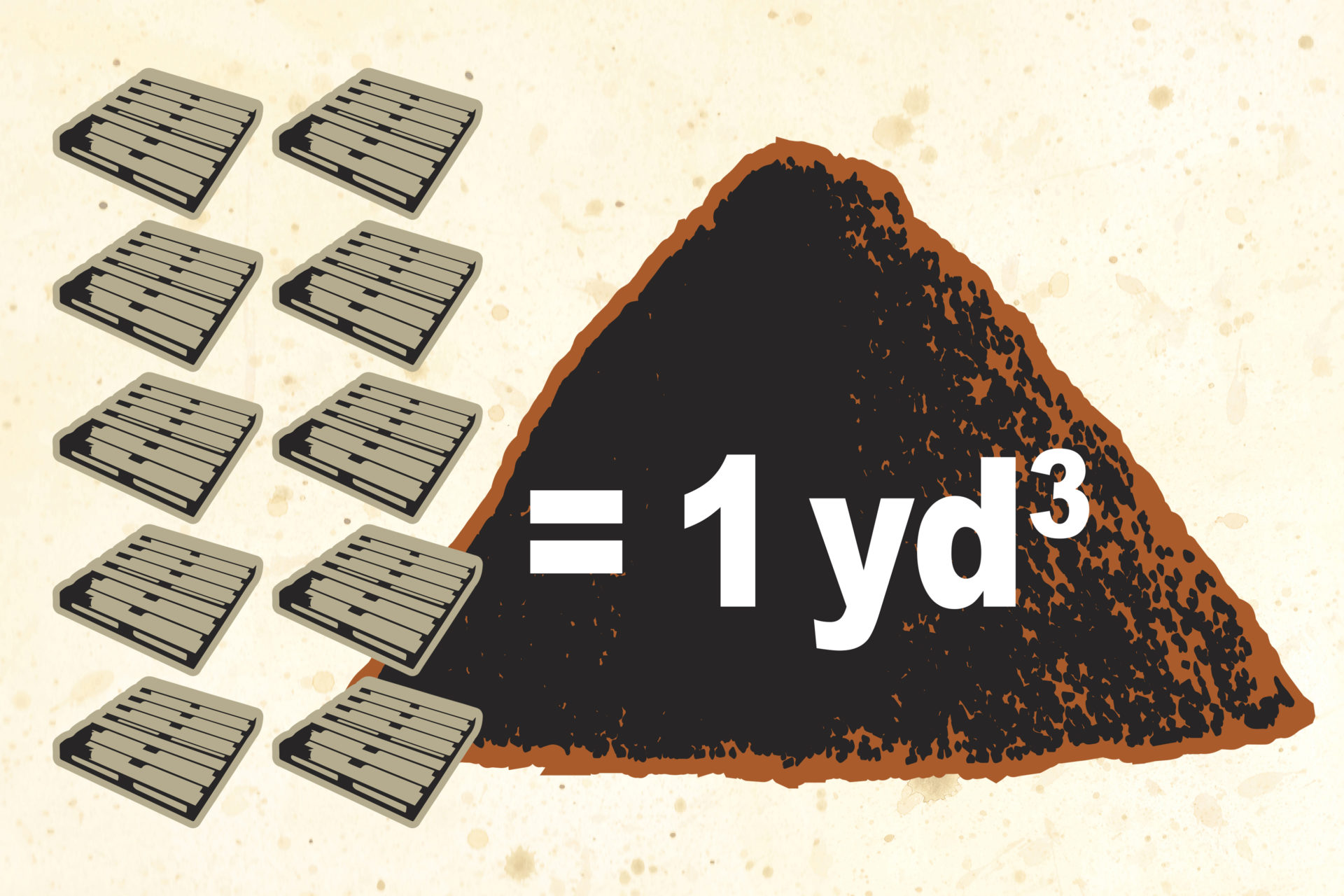
The standard unit for buying mulch is the cubic yard. A cubic yard is a volume measurement equivalent to 3 feet x 3 feet x 3 feet.
To figure out how much you need, you’ll measure the area you want to cover and the depth you want to apply the mulch. A typical recommended depth for mulch is 2 to 4 inches.
Here’s how to calculate it:
- Measure the Area:
- For rectangular or square areas: Length (in feet) x Width (in feet) = Square Feet.
- For circular areas: Radius (in feet) x Radius (in feet) x 3.14 (Pi) = Square Feet. (The radius is half the diameter).
- Convert Depth to Feet:
- Since mulch is usually measured in inches and area in feet, convert your desired depth to feet.
- For example, 3 inches / 12 inches/foot = 0.25 feet.
- Calculate Volume in Cubic Feet:
- Square Feet (from step 1) x Depth (in feet from step 2) = Cubic Feet.
- Convert Cubic Feet to Cubic Yards:
- There are 27 cubic feet in 1 cubic yard (3ft x 3ft x 3ft = 27 cubic feet).
- Cubic Feet / 27 = Cubic Yards.
Example:
Let’s say you have a rectangular garden bed that is 10 feet long and 4 feet wide, and you want to apply mulch 3 inches deep.
- Area: 10 ft x 4 ft = 40 square feet.
- Depth: 3 inches = 0.25 feet.
- Cubic Feet: 40 sq ft x 0.25 ft = 10 cubic feet.
- Cubic Yards: 10 cubic feet / 27 = 0.37 cubic yards.
Pro Tip: Always round up to the nearest half or full cubic yard to ensure you have enough, as it’s better to have a little extra than to run short. For this example, you’d likely want to buy half a cubic yard.
Mulch Calculator Tools
Many online garden supply stores and landscaping websites offer free mulch calculator tools. You simply input your measurements, and they do the math for you. These can be very helpful, especially for irregularly shaped areas.
The Cost of Mulch by the Yard: Factors to Consider
Beyond the base price of the mulch, other elements contribute to the overall landscaping mulch cost.
Delivery Fees and Considerations
If you’re buying mulch in quantities larger than what you can fit in your car (which is most bulk purchases), you’ll need to arrange for delivery.
- Flat Rate Delivery: Many suppliers charge a flat fee for delivery within a certain radius. This might be $50-$100, regardless of the quantity you buy.
- Per-Mile Delivery: Some might charge based on the distance from their yard to your home.
- Minimum Order for Delivery: Some places may have a minimum quantity you need to purchase to qualify for delivery.
- Unloading: Most delivery services will dump the mulch in your driveway or a designated spot. If you need it spread or placed in specific areas, you might need to arrange for that separately, which will increase costs.
Key takeaway for delivery: The mulch delivery cost can significantly impact your total expense. If you are buying a large amount, the per-yard price of the mulch might be lower at a supplier further away, but the delivery cost could negate those savings. It’s worth comparing prices from several local suppliers.
DIY vs. Professional Installation
- DIY: You pick up the mulch yourself (if your vehicle can handle it) or pay for delivery and spread it yourself. This is the most cost-effective approach.
- Professional Installation: Some landscaping companies or the mulch suppliers themselves might offer installation services. This is convenient but will add a labor cost to your mulch cost per cubic yard. This can easily add $50-$150 or more to your project, depending on the amount of mulch and the complexity of the job.
Finding the Best Value: Where to Buy
To get the best cubic yard mulch price, knowing where to look is crucial.
Local Landscape Supply Yards
These are often the hidden gems for landscaping materials.
- Pros:
- Typically offer the best bulk mulch pricing.
- Wide variety of natural mulches, often higher quality than big box stores.
- Knowledgeable staff who can advise on the best mulch for your needs.
- Delivery services are usually well-established.
- Cons:
- May have less convenient hours or locations than larger retailers.
- May not offer the “cheapest mulch per cubic yard” if you’re only buying a very small amount.
Big Box Home Improvement Stores
Places like Home Depot or Lowe’s are popular choices.
- Pros:
- Convenient locations and hours.
- Often have sales and promotions.
- Carry a range of basic and some mid-range mulches.
- Offer delivery services.
- Cons:
- May have a more limited selection of high-quality or specialty mulches.
- The premium mulch price might be higher here than at dedicated supply yards.
- Quality can be variable.
Garden Centers and Nurseries
These specialized stores cater to gardeners.
- Pros:
- Excellent selection of premium and specialty mulches.
- Expert advice on plant and soil needs.
- Often carry unique or organic options.
- Cons:
- Generally the most expensive option, especially for basic mulches.
- May not offer the best bulk mulch pricing.
Tips for Saving Money on Mulch
Everyone wants to save money, and buying mulch is no exception.
Buying in Bulk
As mentioned, purchasing larger quantities almost always leads to a lower per-yard price. If you can coordinate with neighbors to place a single, larger order, you might also save on delivery fees.
Timing Your Purchase
While mulch is a year-round product, some stores might offer sales at the beginning or end of the primary gardening season (spring and fall). Keep an eye out for these opportunities.
Considering Cheaper Alternatives
If budget is a primary concern, explore these options for cheap mulch per cubic yard:
- DIY Composting: Start a compost bin and use your kitchen scraps and yard waste to create your own free mulch.
- Leaf Litter: In the fall, rake and bag fallen leaves. You can use them as is or shred them with a mower to create a good mulch.
- Grass Clippings: Let your grass clippings dry out before applying them. Be careful not to apply too thick a layer at once, as it can mat and prevent air and water from reaching the soil.
Comparing Prices
- Always get quotes from at least 2-3 local suppliers before making a decision.
- Be sure to compare the total cost, including delivery, when comparing prices.
Premium Mulch Price vs. Budget-Friendly Options
What’s the difference between paying for a premium mulch price and opting for a cheap mulch per cubic yard?
Premium Mulch: What You Get for the Extra Cost
- Higher Quality Material: Often made from 100% specific wood types like cedar, cypress, or premium hardwoods. This means a cleaner product with fewer small particles or dust.
- Longevity: Premium mulches, especially cedar and cypress, tend to break down much slower, meaning you won’t have to replenish them as often.
- Appearance: Uniform shredding or chipping provides a more aesthetically pleasing and professional look in your garden beds.
- Pest and Weed Resistance: Some premium mulches, like cedar, naturally deter certain insects and can help suppress weed growth more effectively.
Budget-Friendly Mulch: When It Makes Sense
- Large Areas: If you have vast landscapes to cover, the cost savings of cheaper mulch can be substantial.
- Temporary Coverage: If you’re planning a significant garden overhaul or waiting to plant, a less expensive mulch can provide cover and moisture retention without a huge investment.
- Improving Soil Structure: If your main goal is to add organic matter to the soil over time, even cheaper mulches will eventually decompose and contribute to soil health.
- As a Base Layer: You can sometimes use a cheaper mulch as a base layer and top it with a more attractive premium mulch in visible areas.
Frequently Asked Questions About Mulch Pricing
Here are some common questions people have when trying to figure out the cost of mulch by the yard:
- Q: How much does a yard of mulch cover?
- A: One cubic yard of mulch, applied at a depth of 3 inches, will cover approximately 100-120 square feet.
- Q: How many bags of mulch are in a cubic yard?
- A: This depends on the bag size. Standard bags are often 2 cubic feet or 3 cubic feet.
- For 2 cu ft bags: 27 cu ft / 2 cu ft/bag = 13.5 bags per cubic yard. You’d need about 14 bags.
- For 3 cu ft bags: 27 cu ft / 3 cu ft/bag = 9 bags per cubic yard. You’d need 9 bags.
- A: This depends on the bag size. Standard bags are often 2 cubic feet or 3 cubic feet.
- Q: Is dyed mulch bad for plants?
- A: Generally, no. The dyes used are usually safe and non-toxic. However, very cheap, poorly dyed mulch might contain fine particles that can affect soil aeration or water absorption. Always choose reputable suppliers.
- Q: What is the cheapest mulch per cubic yard?
- A: Often, basic dyed wood chips or locally sourced compost will be among the cheapest options. If you collect your own leaves or grass clippings, those are technically free.
- Q: Should I buy mulch in the spring or fall?
- A: Both seasons are good for mulching. Spring application helps retain moisture and suppress weeds as the growing season begins. Fall application insulates plant roots from winter cold and decomposes over winter to enrich the soil. Prices might fluctuate slightly depending on demand.
By carefully considering these factors and doing a little research, you can confidently determine how much one cubic yard of mulch will cost for your specific landscaping needs and budget.