
A yard of beer is a unique serving of beer, typically served in a tall, thin glass that is a yard (3 feet or about 91.44 cm) in height. So, how much beer is in a yard of beer? A yard of beer glass holds approximately 3 liters of beer, which equates to roughly 101.44 fluid ounces.
Beer enthusiasts and party hosts often wonder about the sheer volume of a “yard of beer.” This iconic serving, presented in a towering glass, is more than just a novelty; it’s a statement. But what exactly does this impressive vessel hold, and how does it compare to more common beer containers? Let’s dive deep into the world of beer volumes, from the smallest bottle to the largest keg, and specifically address the capacity of that magnificent yard glass.
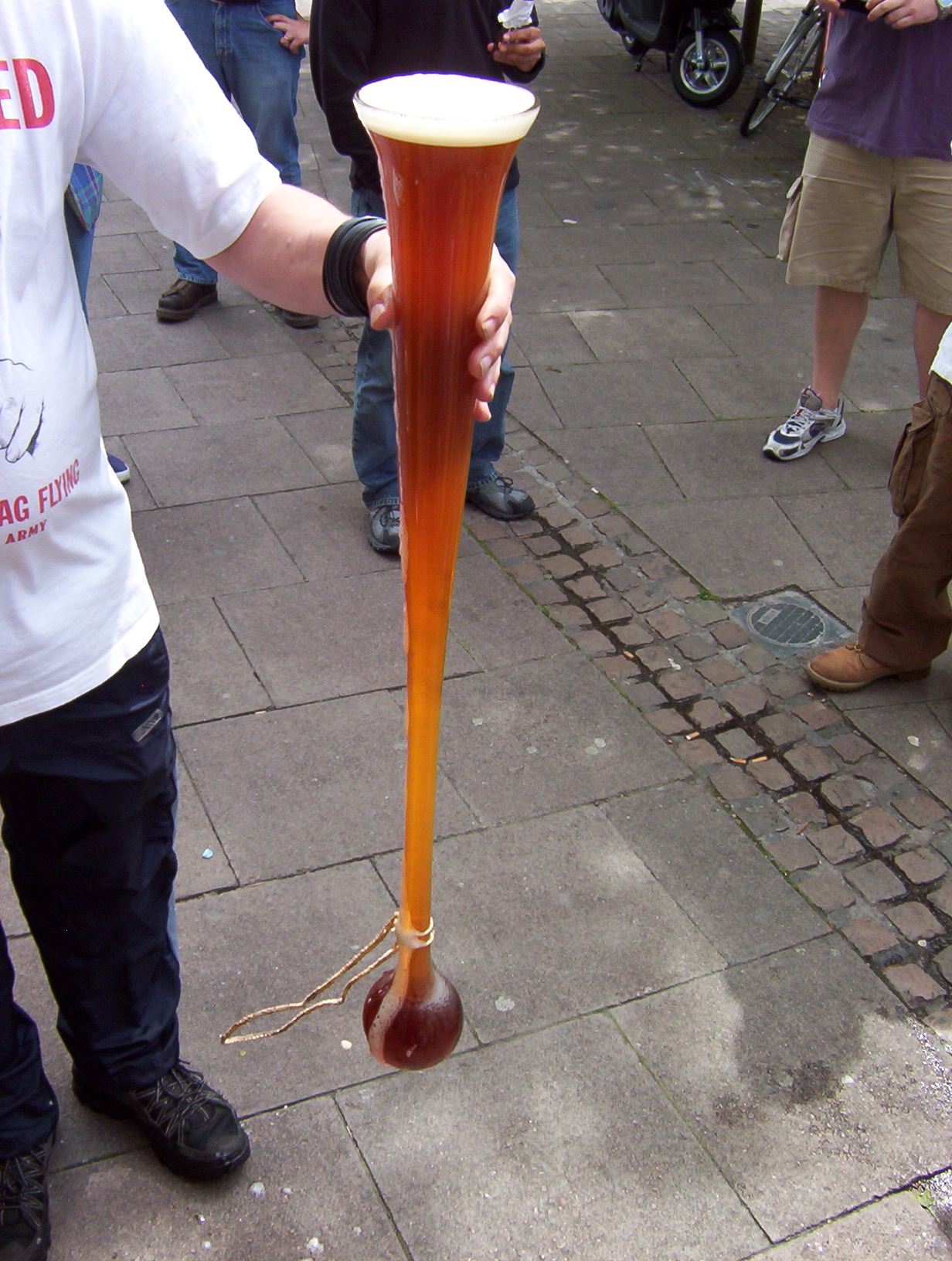
Image Source: upload.wikimedia.org
Deciphering the Yard of Beer
The term “yard of beer” immediately conjures an image of a very long glass. This isn’t just a regular pint glass stretched out; it’s a specially designed piece of glassware. The defining characteristic is its height, traditionally one yard. This elongated form allows for a significant volume of beer, but the narrow diameter means it often requires a specialized drinking technique, sometimes involving a hole near the bottom that must be plugged with a finger or a coin.
What is a Yard of Beer?
Simply put, a yard of beer is a measure of beer served in a tall, yard-long glass. Its primary purpose is to be a conversation starter and a generous serving for dedicated beer lovers. The glass itself is a focal point, and the act of drinking from it can be quite an experience.
The Volume Breakdown: How Much Beer Are We Talking About?
As mentioned, a standard yard of beer glass holds around 3 liters of beer. To put this into more familiar terms:
- Fluid Ounces: Approximately 101.44 US fluid ounces.
- US Pints: This is roughly 6.3 US pints (1 US pint = 16 fluid ounces).
- Milliliters: Exactly 3000 milliliters.
This volume is considerably larger than your average beer bottle or can. It’s a serving meant for sharing or for those who truly appreciate a long, uninterrupted drinking session.
Beyond the Yard: Exploring Beer Keg Volumes
While the yard of beer is a novelty, understanding standard beer container sizes is crucial for anyone involved in brewing, serving, or enjoying beer in larger quantities. Kegs are the workhorses of the beer industry, and their volumes can vary significantly.
Beer Keg Volumes: The Standard Sizes
Kegs, also known as casks or barrels (though technically different, the terms are often used interchangeably in casual conversation), come in various standard sizes. These sizes are important for breweries, bars, and even homebrewers.
Standard Keg Sizes
The most common keg sizes are:
-
Half Barrel (Full Size Keg): This is the most prevalent keg size in the US.
- Gallons in a keg: 15.5 US gallons.
- Liters in a keg: Approximately 58.67 liters.
- How many ounces in a keg: 1984 US fluid ounces.
- Number of 12oz servings: About 165 servings.
-
Quarter Barrel (Pony Keg): Half the size of a half barrel.
- Gallons in a keg: 7.75 US gallons.
- Liters in a keg: Approximately 29.33 liters.
- How many ounces in a keg: 992 US fluid ounces.
- Number of 12oz servings: About 82 servings.
-
Sixth Barrel: A more recent, increasingly popular size, especially for craft breweries.
- Gallons in a keg: 5.16 US gallons.
- Liters in a keg: Approximately 19.54 liters.
- How many ounces in a keg: 661 US fluid ounces.
- Number of 12oz servings: About 55 servings.
-
Cornelius Keg (Corny Keg): Popular with homebrewers.
- Common sizes: 5 US gallons (18.93 liters).
- How many ounces in a keg: 640 US fluid ounces.
- Number of 12oz servings: About 53 servings.
Beer barrel size: Clarifying the Terminology
The term “barrel” in the context of beer can be confusing because it has multiple meanings.
- US Beer Barrel: Historically, a US beer barrel was defined as 31.5 gallons. However, this is rarely the size of a keg used today.
- Brewers’ Barrel: A barrel in brewing can also refer to the capacity of the brewery’s brewhouse, meaning the amount of beer brewed in a single batch.
- Keg Sizes: As listed above, modern kegs have standardized capacities that are generally smaller than the historical beer barrel.
How much beer in a keg? A Comparative Look
To help visualize the differences, let’s compare the volumes of common kegs and relate them back to our yard of beer.
Keg Capacity Chart
| Keg Type | Gallons (US) | Liters (approx.) | Fluid Ounces (US) | Approx. 12oz Servings |
|---|---|---|---|---|
| Yard of Beer | ~0.79 | 3 | ~101.44 | ~8.4 (at 12oz) |
| Sixth Barrel | 5.16 | 19.54 | 661 | 55 |
| Cornelius Keg | 5 | 18.93 | 640 | 53 |
| Quarter Barrel | 7.75 | 29.33 | 992 | 82 |
| Half Barrel | 15.5 | 58.67 | 1984 | 165 |
As you can see, a yard of beer holds a significant amount of beer, but it’s still considerably less than even a sixth barrel keg. It’s a generous single serving, not a party keg.
Beer Volume Conversions: The Math Behind the Measures
Navigating beer volumes often requires understanding various units of measurement. Here are some key beer volume conversions that can help you quantify your beer:
Key Beer Volume Conversions
- 1 US Gallon = 128 US Fluid Ounces
- 1 US Gallon = 3.785 Liters
- 1 Liter = 33.814 US Fluid Ounces
- 1 US Pint = 16 US Fluid Ounces
- 1 US Quart = 32 US Fluid Ounces = 2 US Pints = 0.946 Liters
Let’s use these to confirm the yard of beer’s volume:
- A yard of beer glass is approximately 3 liters.
- 3 liters * 33.814 fl oz/liter = 101.442 US fluid ounces.
And for a half-barrel keg:
- 15.5 US gallons * 128 fl oz/gallon = 1984 US fluid ounces.
These conversions highlight the scale of different beer servings. A yard of beer is a substantial personal indulgence, while a half-barrel keg is designed to serve a crowd.
Fathoming Beer Consumption Patterns
The concept of a yard of beer also touches upon how we consume beer. Is it about quantity, or is it about the experience?
The Experience of a Yard
Drinking a yard of beer is often more about the spectacle and the sustained enjoyment of a single type of beer. It’s not typically a drink you chug; rather, it’s a leisurely experience. The challenge and novelty of the glass contribute to its appeal at events or in specific bars.
Comparing Consumption: Yard vs. Keg
- Yard of Beer: A single, large serving intended for prolonged enjoyment. It’s a novelty item.
- Keg: A bulk container meant for dispensing multiple servings over an event or period. It’s a practical solution for parties and commercial establishments.
For instance, if you have a party of 10 people who each want to drink about 3 pints (48 oz) of beer, you’d need about 480 oz of beer. A quarter barrel keg (992 oz) would be sufficient, while a yard of beer (101.44 oz) would only provide a small amount for each person.
Frequently Asked Questions About Beer Volumes
To further clarify common queries, here are some frequently asked questions regarding beer volumes and serving sizes.
FAQ: Your Burning Beer Volume Questions Answered
-
Q: How many ounces are in a keg?
- A: The number of ounces in a keg depends on the keg size. A standard half-barrel keg (15.5 gallons) contains 1984 US fluid ounces. A sixth barrel (5.16 gallons) has 661 US fluid ounces.
-
Q: What are the standard keg sizes?
- A: The most common standard keg sizes in the US are the Half Barrel (15.5 gallons), Quarter Barrel (7.75 gallons), and Sixth Barrel (5.16 gallons). Homebrewers also frequently use Cornelius kegs, typically 5 gallons.
-
Q: How much beer is in a yard of beer glass?
- A: A yard of beer glass typically holds about 3 liters, which is approximately 101.44 US fluid ounces or about 6.3 US pints.
-
Q: Are there different types of kegs?
- A: Yes, while the term “keg” is often used broadly, specific types like half barrels, quarter barrels, sixth barrels, and Cornelius kegs have distinct volumes and common uses.
-
Q: Can I buy beer in a yard-long glass at a store?
- A: Yard of beer glasses are typically sold as novelty glassware or served in bars. You usually purchase the beer separately to fill it.
-
Q: How do beer volumes in the US compare to those in Europe?
- A: European beer volumes often use the metric system (liters). While a 3-liter yard of beer is metric, many European countries also use metric keg sizes like 50-liter kegs, which are equivalent to about 13.2 US gallons.
-
Q: What is a beer barrel size historically?
- A: Historically, a US beer barrel was defined as 31.5 gallons. However, this is not the size of modern kegs commonly used for serving.
-
Q: How do I convert liters of beer to gallons?
- A: To convert liters to US gallons, multiply the number of liters by approximately 0.264. For example, 3 liters * 0.264 = 0.792 US gallons.
-
Q: If I have a 5-gallon keg, how many 12-ounce beers can I get?
- A: A 5-gallon keg has 640 fluid ounces. Dividing 640 ounces by 12 ounces per serving gives you approximately 53 servings.
-
Q: What’s the best way to serve beer from a yard glass?
- A: Due to the volume and design, it’s best to use a tap system or carefully pour from a pitcher. If drinking directly, be mindful of the central bulb and any holes designed for faster drinking, often requiring a stopper.
Concluding Thoughts on Beer Volumes
Whether you’re marveling at the sheer height of a yard of beer or calculating the capacity of a party keg, understanding beer volumes is key to appreciating the diverse ways beer is served and enjoyed. A yard of beer, holding around 3 liters or 101.44 fluid ounces, is a impressive individual serving, a testament to the celebratory nature of beer. Meanwhile, standard kegs like the half-barrel provide the robust capacity needed for larger gatherings, holding 15.5 gallons or 1984 fluid ounces. By familiarizing yourself with beer volume conversions and standard sizes, you can better navigate the world of beer, from your local pub to your own home brewing adventures.