
So, how much does 1 yard of limestone weigh? A cubic yard of limestone typically weighs between 2,200 to 2,500 pounds. This weight can vary depending on the type of limestone, its size, and how it’s processed.
If you’re planning a project that involves moving or ordering limestone, knowing its weight is crucial. Whether you’re building a garden path, a patio, or a retaining wall, this information will help you order the right amount of material and ensure your project stays on budget. Let’s dive deeper into the factors that affect limestone’s weight and explore what you need to know.
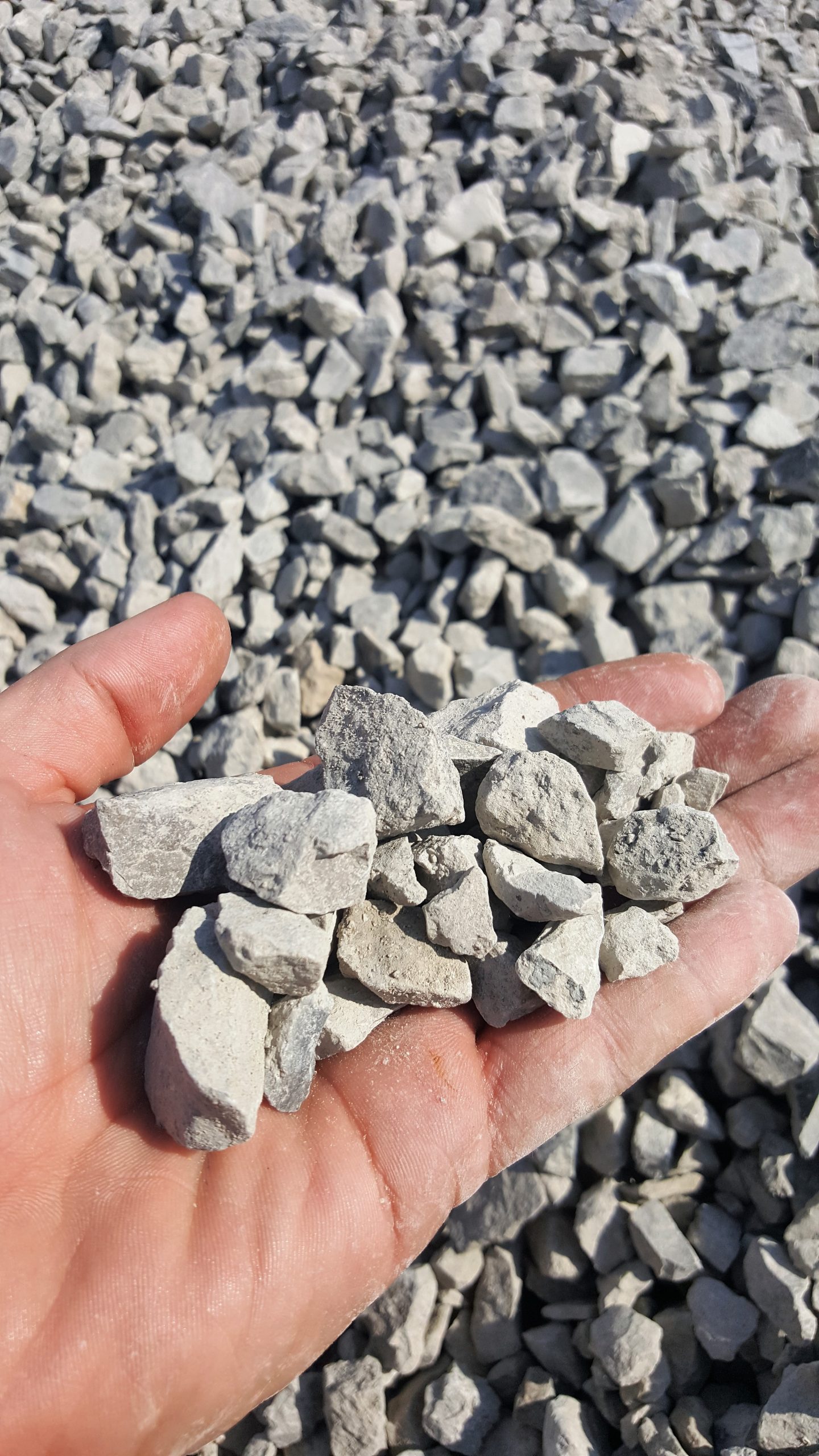
Image Source: www.birchtreebarkandstone.com
The Weight of Limestone: A Closer Look
When we talk about the weight of limestone, we’re really talking about its bulk density of limestone. This measurement tells us how much a certain volume of a material weighs, including any air pockets or spaces between the individual pieces. For limestone, this is important because it’s often sold in a loose, crushed form rather than solid blocks.
Limestone density is a key factor. Density is a measure of mass per unit of volume. Denser materials weigh more for the same amount of space. Limestone itself is a relatively dense rock, but the way it’s processed and the presence of voids will influence the final weight of a cubic yard.
Fathoming Limestone Weight Per Cubic Yard
The limestone weight per cubic yard isn’t a single, fixed number. Several factors contribute to the variation you’ll find. Think of it like this: a bag of feathers and a bag of rocks, both the same size, will weigh very different amounts. The same principle applies to limestone.
Here are the primary influences on how much a cubic yard of limestone weighs:
- Type of Limestone: Limestone isn’t all the same. Different geological formations can have slightly different compositions and therefore densities.
- Processing and Size: Is it a large limestone rock, or finely crushed limestone? The smaller the pieces, the more they can pack together, but also the more air can be trapped.
- Moisture Content: Limestone, like many aggregates, can absorb water. Wet limestone will be heavier than dry limestone.
- Compaction: How tightly the limestone is packed into the cubic yard will also affect its weight.
How Much Does a Cubic Yard of Limestone Weigh? The Breakdown
To give you a clearer picture, let’s break down the average weight of limestone in a cubic yard. As mentioned, the general range is 2,200 to 2,500 pounds. This is a good rule of thumb for most common landscaping and construction applications.
Here’s a more detailed look at why this range exists:
Specific Gravity and Density
The specific gravity of limestone typically ranges from 2.5 to 2.7. Specific gravity is the ratio of the density of a substance to the density of a reference substance, usually water. Water has a density of 62.4 pounds per cubic foot.
- If limestone has a specific gravity of 2.6, its density would be approximately 2.6 x 62.4 pounds per cubic foot = 162.24 pounds per cubic foot.
- To convert this to cubic yards, we need to know that there are 27 cubic feet in 1 cubic yard (3 feet x 3 feet x 3 feet = 27 cubic feet).
- So, a solid cubic foot of limestone would weigh roughly 162.24 pounds.
- Therefore, a solid cubic yard of limestone would weigh about 162.24 pounds/cubic foot * 27 cubic feet/cubic yard = 4,380.48 pounds.
However, we rarely deal with solid blocks of limestone when ordering for projects. We typically use crushed limestone weight.
Crushed Limestone: The Key Player
When you order a cubic yard of limestone for your driveway, garden bed, or pathway, you’re usually getting crushed limestone. This material is broken down into smaller pieces, and this process introduces air pockets. This is why the bulk density of limestone is significantly lower than its solid density.
- Crushed Limestone: This is the most common form. Its weight can vary based on the size of the crush. Finer crushed limestone might pack more densely, while larger aggregate will have more air pockets. The range of 2,200 to 2,500 pounds per cubic yard is most applicable here.
- Limestone Gravel: This is similar to crushed limestone but often contains larger, more rounded pieces. The increased size of the individual pieces can lead to more void space, potentially shifting the weight slightly. It generally falls within the same 2,200-2,500 lb range.
- Limestone Rock: If you’re talking about larger, natural limestone rocks, their weight would be closer to the solid density calculation, but it’s impractical to measure a cubic yard of them. You’d be looking at a higher weight per cubic yard due to less air space, but this isn’t typical for landscaping orders.
Deciphering Limestone Tonnage Per Yard
Often, materials like limestone are sold by the ton. Knowing the limestone tonnage per yard is essential for purchasing.
- 1 ton = 2,000 pounds.
- If a cubic yard of limestone weighs 2,300 pounds, then the tonnage per yard is 2,300 lbs / 2,000 lbs/ton = 1.15 tons.
- So, a cubic yard of limestone weighs approximately 1.0 to 1.25 tons.
This conversion is vital for contractors and homeowners alike, as pricing and delivery fees are often based on weight.
Factors Influencing Weight in Detail
Let’s delve deeper into the specifics that affect weight of limestone by volume.
1. Type of Limestone
Limestone is a sedimentary rock composed primarily of calcium carbonate (CaCO₃). However, impurities and variations in its formation can lead to different types.
- Pure Limestone: Denser and heavier.
- Dolomitic Limestone (Dolomite): Contains magnesium carbonate in addition to calcium carbonate. Its density can be slightly different.
- Shell Limestone (Coquina): Composed of shell fragments, which can create more void space.
While these variations exist, for most common landscaping and construction purposes, the distinction might not significantly alter the average weight per cubic yard unless you’re dealing with a very specific geological sample.
2. Crushing and Sizing
The process of crushing limestone into aggregate for construction or landscaping is critical.
- Crushed Stone (e.g., ¾ inch minus): This is very common. The crushing process creates angular pieces that interlock reasonably well, but there will always be air voids. The size distribution of the crushed material plays a role. A mix with a wide range of sizes might pack tighter than a uniform size.
- Screenings (e.g., #57 stone, screenings): These are finer materials. Limestone screenings are essentially the dust and very small particles created during crushing. They tend to pack more densely than larger aggregate, potentially leading to a slightly higher weight per cubic yard.
- Rip Rap/Boulders: Larger pieces of limestone will have significantly more air space between them when filling a cubic yard. Their weight per cubic yard would be lower than that of crushed limestone, but this is not a typical material ordered by the cubic yard in the same context as crushed stone.
3. Moisture Content
This is a significant, often overlooked, factor. Limestone is porous.
- Dry Limestone: Will be at the lower end of the weight spectrum.
- Wet Limestone: Can absorb a considerable amount of water. Imagine a pile of damp sand versus dry sand; the damp sand feels heavier because of the water it holds. This can add a substantial amount of weight to a cubic yard of limestone, potentially increasing it by 10-20% or more depending on how saturated it is.
- When ordering, it’s best to assume a dry or slightly damp state for estimation purposes, but be aware that delivery on a rainy day could mean you’re hauling more water than you bargained for!
4. Compaction
The way limestone is loaded and transported can affect its density.
- Loose Load: When dumped loosely into a truck or trailer, there will be more air pockets.
- Vibrated or Compacted Load: While not typically done for initial delivery, if you were to compact a cubic yard of limestone yourself, you could significantly increase its density and therefore its weight. For standard orders, the material is usually delivered in a reasonably loose state.
Practical Applications: How This Weight Affects Your Project
Knowing the limestone weight per cubic yard is not just academic. It has real-world implications for your projects:
Estimating Material Needs
- Driveways: A typical driveway might require several cubic yards of crushed limestone for its base. Knowing the weight helps you estimate delivery costs and the total volume needed.
- Pathways and Patios: Similar to driveways, but often with less depth.
- Garden Beds: Used as a decorative mulch or for drainage.
- Retaining Walls: Limestone blocks or crushed limestone fill can be used.
Ordering and Delivery
- Truck Capacity: Most dump trucks have a maximum payload capacity in tons. Knowing that a cubic yard of limestone weighs about 1.1 to 1.25 tons helps you determine how many cubic yards you can haul in a single load.
- Delivery Costs: Suppliers often charge for delivery based on distance and the number of trips. Ordering the correct amount upfront can save on multiple delivery fees.
- Budgeting: Understanding the weight helps you get accurate quotes from suppliers, as pricing is often per ton or per cubic yard with an implicit weight.
Site Preparation
- Tractor and Trailer Weight Limits: If you’re hauling it yourself with a trailer, you need to know the Gross Vehicle Weight Rating (GVWR) of your vehicle and trailer to avoid overloading. A common landscaping trailer might hold 1-2 cubic yards comfortably, depending on its capacity. A full cubic yard can weigh over a ton, which is a significant load for many small trucks and trailers.
Calculating Your Needs: A Simple Guide
To estimate how much limestone you need, follow these steps:
-
Determine the Volume:
- For rectangular areas (like driveways or patios): Length (ft) x Width (ft) x Depth (ft) = Cubic Feet.
- Convert cubic feet to cubic yards: Cubic Feet / 27 = Cubic Yards.
- Example: A patio is 10 ft x 12 ft and you want a 4-inch base.
- Depth in feet: 4 inches / 12 inches/foot = 0.333 feet.
- Volume in cubic feet: 10 ft x 12 ft x 0.333 ft = 39.96 cubic feet.
- Volume in cubic yards: 39.96 cubic feet / 27 cubic feet/cubic yard = 1.48 cubic yards.
-
Estimate the Weight:
- Multiply the cubic yards needed by the estimated weight per cubic yard.
- Example (continuing from above): You need 1.48 cubic yards, and you estimate each yard weighs 2,300 lbs.
- Total weight: 1.48 cubic yards * 2,300 lbs/cubic yard = 3,304 pounds.
- To convert to tons: 3,304 lbs / 2,000 lbs/ton = 1.65 tons.
-
Add a Buffer: It’s always wise to order about 10% extra to account for settling, uneven spreading, and waste.
- Example: 1.48 cubic yards + 10% = 1.63 cubic yards. It’s better to round up to 1.75 or 2 cubic yards to be safe.
Frequently Asked Questions (FAQ)
Here are some common questions people have about limestone weight:
- Q: Does the color of limestone affect its weight?
- A: No, the color of limestone does not directly affect its weight. Weight is determined by density and volume, which are influenced by the rock’s composition and processing, not its color.
- Q: Is limestone gravel heavier than sand?
- A: Generally, yes. Dry sand has a bulk density of around 100 pounds per cubic foot (or 2,700 pounds per cubic yard), while limestone is denser, typically 110-130 pounds per cubic foot (or 2,970-3,510 pounds per cubic foot). However, when considering crushed limestone aggregate, the weight per cubic yard (2,200-2,500 lbs) is similar or slightly less than densely packed sand due to air pockets.
- Q: How much does a bag of limestone weigh?
- A: Bags of limestone vary greatly in size. Common bag sizes might be 0.5 cubic feet. If a cubic foot weighs around 120 lbs (average for compacted crushed stone), a 0.5 cubic foot bag would weigh approximately 60 pounds. Always check the bag for specific weight information.
- Q: Can I order limestone by weight or volume?
- A: Most suppliers offer limestone by the cubic yard or by the ton. It’s best to clarify with your supplier which is more economical or if they have a preference. For large quantities, pricing by the ton is common.
- Q: What is the difference between limestone density and bulk density?
- A: Limestone density refers to the weight of the solid rock itself, without any air spaces. Bulk density, often referred to as the bulk density of limestone, includes the weight of the material plus the weight of the air trapped between the pieces, which is what you typically deal with when ordering loose aggregate.
Conclusion: Knowing Your Weight is Power
When you’re planning a project, asking “how much does a cubic yard of limestone weigh?” is a fundamental question. The answer, generally between 2,200 to 2,500 pounds, allows you to accurately estimate your material needs, manage your budget, and ensure your project is successful. By considering the type of limestone, its processing, and moisture content, you can get an even more precise estimate for your specific application. Armed with this knowledge, you can confidently order your materials and get started on building your vision.