
A cubic yard of material will cover approximately 100 square feet at a depth of 3 inches, but this is a general guideline. The actual square footage covered depends heavily on the desired depth and the specific type of material being used, as different materials have varying densities and consistencies. This guide will help you decipher the relationship between volume and area for bulk materials.
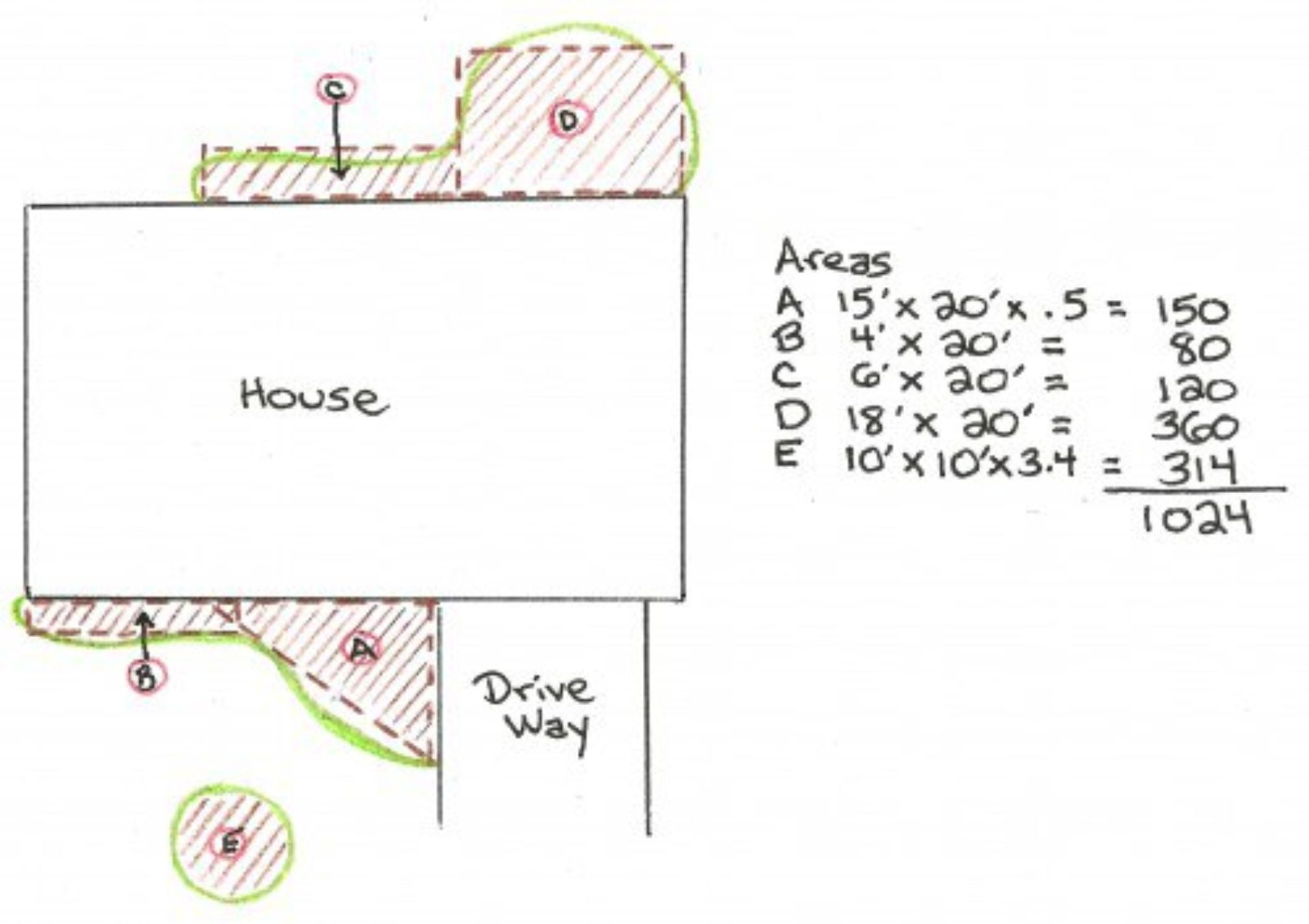
Image Source: klsupplies.com
Deciphering Volume and Area: The Cubic Yard to Square Feet Conversion
When you purchase bulk materials like soil, gravel, mulch, or sand, they are typically measured in cubic yards. This measurement refers to volume – the amount of space a material occupies. However, when you’re planning a project, what you often need to know is how much area that volume will cover at a specific depth. This is where the conversion from volume to area becomes crucial for estimating material coverage.
A key concept to grasp is that a cubic yard represents three dimensions: length, width, and depth. To convert this to square feet, which is a two-dimensional measurement (length and width), you need to establish a consistent depth.
The Basic Calculation: Volume to Area Conversion
Let’s break down the fundamental cubic yard to square feet conversion.
- One cubic yard is equal to 3 feet x 3 feet x 3 feet.
- In terms of square feet, this volume occupies an area of 9 square feet if the depth were 3 feet.
However, most landscaping and construction projects don’t require a 3-foot depth. Common depths are much shallower, such as 2 inches for mulch, 4 inches for a gravel base, or 6 inches for concrete. This is where the calculation gets more practical.
To find out how many square feet a cubic yard will cover, we need to consider the desired depth. The formula to remember is:
Area (in sq ft) = Volume (in cubic ft) / Depth (in ft)
Since we are starting with cubic yards, the first step is to convert cubic yards to cubic feet.
- 1 cubic yard = 27 cubic feet (because 1 yard = 3 feet, so 3 ft x 3 ft x 3 ft = 27 cubic feet).
Now, let’s think about a standard project depth, say 3 inches.
- First, convert inches to feet: 3 inches / 12 inches/foot = 0.25 feet.
Using our formula:
- Area = 27 cubic feet / 0.25 feet
- Area = 108 square feet
So, one cubic yard will cover approximately 108 square feet at a depth of 3 inches. This is a more precise number than the initial general guideline.
Fathoming Landscaping Material Coverage
Landscaping material coverage is a common application for this type of calculation. Whether you’re laying down mulch, gravel, or soil, knowing the coverage helps prevent over- or under-ordering.
Mulch Coverage Per Cubic Yard
Mulch is a popular choice for garden beds and around trees. The recommended depth for mulch is typically 2 to 4 inches.
-
For a 2-inch depth:
- Depth in feet = 2 inches / 12 inches/foot = 0.167 feet
- Area = 27 cubic feet / 0.167 feet = 162 square feet per cubic yard.
-
For a 3-inch depth:
- Depth in feet = 3 inches / 12 inches/foot = 0.25 feet
- Area = 27 cubic feet / 0.25 feet = 108 square feet per cubic yard.
-
For a 4-inch depth:
- Depth in feet = 4 inches / 12 inches/foot = 0.333 feet
- Area = 27 cubic feet / 0.333 feet = 81 square feet per cubic yard.
This shows that the shallower you spread the mulch, the more area one cubic yard will cover.
Gravel Coverage Per Cubic Yard
Gravel is used for various purposes, from driveways and pathways to decorative ground cover. The required depth for gravel depends on its intended use. For pathways or decorative layers, 2-3 inches might suffice. For a base under a patio or driveway, 4-6 inches or more could be necessary.
-
How much will a yard of gravel cover? This question hinges on the depth.
-
For a 2-inch depth:
- Area = 162 square feet per cubic yard.
-
For a 3-inch depth:
- Area = 108 square feet per cubic yard.
-
For a 4-inch depth:
- Area = 81 square feet per cubic yard.
-
For a 6-inch depth:
- Depth in feet = 6 inches / 12 inches/foot = 0.5 feet
- Area = 27 cubic feet / 0.5 feet = 54 square feet per cubic yard.
It’s important to note that gravel can also settle and compact, especially under traffic. So, it’s often wise to order slightly more than your initial square footage calculation for bulk materials suggests.
Soil and Compost Coverage
When amending garden soil or creating new beds, the depth can vary. A common practice is to add a few inches of compost or topsoil.
-
For a 3-inch depth of topsoil:
- Area = 108 square feet per cubic yard.
-
For a 4-inch depth of topsoil:
- Area = 81 square feet per cubic yard.
When dealing with soil, consider that it can compact significantly, especially if it’s a finer material. This might mean you need slightly more material than your initial calculations suggest to achieve the desired settled depth.
Comprehending Paving Coverage
Paving coverage per cubic yard typically refers to the base layers needed before the final paving surface is applied, or sometimes for small-scale paving projects using loose materials like crushed stone.
Paving Base Material (e.g., Crusher Run Gravel)
For driveways, patios, or pathways, a compacted base layer is essential for stability and drainage. This base layer is often made of crushed stone or a mix of stone and sand. Depths can range from 4 to 8 inches or more.
-
For a 4-inch base:
- Area = 81 square feet per cubic yard.
-
For a 6-inch base:
- Area = 54 square feet per cubic yard.
-
For an 8-inch base:
- Depth in feet = 8 inches / 12 inches/foot = 0.667 feet
- Area = 27 cubic feet / 0.667 feet = 40.5 square feet per cubic yard.
Remember to account for compaction. Most base materials will compact by about 10-20% after rolling. This means you should order about 10-20% more material than your calculated coverage to achieve the final desired depth after compaction.
Fathoming Concrete Volume to Area Calculations
Concrete volume to area calculations are a bit different. Concrete is typically ordered by the cubic yard, but it’s poured into forms to create a specific area at a certain thickness.
When ordering concrete for a project like a sidewalk, patio, or small foundation, you’ll specify the area and the desired thickness.
Let’s say you need to pour a patio that is 10 feet by 10 feet and 4 inches thick.
- Calculate the area: 10 ft x 10 ft = 100 square feet.
- Convert the depth to feet: 4 inches / 12 inches/foot = 0.333 feet.
- Calculate the volume in cubic feet: Area x Depth = 100 sq ft x 0.333 ft = 33.3 cubic feet.
- Convert cubic feet to cubic yards: 33.3 cubic feet / 27 cubic feet/cubic yard = 1.23 cubic yards.
So, for a 10×10 foot patio that’s 4 inches thick, you would need approximately 1.25 cubic yards of concrete (it’s always good to round up to the nearest quarter or half cubic yard for concrete orders).
The question “How many square feet will a cubic yard cover?” in the context of concrete is less about a loose material spreading and more about how much area a set volume will fill at a specific thickness.
- If you have 1 cubic yard of concrete (27 cubic feet), and you want to pour it at a 4-inch (0.333 ft) thickness:
- Area = Volume / Depth = 27 cubic feet / 0.333 ft = 81 square feet.
This reinforces the earlier calculation for gravel at a 4-inch depth, as the principle of volume to area conversion is the same.
Factors Influencing Actual Coverage
While the calculations provide a solid baseline, several factors can influence how much area your bulk material actually covers:
Desired Depth
This is the most significant factor. As shown, a shallower depth means a larger area covered per cubic yard.
Material Compaction
- Gravel and Stone: These materials tend to compact under pressure, especially from foot traffic or vehicles. This means the initial loose volume will occupy less space once settled.
- Soil: Organic soils and fine-grained soils can also compact. Introducing amendments like compost might initially increase volume but can still settle over time.
- Mulch: Mulch, especially wood chips, can break down over time, reducing its effective depth and coverage.
Material Density and Type
While we’ve used standard cubic foot to cubic yard conversions, the actual weight of a cubic yard can vary. This isn’t directly relevant to square footage coverage at a set depth, but it’s a factor if you’re comparing materials by weight.
Uneven Spreading
In practical application, achieving a perfectly uniform depth across an entire area can be challenging. Some areas might end up slightly thicker, while others might be thinner. This can lead to using more material than theoretically calculated.
Site Preparation
A well-prepared, level sub-base will allow for more uniform spreading and less wasted material compared to an uneven or sloped surface.
Practical Tips for Estimating Material Coverage
When you’re doing estimating material coverage, it’s always better to be slightly over than under. Running out of material mid-project can be costly and time-consuming.
Measure Accurately
Before you buy, measure your area precisely. Use a tape measure and sketch out the dimensions.
Determine the Required Depth
Research the best depth for your specific material and project. If unsure, err on the side of slightly deeper for structural applications (like gravel bases) and shallower for decorative ones (like some mulches).
Use a Consistent Unit of Measurement
Ensure all your measurements (length, width, depth) are in the same unit (feet or inches) before you start calculating.
The Coverage Chart is Your Friend
Refer to charts or online calculators provided by material suppliers. They often have specific mulch coverage per cubic yard or gravel coverage per cubic yard data based on their products.
Add a Buffer
For materials that compact or are difficult to spread evenly, add a 10-15% buffer to your calculated quantity.
Putting it into Practice: Sample Project Scenarios
Let’s illustrate with a couple of common scenarios.
Scenario 1: Mulching a Garden Bed
You have a rectangular garden bed that measures 15 feet long and 5 feet wide. You want to apply a 3-inch layer of mulch.
- Area: 15 ft x 5 ft = 75 square feet.
- Coverage at 3 inches: We know 1 cubic yard covers 108 sq ft at 3 inches.
- Material needed: Since your area (75 sq ft) is less than the coverage of one cubic yard (108 sq ft) at the desired depth, you will need less than one cubic yard.
- Amount needed = (Desired Area / Coverage per Cubic Yard) x 1 Cubic Yard
- Amount needed = (75 sq ft / 108 sq ft) x 1 cubic yard = 0.69 cubic yards.
In practice, you’d likely order 0.75 cubic yards or perhaps a full cubic yard to be safe and account for any settling or unevenness.
Scenario 2: Creating a Gravel Pathway
You’re building a pathway that is 20 feet long and 3 feet wide. You want a 4-inch layer of gravel for the base.
- Area: 20 ft x 3 ft = 60 square feet.
- Coverage at 4 inches: We know 1 cubic yard covers 81 sq ft at 4 inches.
- Material needed:
- Amount needed = (60 sq ft / 81 sq ft) x 1 cubic yard = 0.74 cubic yards.
For a gravel base that will be compacted, it’s wise to add a buffer. Ordering 0.85 to 1 cubic yard would be recommended.
Frequently Asked Questions (FAQ)
Q1: What is the standard depth for gravel?
The standard depth for gravel varies greatly depending on its use. For decorative pathways, 2-3 inches is common. For driveways or patio bases, 4-6 inches is a more typical requirement. Always check project-specific recommendations.
Q2: Can I use the same coverage rate for all types of mulch?
No. Different mulches have different densities and particle sizes. Finer mulches might spread slightly thinner, while coarser mulches might maintain their loft better. It’s best to check supplier recommendations for specific mulch types.
Q3: How do I calculate the square footage of an irregular shape?
For irregular shapes, break them down into simpler geometric forms (rectangles, triangles, circles) and calculate the area of each part. Then, sum these areas to get the total. Alternatively, use online tools or apps that can help measure areas from aerial photos or sketches.
Q4: Will the coverage of a cubic yard change if the material is wet?
The coverage of a cubic yard is based on its volume. While wet material might feel denser or heavier, its volumetric measurement (cubic yard) remains the same unless it compacts significantly. However, wet material can be harder to spread evenly, potentially affecting the final coverage.
Q5: Who is responsible for ensuring correct material quantities are ordered?
Ultimately, the homeowner or project manager is responsible for ensuring correct quantities are ordered. While suppliers can offer guidance, they rely on the customer’s measurements and project specifications. Always double-check your calculations.
By following these guidelines and performing careful measurements and calculations, you can confidently estimate how many square feet a cubic yard of material will cover for your next project.