
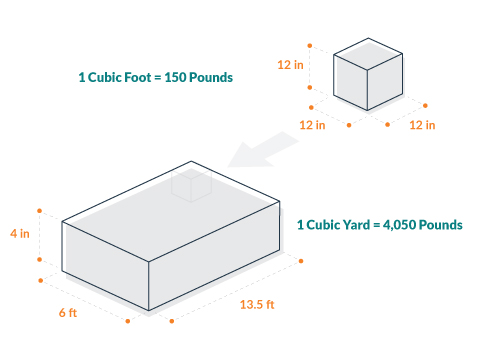
Image Source: www.dumpsters.com
How Many Pounds In A Yard Of Concrete: Your Guide
So, how many pounds in a yard of concrete? A typical cubic yard of concrete weighs around 4,050 pounds. This is a crucial piece of information for anyone planning a concrete project, from DIY enthusiasts to professional contractors. Knowing the concrete weight per cubic yard helps in ordering the right amount of material, calculating transportation needs, and ensuring structural integrity.
Deciphering the Weight of Concrete: More Than Just a Number
When you’re planning a construction or repair project that involves concrete, one of the most common questions that arises is, “How much does a yard of concrete weigh?” It’s not as simple as picking up a bag of concrete mix and weighing it. The weight of concrete yard is influenced by several factors, making it essential to grasp the basics of concrete density per yard. This guide will help you navigate the specifics, from the average concrete weight per cubic yard to how different mixes can affect the final poundage. We’ll explore the relationship between concrete volume to weight and provide practical insights to help you accurately estimate the estimated weight of concrete for your needs.
The Foundation of Concrete Weight: Density and Composition
The weight of concrete is primarily determined by its density. Density is a measure of mass per unit of volume. For concrete, this means how much a specific volume of concrete weighs. This density is not fixed; it can vary based on the ingredients used in the concrete mix.
Key Components and Their Impact on Weight
Concrete is a composite material made from cement, aggregates (sand and gravel), and water. Each of these components plays a role in the final weight.
- Cement: Portland cement is the binder that holds the concrete together. While it’s a powder, its density contributes significantly to the overall weight.
- Aggregates: These are the bulk of the concrete mix, typically making up 60-75% of the total volume. Aggregates can be fine (sand) or coarse (gravel or crushed stone). The type, size, and density of the aggregates have a substantial impact on the final concrete density per yard. Denser aggregates will result in heavier concrete.
- Water: Water is crucial for the chemical reaction (hydration) that hardens the cement. The amount of water used, known as the water-cement ratio, affects both the strength and the weight of the concrete. Too much water can lead to a weaker, less dense concrete, while too little can make it difficult to work with.
- Admixtures: These are chemicals added to the concrete mix to modify its properties. Some admixtures can slightly alter the weight, but their primary purpose is usually to improve workability, durability, or strength.
Calculating the Cubic Yard Concrete Weight: The Numbers Game
To determine how many pounds in a yard of concrete, we rely on established industry standards and calculations based on the average density of common concrete mixes.
What is a Cubic Yard?
Before diving into weights, let’s clarify what a cubic yard is. A cubic yard is a unit of volume in the imperial and US customary systems. It’s equivalent to a cube that measures 3 feet in length, 3 feet in width, and 3 feet in height (3′ x 3′ x 3′).
- Volume Conversion: 1 cubic yard = 27 cubic feet. This conversion is vital when you’re working with measurements in feet and need to translate them into cubic yards.
The Average Weight: A Benchmark
The most commonly cited figure for the weight of concrete yard is around 4,050 pounds. This is an average for standard, non-reinforced concrete with typical aggregate mixes.
- Why an Average? This number serves as a useful benchmark, but remember that actual weights can vary. If your project requires a specific type of concrete or has unique specifications, consulting with your concrete supplier is essential.
Breaking Down the Weight: A Closer Look
Let’s consider the typical composition of a cubic yard of concrete to see where the weight comes from.
| Component | Approximate Percentage of Volume | Estimated Weight Contribution (lbs) |
|---|---|---|
| Cement | 7-15% | 300 – 600 |
| Water | 14-21% | 560 – 840 |
| Aggregates | 60-75% | 2,600 – 3,000 |
| Air | 1-8% (Entrapped/Entrained) | Varies |
Note: These are approximate figures and can vary based on the specific mix design.
The largest portion of the weight comes from the aggregates. The density of the specific gravel or stone used will have the most significant impact on the overall cubic yard concrete weight.
Factors Influencing Concrete Weight: Beyond the Average
While 4,050 pounds per cubic yard is a good starting point, several factors can cause the concrete weight per cubic yard to fluctuate.
1. Aggregate Type and Density
- Dense Aggregates: Using dense aggregates like granite or basalt will result in heavier concrete. These stones have a higher specific gravity.
- Lighter Aggregates: Conversely, using lighter aggregates, such as expanded shale or pumice (used in lightweight concrete), will reduce the pound per yard concrete.
2. Water-Cement Ratio
- Higher Water Content: A higher water-cement ratio generally leads to a less dense concrete because water occupies space that could be filled by denser cement paste or aggregates. This can slightly decrease the weight of concrete yard.
- Lower Water Content: A lower water-cement ratio, while often resulting in stronger concrete, can also increase density due to better particle packing and less void space.
3. Air Entrainment
- Purpose of Air Entrainment: Air entrainment is the intentional introduction of tiny air bubbles into the concrete mix. This is primarily done to improve resistance to freeze-thaw cycles and de-icing salts.
- Impact on Weight: The inclusion of air bubbles, though tiny, does displace some of the denser material. Therefore, air-entrained concrete will be slightly lighter per cubic yard than non-air-entrained concrete of the same mix proportions. This is a common reason why the estimated weight of concrete might be lower than expected for certain applications like sidewalks and driveways.
4. Reinforcement
- Steel Reinforcement: If the concrete is reinforced with steel rebar, the steel itself adds significant weight. However, the weight of the steel is usually calculated separately when determining the total weight of a reinforced concrete structure. When discussing the weight of concrete yard in terms of the material itself, it typically refers to the unreinforced mix.
5. Curing Stage
- Initial Curing: Freshly mixed concrete is heavier than fully cured concrete. As concrete cures, some of the water evaporates, and chemical reactions continue to occur, which can subtly alter its density and weight over time. However, for practical project planning, the weight of fresh concrete is the relevant figure.
Practical Applications: Why Does This Weight Matter?
Knowing the concrete weight per cubic yard is not just an academic exercise; it has real-world implications for your projects.
1. Ordering Concrete
- Delivery Trucks: Concrete is delivered in trucks, and these trucks have weight limits. Knowing the weight of concrete helps in estimating how much concrete a truck can safely carry and how many loads you’ll need for your project.
- Accurate Quantities: Ordering too much or too little concrete can be costly and inconvenient. Accurate weight estimations help ensure you order the correct volume.
2. Structural Load Calculations
- Foundations and Slabs: For larger projects, engineers need to know the weight of the concrete to calculate the loads on foundations, walls, and other structural elements. The concrete density per yard is a critical input for these calculations.
- Bridge Decks and Beams: In civil engineering, the precise weight of concrete yard is essential for designing structures that can safely support the weight of the concrete itself, along with traffic loads or other forces.
3. Transportation and Handling
- Lifting Equipment: If you’re pouring concrete in a location that requires lifting it (e.g., upper floors of a building), knowing the weight of the volume you’re moving is crucial for selecting the appropriate lifting equipment (cranes, hoists). A yard of concrete pounds is a significant amount of material to move.
- Durability: Understanding the concrete weight per cubic yard can also indirectly relate to durability. Denser concrete is often stronger and more resistant to water penetration and wear.
From Bags to Yards: Connecting Small Batches to Bulk Orders
Many DIY projects start with bags of concrete mix. It’s useful to understand the relationship between the weight of a concrete bag and the weight of a cubic yard.
Typical Concrete Bag Weights
Concrete is commonly sold in bags of varying weights, such as 40 lb, 60 lb, and 80 lb bags. These bags contain a dry mix of cement, sand, and aggregate.
- Estimating Yardage from Bags: The yield of a bag of concrete (how much mixed concrete it produces) is listed on the packaging. For example, an 80 lb bag typically yields about 0.6 cubic feet of concrete.
- To convert cubic feet to cubic yards, divide by 27. So, 0.6 cubic feet / 27 cubic feet/yard = 0.022 cubic yards per 80 lb bag.
- To get 1 cubic yard, you would need approximately 1 / 0.022 = 45.45 bags.
- Weight Conversion: If you know the yield and the bag weight, you can estimate the weight of a cubic yard.
- For 80 lb bags yielding 0.6 cubic feet: 45.45 bags * 80 lbs/bag = 3636 lbs per cubic yard. This is lower than the average due to the dry mix and the fact that it hasn’t fully cured or compacted like ready-mix.
Factors Affecting Bag Yield
- Water Added: The amount of water you add to a bag of concrete mix will affect the final volume and, consequently, the overall weight per cubic yard when scaled up.
- Compaction: When concrete is poured in bulk, it naturally compacts more than dry mix from bags.
This calculation highlights why directly scaling up bag weights isn’t always perfectly accurate for predicting the estimated weight of concrete for a large pour. The concrete bag to yard weight conversion involves more variables than a simple multiplication.
Lightweight vs. Standard Concrete: A Weight Difference
For specialized applications, lightweight concrete is used. This is achieved by using lightweight aggregates.
Characteristics of Lightweight Concrete
- Reduced Density: Lightweight concrete can weigh significantly less, sometimes as low as 90-115 pounds per cubic foot, compared to standard concrete which is around 140-150 pounds per cubic foot.
- Applications: It’s often used in precast construction, roof decks, and in situations where reducing the overall weight of a structure is critical to minimize foundation requirements or increase load capacity.
Weight Comparison
- Standard Concrete: Approximately 4,050 lbs/cubic yard (or about 150 lbs/cubic foot).
- Lightweight Concrete: Can range from 2,700 lbs to 3,500 lbs per cubic yard (or about 100-130 lbs/cubic foot).
This shows a considerable difference in concrete density per yard and, therefore, the total pound per yard concrete.
Special Mixes and Their Weight Implications
Beyond lightweight concrete, other specialized mixes can also influence the weight of concrete yard.
High-Strength Concrete
- Composition: High-strength concrete often uses a lower water-cement ratio and may incorporate supplementary cementitious materials (SCMs) like fly ash or silica fume, along with carefully selected aggregates.
- Weight: While the focus is on strength, the density of the aggregates and the reduced void space due to a lower water-cement ratio can sometimes lead to slightly denser, and thus heavier, concrete per cubic yard compared to standard mixes. However, the primary goal is strength, not weight manipulation.
Fiber-Reinforced Concrete
- Fiber Types: Concrete can be reinforced with various fibers (steel, synthetic, natural) to improve toughness, crack resistance, and impact strength.
- Weight Impact: The addition of fibers typically adds only a small amount of weight to the concrete, often negligible when calculating the overall cubic yard concrete weight. The primary effect is on mechanical properties.
Calculating Your Concrete Needs: A Practical Approach
If you need to estimate the weight of concrete for a specific project, you can follow these steps:
1. Determine the Volume Needed
- Measurements: Measure the length, width, and depth of the area to be filled with concrete. Ensure all measurements are in the same units (e.g., feet).
- Volume Calculation: Multiply length x width x depth to get the volume in cubic feet.
- Convert to Cubic Yards: Divide the cubic feet by 27 to get the volume in cubic yards.
2. Use the Average Weight as a Starting Point
-
Estimate Total Weight: Multiply your calculated cubic yards by the average concrete weight per cubic yard (4,050 lbs).
-
Example: For a 4-inch thick slab that is 10 feet by 10 feet:
- Depth = 4 inches = 0.333 feet
- Volume = 10 ft x 10 ft x 0.333 ft = 33.3 cubic feet
- Volume in cubic yards = 33.3 cubic feet / 27 cubic feet/yard = 1.23 cubic yards
- Estimated weight = 1.23 cubic yards * 4,050 lbs/cubic yard = 4,981.5 pounds.
3. Consult Your Supplier for Specifics
- Mix Design: If you have a specific mix design or are using a specialty concrete, always ask your concrete supplier for their estimated concrete density per yard. They can provide the most accurate figures for the material they are supplying.
- Reinforcement: If your project includes significant steel reinforcement, remember that the steel adds weight. This is usually accounted for in structural engineering calculations rather than the base weight of concrete yard.
Frequently Asked Questions (FAQ)
Q1: What is the standard weight of a cubic yard of concrete?
A1: The standard weight of a cubic yard of concrete is approximately 4,050 pounds.
Q2: Does the type of aggregate affect the weight of concrete?
A2: Yes, the type and density of the aggregates used have a significant impact on the overall concrete density per yard. Denser aggregates will result in heavier concrete.
Q3: How much does a yard of concrete weigh if it has air entrainment?
A3: Air-entrained concrete is slightly lighter than non-air-entrained concrete because the air bubbles displace some of the denser material. The exact weight reduction depends on the percentage of air entrained.
Q4: Can I calculate the weight of concrete from a bag of mix?
A4: You can estimate the weight by knowing the yield of the bag and scaling it up, but this is less accurate than using standard concrete weight per cubic yard figures because bag yields are for dry mix and don’t account for the compaction of ready-mix concrete. The concrete bag to yard weight conversion can be misleading.
Q5: How does the water-cement ratio affect concrete weight?
A5: A higher water-cement ratio can lead to less dense concrete, slightly reducing its weight per cubic yard.
Q6: Why is it important to know the weight of concrete?
A6: Knowing the estimated weight of concrete is crucial for ordering materials, calculating transportation needs, and performing structural load calculations to ensure safety and stability.
Q7: What is the difference in weight between standard concrete and lightweight concrete per yard?
A7: Lightweight concrete can weigh between 2,700 to 3,500 pounds per cubic yard, whereas standard concrete weighs around 4,050 pounds per cubic yard.
Q8: Is the weight of reinforced concrete included in the standard weight per cubic yard?
A8: Typically, the concrete weight per cubic yard refers to the unreinforced concrete mix. The weight of steel reinforcement is usually calculated and added separately for structural analysis.
Q9: How do I convert cubic feet of concrete to cubic yards?
A9: To convert cubic feet to cubic yards, divide the total cubic feet by 27, as there are 27 cubic feet in one cubic yard.
Q10: What is the typical density of concrete per cubic foot?
A10: The typical density of standard concrete is around 140-150 pounds per cubic foot.