
If you’re asking “how many lbs in a yard of gravel?”, the answer is it typically ranges from 2,000 to 2,500 pounds per cubic yard, but this can vary significantly based on the type of gravel.
When you’re planning a landscaping project, a construction job, or even just trying to figure out how much material to order for a driveway, you’ll inevitably run into the question: “How many pounds of gravel are in a cubic yard?” This isn’t a simple question with a single answer because gravel isn’t a uniform substance. Its weight per cubic yard depends on several factors, primarily its composition and moisture content. Knowing this conversion is crucial for accurate material estimation, budgeting, and avoiding over or under-ordering. This guide will break down the science behind gravel weight, help you calculate your needs, and provide practical advice for your projects.
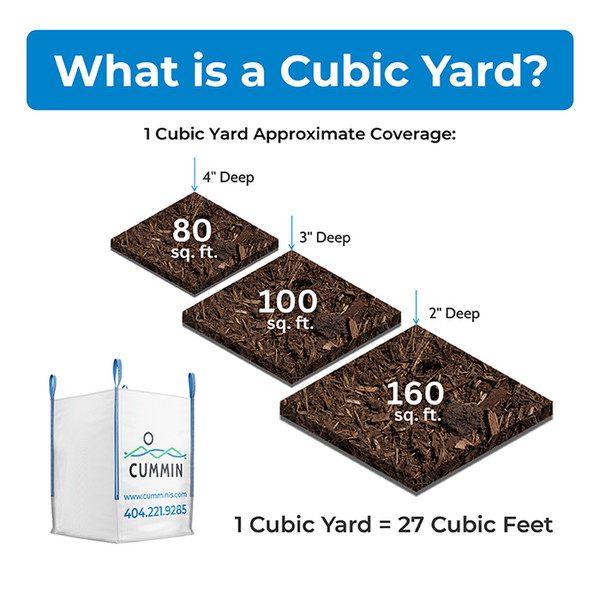
Image Source: www.cumminlandscapesupply.com
Deciphering Gravel Density: What Makes Gravel Weigh Differently?
The fundamental reason behind the variability in pounds per cubic yard gravel is density. Density is a measure of how much mass is contained in a given volume. For gravel, this translates to how much it weighs in a specific space, like a cubic yard. Several elements contribute to a gravel’s density:
- Type of Rock: Different types of rocks have different intrinsic densities. For instance, granite is denser than limestone. This means that a cubic yard of gravel made from granite will weigh more than a cubic yard of gravel made from limestone.
- Size and Shape of the Stones: Smaller, angular stones tend to pack more tightly than larger, rounded stones. This tighter packing leaves less air space between the stones, increasing the overall density and thus, the weight.
- Moisture Content: Gravel, especially when freshly excavated or delivered, can hold a significant amount of water. Water is heavy! The more moisture present, the higher the weight of the gravel will be. Dry gravel will always be lighter than wet gravel.
- Presence of Fines and Dust: The amount of smaller particles, like sand and dust, mixed with the gravel can also affect density. A higher proportion of fines can fill the voids between larger stones, leading to a denser, heavier material.
Common Gravel Types and Their Weights
To give you a clearer picture, let’s look at some common types of gravel and their approximate weights. These are general estimates, and your specific gravel might fall slightly outside these ranges.
Table 1: Approximate Weight of Common Gravel Types per Cubic Yard
| Gravel Type | Typical Rock Composition | Approximate Weight (lbs/cubic yard) | Notes |
|---|---|---|---|
| Crushed Stone | Various (e.g., granite, limestone) | 2,400 – 2,800 | Angular shapes, good for base layers, compacts well. |
| Pea Gravel | Rounded river stone | 2,500 – 2,700 | Rounded, smaller stones, good for decorative purposes, drainage. |
| River Rock | Rounded, various | 2,500 – 2,700 | Similar to pea gravel but can be larger, used decoratively. |
| Gravel Mix (e.g., 3/4″ minus) | Crushed stone with fines | 2,600 – 2,900 | Contains smaller particles and dust, compacts very well. |
| Sand and Gravel Mix | Sand with some gravel | 2,800 – 3,200 | Higher density due to sand content, often used for concrete mixes. |
| Rip Rap | Large, angular stones | 2,200 – 2,500 | Larger stones, more air space, used for erosion control. |
| Road Base / Subbase | Crushed aggregate, varying | 2,500 – 2,800 | Designed for stability and compaction under roads and driveways. |
| Decomposed Granite | Fine rock particles | 2,000 – 2,400 | Very fine, can compact well but may be dusty. |
| Asphalt Gravel | Crushed aggregate, specific sizing | 2,700 – 3,000 | Used as aggregate in asphalt paving, specific gradation. |
It’s important to note that the term “asphalt gravel weight per yard” refers to the specific aggregate used in asphalt mixes, which has a particular density due to its composition and crushing process.
Estimating Gravel Needs: From Volume to Weight
When you’re trying to figure out how much gravel per yard you need, you’ll likely start with a volume measurement. This is often determined by the dimensions of your project area (length, width, and desired depth).
To calculate the volume in cubic yards, you’ll use this formula:
Volume (cubic yards) = (Length x Width x Depth) / 27
- Length, Width, and Depth should all be in feet.
- The number 27 comes from the fact that there are 27 cubic feet in 1 cubic yard (3 feet x 3 feet x 3 feet = 27 cubic feet).
Once you have your volume in cubic yards, you can convert it to weight using the estimated density of the gravel you plan to use. This is where a gravel weight calculator or a simple multiplication comes in handy.
Weight (pounds) = Volume (cubic yards) x Weight per Cubic Yard (lbs/cubic yard)
Practical Application: Calculating Gravel for a Driveway
Let’s say you need to put a 4-inch layer of crushed stone on a driveway that is 10 feet wide and 50 feet long.
- Convert Depth to Feet: 4 inches / 12 inches/foot = 0.33 feet
- Calculate Volume in Cubic Feet: 10 feet (width) x 50 feet (length) x 0.33 feet (depth) = 165 cubic feet
- Convert Volume to Cubic Yards: 165 cubic feet / 27 cubic feet/cubic yard = 6.11 cubic yards
- Estimate Weight: Let’s assume your crushed stone weighs approximately 2,600 pounds per cubic yard.
6.11 cubic yards x 2,600 lbs/cubic yard = 15,886 pounds
So, you would need about 15,886 pounds of gravel for your driveway. It’s always a good idea to round up to the nearest half or full cubic yard when ordering to account for settling and slight variations in measurement.
The Role of the Gravel Weight Estimator
For those who prefer not to do the calculations themselves, a gravel weight estimator can be an invaluable tool. These online calculators or spreadsheet templates are designed to take your project dimensions and the type of gravel you’re using as input and provide an estimated weight. They often have pre-programmed densities for common gravel types, simplifying the estimating gravel weight process.
When using an estimator, be sure to:
- Measure accurately: Double-check your dimensions for length, width, and depth.
- Know your gravel type: Select the closest match from the estimator’s options. If you’re unsure, it’s better to choose a slightly denser option to be safe.
- Consider moisture: If you know the gravel will be very wet, you might want to add a small buffer to the estimated weight.
Fathoming Gravel Volume to Weight Conversions
The core of gravel volume to weight conversion lies in understanding density. It’s the bridge between how much space the gravel occupies and how much it weighs. For example, if you are trying to convert 1 cubic yard of gravel to pounds and you know its density is 2,500 lbs/cubic yard, the calculation is straightforward: 1 yard * 2500 lbs/yard = 2500 lbs.
This relationship is fundamental for purchasing materials, especially when dealing with suppliers who might price by weight or volume.
Factors Affecting Loose Gravel Weight Per Yard
The term “loose gravel weight per yard” is significant. When gravel is delivered, it’s typically in a loose state. As mentioned earlier, the way stones pack together affects density. In a loose state, there will be more air pockets than in a compacted state. This means that a cubic yard of freshly delivered, loose gravel might weigh slightly less than a cubic yard of the same gravel after it has been compacted by traffic or rolling.
However, for ordering purposes, we usually work with the loose weight because that’s how it’s measured for delivery. The compaction factor is more relevant for project success, ensuring your base layers are stable.
Comprehending Cubic Yard to Pound Conversions
The direct conversion from a cubic yard to pounds is not fixed; it’s a multiplier that depends on the specific gravity of the material. Since gravel is made up of various minerals, its specific gravity can vary. However, for practical purposes, we use average density figures.
A cubic yard to pound conversion is essentially applying the density factor. If a supplier tells you they sell gravel by the ton (2,000 lbs), and you’ve calculated you need 15,886 lbs, you’d divide that by 2,000 to get the number of tons: 15,886 lbs / 2,000 lbs/ton = 7.94 tons. You would likely round up to 8 tons.
The Gravel Density Lbs Mystery Solved
The “gravel density lbs” refers to the weight of one cubic yard of gravel in pounds. As we’ve established, this is not a constant but a range. A good rule of thumb to remember is:
- Lightweight gravels (like some decomposed granite or porous rocks) might be closer to 1,800-2,200 lbs per cubic yard.
- Medium-density gravels (like common crushed stone or pea gravel) typically fall between 2,400-2,800 lbs per cubic yard.
- Heavy-density gravels (like dense granite or gravel mixes with a lot of fines) can reach 2,800-3,200+ lbs per cubic yard.
When you are tasked with the job of estimating gravel weight, it’s vital to have an idea of the density of the specific material you are using.
Common Conversions and Useful Ratios
Here are some general ratios that can help you quickly convert between volume and weight, remembering these are approximate:
- 1 cubic yard of gravel ≈ 1.2 to 1.5 tons (since 1 ton = 2,000 lbs)
- This means 1 cubic yard is roughly 2,400 to 3,000 lbs.
It’s always best to check with your supplier for their specific gravel density if precise calculations are critical.
How to Ask Your Supplier for Information
When you’re ordering gravel, don’t hesitate to ask your supplier specific questions. They are the experts on the materials they sell and can provide the most accurate figures for gravel density lbs. Here are some questions to ask:
- “What is the approximate weight per cubic yard for your [specific gravel type, e.g., 3/4″ crushed granite]?”
- “Is that weight for dry or wet gravel?”
- “Do you have a material safety data sheet (MSDS) or technical specification sheet for this product that includes density?”
- “What is the typical moisture content of your gravel upon delivery?”
Getting this information upfront will significantly improve the accuracy of your estimating gravel weight efforts.
Common Pitfalls in Gravel Calculation
Even with all this information, there are common mistakes people make:
- Assuming all gravel weighs the same: This is the most frequent error. Ignoring the type of gravel leads to inaccurate ordering.
- Not accounting for depth: Underestimating the required depth for a project will mean you run out of material.
- Forgetting compaction: While you order loose gravel, understanding that it will compact can lead you to order a bit more to ensure you achieve the desired final thickness.
- Ignoring moisture: Wet gravel is heavier. If your project requires a precise weight and you’re buying very wet gravel, your weight calculation might be off.
- Using incorrect conversion factors: Always double-check that you’re using the correct factor (27 for cubic feet to cubic yards).
Frequently Asked Questions (FAQ)
Q1: How much does a cubic yard of gravel weigh if it’s wet?
Wet gravel will weigh more than dry gravel. The exact increase depends on the type of gravel and how saturated it is, but it could add anywhere from 100 to 400+ pounds per cubic yard. Always try to get density figures for dry gravel and add a buffer if you anticipate delivering or working with wet material.
Q2: Can I use a general weight per cubic yard for all my gravel projects?
While it’s convenient, using a single average weight for all gravel types is not recommended for accurate planning. Different gravel types have significantly different densities. For critical projects, it’s best to get the specific weight per cubic yard from your supplier for the exact material you intend to use.
Q3: What is the difference between weight per cubic yard for crushed stone and pea gravel?
Crushed stone, due to its angular shape, tends to pack more tightly than rounded pea gravel, especially when it includes finer materials. This often means crushed stone can be slightly denser and heavier per cubic yard than pea gravel, although the difference might not be dramatic for all types.
Q4: How do I convert pounds of gravel to tons?
To convert pounds to tons, divide the total pounds by 2,000 (since there are 2,000 pounds in a short ton). For example, 10,000 pounds of gravel is equal to 5 tons (10,000 / 2,000 = 5).
Q5: What if my project requires a specific compacted thickness? How does that affect ordering?
If you need a specific compacted thickness, you should first calculate the volume required for that compacted thickness. Then, estimate the volume of loose gravel needed, knowing that gravel will compact. A common rule of thumb is to add 10-20% to your loose volume calculation to account for compaction. For example, if you calculate you need 5 cubic yards of compacted gravel, you might order 5.5 to 6 cubic yards of loose gravel.
By delving into the specifics of gravel density, you can confidently tackle any project requiring this versatile material. Remember to measure carefully, ask questions, and utilize the resources available to ensure you order the right amount.