
How long to water lawn with hose? Generally, aim for about 1 inch of water per week, applied in one to two watering sessions. However, this is a guideline, and the precise duration depends on many factors, including grass type, soil, weather, and season. This guide will help you decipher your lawn’s specific needs to achieve that coveted lush, green appearance.
Watering your lawn is crucial for its health and appearance, but getting the duration right can be tricky. Too little water, and your grass turns brown and stressed. Too much, and you risk root rot, fungal diseases, and wasted water. This in-depth guide will equip you with the knowledge to water your lawn effectively using a hose, ensuring vibrant, healthy growth. We’ll delve into the “how long to water lawn with hose” question, explore how often to water lawn, discuss the best time to water lawn, and cover essential techniques like deep watering lawn versus shallow watering lawn. We’ll also touch upon watering newly seeded lawn and creating a lawn watering schedule.
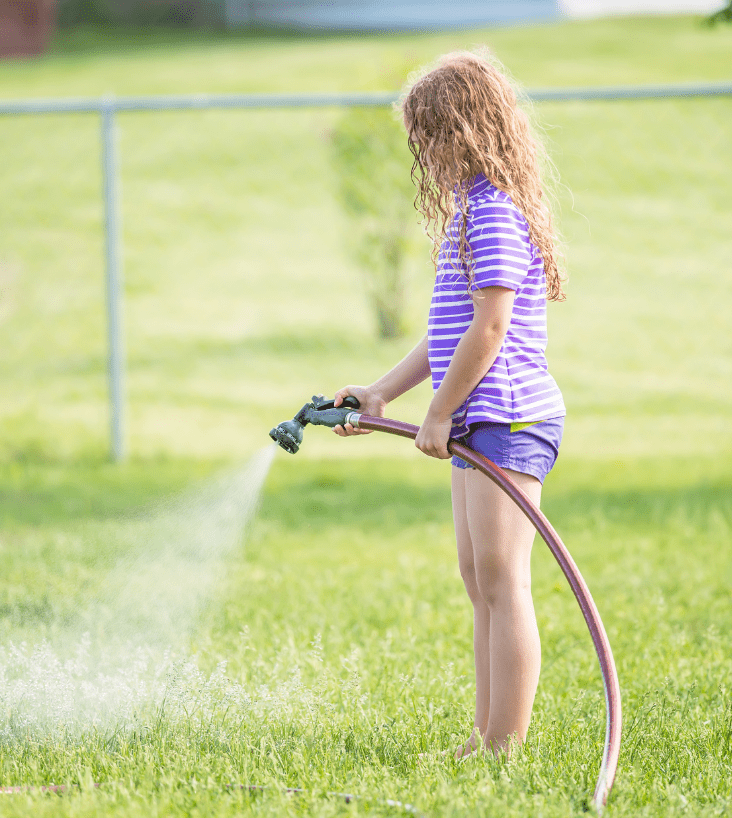
Image Source: lawnsavers.com
Why Deep Watering is Key for a Healthy Lawn
Many homeowners make the mistake of frequent, shallow watering. This encourages grass to develop shallow roots that are more susceptible to drought and heat stress. Deep watering lawn promotes the opposite: it encourages grass roots to grow deeper into the soil, seeking out moisture. Deeper roots make your lawn more resilient, drought-tolerant, and less reliant on constant watering.
How Much Water Does Lawn Need?
The general rule of thumb is that most established lawns need about 1 to 1.5 inches of water per week. This can be delivered through rainfall or irrigation. However, this is just an average. Several factors influence your lawn water requirements:
- Grass Type: Different grass species have varying water needs. Cool-season grasses like Kentucky bluegrass and fescue generally require more water than warm-season grasses like Bermuda and Zoysia, especially during hot summer months.
- Soil Type: Sandy soils drain quickly and need more frequent watering than clay soils, which retain moisture longer. Loam, a mix of sand, silt, and clay, offers a good balance.
- Weather Conditions: Hot, dry, and windy weather increases evaporation, meaning your lawn will need more water. Cool, cloudy, and humid weather reduces water loss.
- Sunlight Exposure: Lawns in full sun will dry out faster and require more water than those in shady areas.
- Slope: Sloped areas can experience runoff, meaning water doesn’t have as much time to soak into the soil.
The Duration Equation: Watering Lawn by Hand
When you’re watering lawn by hand with a hose, precision is key. You need to deliver the right amount of water without over- or under-watering. A simple way to measure how much water your hose delivers is to place a few empty tuna cans or straight-sided containers around your lawn while watering. Time how long it takes to fill these cans to the 1-inch mark. This will give you a good estimate for your watering lawn duration.
For instance, if it takes your hose 20 minutes to deliver 1 inch of water in a specific area, then you know you need to water that area for 20 minutes to achieve that depth.
Determining Your Lawn Watering Schedule
Creating a consistent lawn watering schedule is essential for maintaining a healthy, green lawn. Instead of watering a little bit every day, which leads to shallow roots, it’s far better to water deeply and less frequently.
How Often to Water Lawn Effectively
- Established Lawns: Aim to water 1-2 times per week. The goal is to allow the soil to dry out slightly between waterings. This encourages roots to grow deeper in search of moisture.
- Newly Seeded Lawns: This is a different scenario. Watering newly seeded lawn requires constant moisture for germination. You’ll need to water lightly and frequently, perhaps several times a day, for the first few weeks, ensuring the top layer of soil stays moist but not waterlogged. As the grass grows, you can gradually reduce the frequency and increase the duration of watering.
- Dormant Lawns: During periods of drought or extreme heat, if your grass goes dormant (turns brown but the crown is still green), you can water deeply once every few weeks to keep it alive, but this isn’t necessary for lush green growth.
When is the Best Time to Water Lawn?
The best time to water lawn is generally in the early morning, between 4 AM and 10 AM.
-
Why Early Morning?
- Reduces Evaporation: Temperatures are cooler, and there’s less wind, so more water actually reaches the soil and roots.
- Minimizes Fungal Diseases: Watering in the morning allows grass blades to dry off throughout the day. Watering in the evening or at night can leave grass wet for extended periods, creating an ideal environment for fungal growth.
- Less Water Waste: You avoid the high evaporation rates that occur during the heat of the day.
-
Avoid Watering During Peak Heat: Watering when the sun is hottest causes a significant amount of water to evaporate before it can penetrate the soil.
-
Evening Watering: While better than midday, watering in the evening can still lead to fungal issues if grass blades remain wet overnight. If you must water in the evening, try to do so earlier in the evening to allow some drying time.
Mastering Deep Watering Lawn Techniques
Deep watering lawn means applying enough water to soak the soil to a depth of 4-6 inches. This is beneficial for several reasons:
- Encourages Deep Root Growth: As mentioned, deeper roots make your lawn more drought-tolerant.
- Reduces Weed Growth: A well-watered, dense lawn crowds out weeds, making it harder for them to establish.
- Improves Nutrient Uptake: Water is essential for transporting nutrients to the grass roots.
How to Achieve Deep Watering with a Hose
When watering lawn by hand, the watering lawn duration will be longer than with sprinklers that deliver water more quickly.
- Assess Your Lawn’s Needs: As discussed, consider grass type, soil, and weather.
- Choose the Right Time: Early morning is ideal.
- Use a Soaker Hose or Wand: These distribute water more evenly and at a slower rate, allowing better soil penetration. Standard spray nozzles can sometimes create runoff if the water is applied too quickly.
- Water Consistently: Stick to your lawn watering schedule as much as possible.
- Check Soil Moisture: Before watering, poke a screwdriver or soil probe into the ground. If it goes in easily to a depth of several inches, the soil is likely moist enough. If it’s difficult to push, it’s time to water.
- Observe Your Grass: Wilting or dull, greyish-blue grass blades are signs your lawn needs water.
Example Watering Durations (Approximate for 1 Inch of Water):
The exact time will vary greatly depending on your hose’s flow rate and the type of nozzle.
| Grass Type | Soil Type | Watering Duration per Session (approx.) | Frequency (per week) | Notes |
|---|---|---|---|---|
| Kentucky Bluegrass | Clay | 25-30 minutes | 1-2 | Clay soil holds water well. |
| Kentucky Bluegrass | Loam | 20-25 minutes | 1-2 | Good balance of drainage and retention. |
| Kentucky Bluegrass | Sandy | 15-20 minutes | 2-3 | Sandy soil drains quickly, needs more frequent watering. |
| Fescue | Clay | 25-30 minutes | 1-2 | Similar to KBG, slightly more drought-tolerant. |
| Fescue | Loam | 20-25 minutes | 1-2 | |
| Fescue | Sandy | 15-20 minutes | 2-3 | |
| Bermuda Grass | Clay | 20-25 minutes | 1-2 | Warm-season grass, more drought tolerant. |
| Bermuda Grass | Loam | 15-20 minutes | 1-2 | |
| Bermuda Grass | Sandy | 10-15 minutes | 2-3 | Can tolerate drier conditions. |
| Zoysia Grass | Clay | 20-25 minutes | 1-2 | Very drought tolerant once established. |
| Zoysia Grass | Loam | 15-20 minutes | 1-2 | |
| Zoysia Grass | Sandy | 10-15 minutes | 2-3 |
Important Note: These are rough estimates. Always calibrate your watering by using tuna cans or similar containers to measure actual water application.
Shallow Watering Lawn vs. Deep Watering Lawn
- Shallow Watering Lawn: This involves frequent, short watering sessions. It leads to shallow root systems. While it keeps the surface green, the grass is less resilient to stress, and the shallow roots are more prone to drying out. This is generally not recommended for long-term lawn health.
- Deep Watering Lawn: This means watering less frequently but for longer durations, allowing water to penetrate deep into the soil. This encourages roots to grow deeper, making the lawn more drought-tolerant and healthier overall.
Watering Newly Seeded Lawn: A Delicate Balance
Watering newly seeded lawn is a critical phase that requires careful attention. The goal is to keep the top inch of soil consistently moist without creating soggy conditions that can lead to disease or wash away seeds.
Key Principles for Watering New Seed:
- Frequency is Key: For the first 1-2 weeks after seeding, you’ll likely need to water lightly several times a day (e.g., 2-3 short sessions). The soil surface should always feel moist to the touch.
- Gentle Application: Use a fine mist setting on your hose or a sprinkler designed for gentle watering to avoid dislodging the seeds.
- Duration: Each watering session will be short – just enough to moisten the surface. Think minutes, not tens of minutes.
- Observe Closely: Monitor the soil moisture daily. If it starts to dry out, water again.
- Gradual Transition: As the seedlings emerge and grow to about an inch tall, you can gradually transition to less frequent, deeper watering. This might mean watering once a day, then every other day, increasing the duration of each session to encourage deeper root growth.
Transitioning from Seeding to Established Lawn Watering:
| Stage | Watering Frequency | Watering Duration per Session | Soil Moisture Target | Notes |
|---|---|---|---|---|
| Seed Germination (0-2 weeks) | 2-3 times per day | 5-10 minutes | Top 1 inch consistently moist | Use a gentle mist; avoid dislodging seeds. |
| Seedling Growth (2-4 weeks) | 1 time per day | 10-15 minutes | Top 2-3 inches moist | Begin encouraging deeper roots by increasing duration slightly. |
| Established (4+ weeks) | 1-2 times per week | 20-30 minutes (or calibrated) | Top 4-6 inches moist | Transition to deep, infrequent watering. Follow general lawn watering schedule. |
Common Lawn Watering Mistakes to Avoid
- Overwatering: This is as detrimental as underwatering. It leads to shallow roots, encourages fungal diseases, and wastes water.
- Underwatering: Causes stress, wilting, browning, and can make the lawn more susceptible to pests and diseases.
- Watering in the Midday Sun: Leads to significant water loss through evaporation.
- Watering Too Frequently, Too Shallowly: Promotes shallow root growth, making the lawn weak and less resilient.
- Not Adjusting for Weather: Failing to water more during hot, dry spells or less during cool, wet periods.
- Ignoring Lawn Type and Soil: Using a one-size-fits-all approach when lawn water requirements vary significantly.
Creating Your Lawn Watering Schedule
A good lawn watering schedule is not set in stone but adapts to the seasons and specific conditions.
Seasonal Adjustments:
- Spring: As temperatures warm up, you can start your watering regime. Deep watering once a week is often sufficient, provided there’s adequate rainfall.
- Summer: This is when your lawn needs the most water. Depending on the heat and rainfall, you might need to water deeply 1-2 times per week. Watch for signs of stress.
- Fall: As temperatures cool and rainfall increases, you can reduce watering. Lawns are storing energy for winter, so a good deep watering before the ground freezes can be beneficial.
- Winter: In most climates, dormancy means little to no watering is needed.
Observing Your Lawn is Crucial:
Your lawn will tell you when it needs water. Learn to recognize these signs:
- Color Change: Grass may turn a dull, grayish-blue color.
- Footprints: If footprints remain visible on the lawn for an extended period after you walk on it, the grass blades lack the moisture to spring back.
- Wilting: The grass blades may start to curl or fold.
Frequently Asked Questions (FAQ)
Q1: How long should I water my lawn with a hose?
A: For most established lawns, aim for about 1 inch of water per week, delivered in 1-2 deep watering sessions. The duration for each session depends on your hose’s flow rate, but typically it might be 20-30 minutes per session to deliver 1 inch of water. Always calibrate by using tuna cans.
Q2: How often should I water my lawn?
A: Established lawns typically need watering 1-2 times per week, focusing on deep watering to encourage root growth. Newly seeded lawns require more frequent, light watering.
Q3: What is the best time to water my lawn?
A: The best time is early morning (4 AM to 10 AM) to minimize evaporation and reduce the risk of fungal diseases.
Q4: Is shallow watering lawn bad?
A: Yes, shallow watering lawn is generally discouraged. It promotes shallow root systems, making the grass more susceptible to drought, heat, and disease. Deep watering lawn is preferred.
Q5: How do I know if I’m watering enough?
A: Observe your lawn for signs of stress like wilting or a color change to grayish-blue. You can also use a screwdriver to check soil moisture; it should be moist several inches down. Calibrating with tuna cans ensures you’re delivering the right amount.
Q6: How do I care for watering newly seeded lawn?
A: Watering newly seeded lawn requires keeping the top inch of soil consistently moist. This often means light watering several times a day for the first 1-2 weeks, then gradually transitioning to deeper, less frequent watering as the grass grows.
Q7: How much water does my lawn need?
A: Most lawns need about 1 to 1.5 inches of water per week. However, this varies based on grass type, soil type, weather, and sunlight.
By following these guidelines and observing your lawn’s specific needs, you can master the art of watering with a hose to achieve a lush, green, and healthy lawn. Remember that consistency and adapting to your environment are key to success.