
You measure a lawn mower blade primarily to ensure it’s the correct size for your mower and to assess its condition for sharpening or replacement. This guide will walk you through exactly how to do it. Knowing how to measure your lawn mower blade is crucial for proper maintenance and performance. An incorrectly sized or damaged blade can lead to a poor cut, increased wear on your mower, and even safety hazards. This guide will provide a quick and easy way to measure your lawn mower blade.
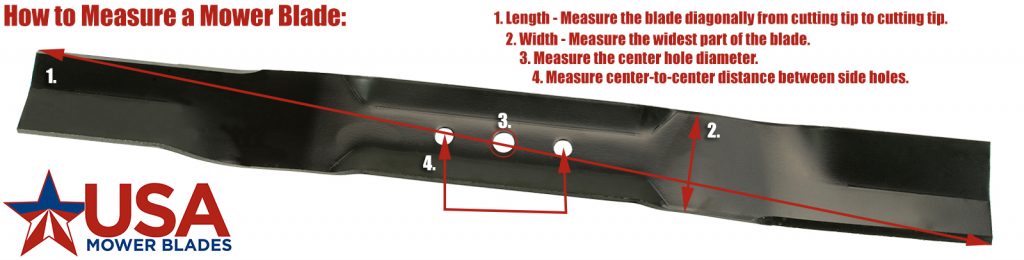
Image Source: usamowerblades.com
Why Measure Your Lawn Mower Blade?
Measuring your lawn mower blade isn’t just about knowing its dimensions; it’s a vital step in several key maintenance tasks:
- Replacement: When your blade becomes worn, bent, or significantly damaged, you’ll need a new one. Measuring ensures you order the correct size.
- Sharpening: While you don’t measure for sharpening itself, you might measure before or after to check that the intended profile is maintained or that the length hasn’t been significantly reduced.
- Balancing: A balanced blade is essential for smooth operation and preventing vibration. While you don’t measure for balance directly, knowing the original dimensions helps in achieving it after sharpening.
- Compatibility: Different mower models use different blade sizes. Measuring confirms you have the right blade for your specific machine.
Tools You’ll Need
Gathering the right tools makes the process simple and accurate:
- Measuring Tape or Ruler: For measuring the overall length and width of the blade.
- Calipers (Optional but Recommended): For precise measurement of blade thickness, especially at the cutting edge.
- Socket Wrench: To remove the blade from the mower.
- Torque Wrench: To properly reinstall the blade with the correct tightness.
- Gloves: For safety when handling the blade.
- Safety Glasses: To protect your eyes.
Step-by-Step Guide to Measuring Your Lawn Mower Blade
Let’s break down how to measure your lawn mower blade accurately.
Step 1: Safety First!
Before you touch anything, ensure your mower is completely safe to work on.
- Turn off the engine: Make sure the mower is completely off.
- Remove the spark plug: Disconnecting the spark plug prevents the engine from accidentally starting.
- Disconnect the battery (if electric): For electric mowers, disconnect the battery pack.
- Wear protective gear: Always wear sturdy gloves and safety glasses.
Step 2: Accessing the Blade
You’ll need to get to the blade itself.
- Tilt the mower: Gently tilt the mower on its side. Most mowers can be tilted safely with the carburetor facing upwards to prevent fuel or oil leakage. Check your mower’s manual for the correct tilting direction.
- Locate the blade: The blade is mounted underneath the mower deck.
Step 3: Removing the Blade
This is where your socket wrench comes in handy.
- Identify the blade bolt: You’ll see a large bolt in the center of the blade.
- Secure the blade: You might need to wedge a piece of wood between the blade and the mower deck to prevent it from spinning.
- Loosen the bolt: Use the appropriate size socket wrench to loosen the bolt. Remember that some bolts might be reverse-threaded, meaning you turn them clockwise to loosen. If it’s stubborn, a little penetrating oil can help.
- Remove the blade: Once the bolt is out, carefully slide the blade off the spindle.
Step 4: Measuring the Blade Length
This is the most common measurement.
- What is blade length? Blade length is the measurement from the tip of one end of the blade to the tip of the other end.
- How to measure: Lay the blade flat on a surface.
- Using a Measuring Tape or Ruler: Place the end of your measuring tape or ruler at the very tip of one end of the blade. Extend it straight across to the very tip of the opposite end. Read the measurement.
- Center Hole Measurement: Some people measure from the center of the blade’s mounting hole to the tip, then double that measurement. However, measuring tip-to-tip is the most standard and accurate way to get the overall blade length.
- Record the measurement: Note down the blade length in inches or centimeters. This is the most crucial dimension for ordering a replacement.
Step 5: Measuring the Blade Width
This measurement tells you how much material is being cut on each pass.
- What is blade width? Blade width refers to the widest part of the blade.
- How to measure: With the blade still lying flat:
- Using a Ruler or Measuring Tape: Place your ruler or tape measure across the widest point of the blade. Ensure the ruler is perpendicular to the blade’s length.
- Using Calipers: For a more precise measurement, use calipers to measure the distance across the widest section.
- Record the measurement: Write down the blade width.
Step 6: Measuring the Blade Thickness
Thickness is important for durability and how the blade mounts.
- What is blade thickness? Blade thickness is the measurement of the material’s depth.
- How to measure:
- Using Calipers (Recommended): The most accurate way to measure thickness is with calipers. Measure the thickness of the blade at its base, away from the cutting edge, and also at the cutting edge. The cutting edge will likely be thinner after sharpening.
- Using a Ruler (Less Precise): You can try to use a ruler to measure the thickest part of the blade, but this will be less accurate, especially for thinner blades.
- Record the measurement: Note down the thickness. This is important if you are replacing a blade, as the correct thickness ensures it fits properly on the spindle and mower deck.
Step 7: Checking the Blade Center Hole Diameter
This ensures the blade fits the mower’s spindle.
- What is the center hole diameter? This is the size of the hole in the middle of the blade where it attaches to the mower.
- How to measure:
- Using Calipers: The best tool for this is calipers, as it can accurately measure the diameter of the hole.
- Using a Ruler (If Calipers Unavailable): You can try to measure the diameter with a ruler, but accuracy can be an issue. You can also try fitting a series of drill bits or round objects of known diameters into the hole until you find a snug fit.
- Record the measurement: Write down the diameter of the center hole.
Step 8: Measuring Blade Lift (Optional but Useful)
Blade lift, or the “sail” on the blade, affects how well it discharges grass clippings.
- What is blade lift? It’s the upward curve at the ends of the blade that helps create suction to pull grass upright before cutting.
- How to measure: This is more qualitative than quantitative for most DIYers. You’ll generally look for the presence and general angle of this upward curve. You can compare it to a new blade of the same model if you have one. Significant bending or flattening of this lift can reduce cutting efficiency.
Step 9: Checking for Blade Balance
Proper blade balance is critical for mower health and user comfort.
- What is blade balance? A balanced blade spins smoothly without wobbling. An unbalanced blade can cause vibrations that damage the mower’s engine and bearings.
- How to check (simple method):
- Using a Nail or Screwdriver: Place a nail or a screwdriver horizontally through the center hole of the blade.
- Observe: A balanced blade should rest horizontally, or very close to it. If one end consistently drops lower than the other, it’s unbalanced.
- What to do if unbalanced: If a blade is unbalanced after sharpening, you can often file a small amount of metal off the heavier end to correct it. Many blade sharpening kits come with balancers.
Interpreting Your Measurements
Once you have your measurements, what do they mean?
- Blade Length: This is your primary identifier for a replacement blade. Most mower manufacturers list the correct blade length for their models. You’ll typically find this information in your owner’s manual or on the manufacturer’s website. If you’re buying a generic blade, match the length precisely.
- Blade Width and Thickness: These dimensions are also important for compatibility. While length is the most critical for fit, the width and thickness ensure the blade is robust enough for the job and mounts correctly.
- Center Hole Diameter: This is absolutely vital for ensuring the blade fits onto your mower’s spindle. Blades come with various center hole sizes, including round, star, or bow-tie shapes. Using the wrong size hole means the blade won’t attach securely.
- Blade Lift: A good lift helps bag or discharge grass efficiently. If the lift is significantly bent or flattened, it might be time for a new blade, even if the cutting edge is still sharp.
When to Replace Your Blade
Beyond just measuring, you need to know when your blade has served its time.
- Excessive Wear: If the cutting edge is significantly thinned or rounded, it’s time.
- Bent or Cracked Blades: Never use a bent or cracked blade. This is a serious safety hazard.
- Severely Dull Edges: While blade sharpening can fix this, if the blade is worn down to the point where sharpening removes too much material, replacement is necessary.
- Unbalanceable Blades: If a blade cannot be balanced after sharpening, it’s too far gone.
Reinstalling the Blade
After measuring, sharpening, or replacing, reinstallation is key.
- Position the blade: Place the new or sharpened blade back onto the spindle. Ensure the correct side faces up (often indicated by markings on the blade or spindle). The “lift” or curved portion of the blade should point upwards towards the mower deck.
- Tighten the bolt: Thread the blade bolt back in.
- Use a torque wrench: This is crucial. Over-tightening can damage the spindle or bolt. Under-tightening can lead to the blade coming loose, which is extremely dangerous. Consult your mower’s manual for the correct torque specification for the blade bolt. Typically, it’s in the range of 50-75 ft-lbs, but always check your manual.
- Reconnect the spark plug/battery: Once the blade is secure, reconnect the spark plug wire or battery.
- Lower the mower: Gently lower the mower back onto its wheels.
Frequently Asked Questions (FAQ)
Q: What are the standard lawn mower blade sizes?
A: There isn’t one “standard” size. Blade lengths can range from around 18 inches for smaller push mowers to over 60 inches for large riding mowers. The center hole size and bolt pattern also vary significantly. It’s always best to measure your existing blade or consult your mower’s manual for the correct specifications.
Q: Can I use a longer or shorter blade than what my mower originally came with?
A: It’s generally not recommended. Using a blade that is too long can cause it to hit the mower deck, leading to damage and poor cutting. A blade that is too short may not cut the entire width of the deck, resulting in an uneven lawn and potentially straining the mower’s engine. Always stick to the manufacturer’s recommended blade length.
Q: How often should I sharpen my lawn mower blade?
A: This depends on how often you mow and the type of grass you have. A good rule of thumb is to check your blade for sharpness every 25 mowing hours or at least once per season. If you notice torn grass blades (frayed, brown tips), it’s definitely time for sharpening or replacement.
Q: My blade bolt is stuck. What can I do?
A: If the blade bolt is stubborn, try applying a penetrating oil and letting it sit for 10-15 minutes. You can also try gently tapping the bolt head with a hammer (ensure the blade is well-secured first). Using a breaker bar can provide more leverage than a standard socket wrench. If it still won’t budge, you might need to seek professional help to avoid damaging the spindle.
Q: How do I know if my blade is balanced after sharpening?
A: The simplest way is the nail or screwdriver method described in this guide. If one side consistently dips, it’s unbalanced. Many blade sharpening services or DIY kits include a blade balancer. Proper balancing is crucial to prevent engine vibration and premature wear on your mower.
By following these steps and paying attention to your measurements, you can ensure your lawn mower operates efficiently and safely, giving you a beautifully cut lawn every time.