
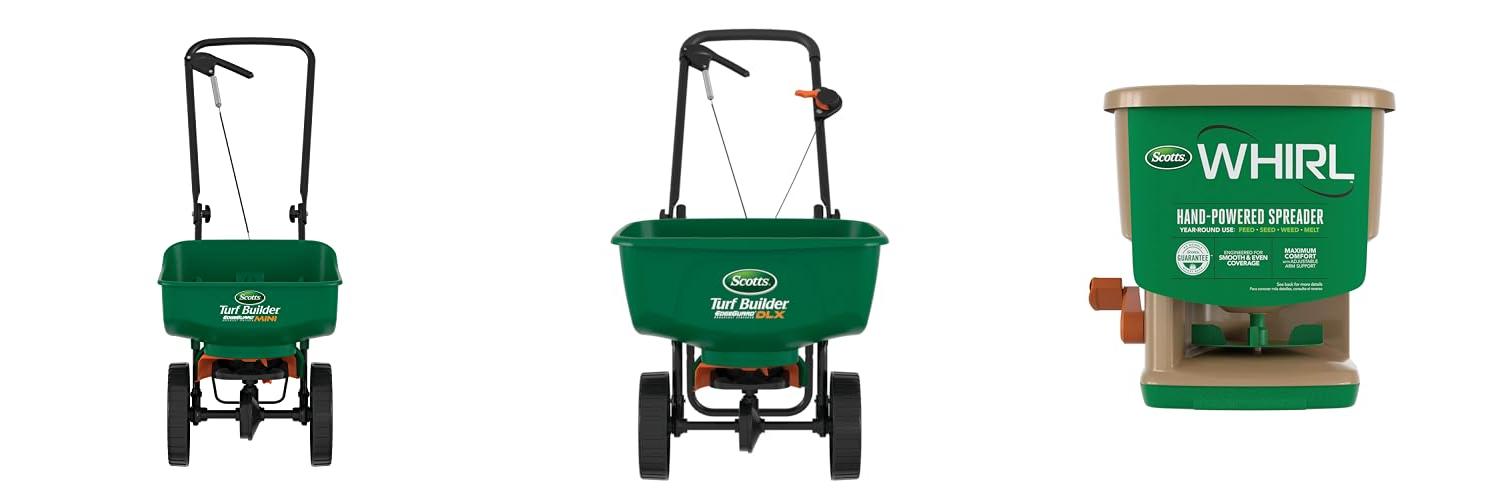
Ever look at your lawn or garden and wish it was greener, lusher, and bursting with life? You’ve probably heard that fertilizer is the key, but then comes the confusing part: how do you actually get that goodness onto your plants evenly? Picking the right fertilizer spreader can feel like a puzzle. Will it be too much in one spot and not enough in another? Will it be easy to use, or a back-breaking chore? These are common worries that can make even the most enthusiastic gardener feel overwhelmed.
But don’t let spreader confusion wilt your gardening dreams! This post is here to help you conquer that challenge. We’ll break down what makes a good fertilizer spreader, what to look for, and how to choose the one that’s perfect for your needs and your yard. By the end, you’ll feel confident in your choice and ready to give your plants the best possible start.
Our Top 5 Spreader Fertilizer Recommendations at a Glance
Top 5 Spreader Fertilizer Detailed Reviews
1. Scotts Turf Builder EdgeGuard Mini Broadcast Spreader for Seed

Rating: 8.7/10
Tired of uneven lawn care or messy applications? The Scotts Turf Builder EdgeGuard Mini Broadcast Spreader is here to help. This spreader is designed to make applying grass seed, fertilizer, and even ice melt a breeze. It’s perfect for small to medium-sized yards, making lawn maintenance simpler and more effective.
What We Like:
- It’s a mini broadcast spreader, great for small to medium yards.
- The spreader comes ready to go – it’s pre-calibrated and fully assembled.
- It has a fold-down handle, which makes storing it super easy.
- The EdgeGuard technology is a game-changer. It keeps lawn products off your landscaping, driveways, and sidewalks.
- Its redesigned hopper and agitator help product flow smoothly. This means you get consistent coverage across your lawn.
- It holds enough Scotts lawn product to cover up to 5,000 sq. ft.
- You can use it for grass seed, fertilizer, and even salt or ice melt in the winter.
What Could Be Improved:
- While it’s great for smaller areas, it might not be the best choice for very large lawns.
This spreader makes lawn care tasks much more manageable. You’ll get a more even application and less mess with its smart design.
2. Scotts Turf Builder EdgeGuard DLX Broadcast Spreader for Seed

Rating: 8.7/10
Tired of messy lawn applications? The Scotts Turf Builder EdgeGuard DLX Broadcast Spreader makes taking care of your yard simple and effective. This spreader is designed to help you spread Scotts lawn care products evenly and precisely. It’s ready to go right out of the box, saving you time and frustration. Plus, its special EdgeGuard technology prevents product from spilling onto sidewalks or flower beds.
What We Like:
- It comes pre-calibrated, so you can use it right away.
- The exclusive EdgeGuard Technology keeps your lawn treatments on the lawn, not on your driveway or garden.
- A redesigned hopper and agitator help spread product smoothly for even coverage.
- It holds enough product to cover up to 15,000 square feet, which is a big area!
- You can use it for grass seed, fertilizer, and even salt or ice melt in the winter.
What Could Be Improved:
- While the EdgeGuard is great, some users might find they need to adjust their walking speed for perfect results.
- The assembly, though straightforward, might take a few minutes for some people.
This spreader is a reliable tool for anyone who wants a healthier, more beautiful lawn. It makes lawn care tasks much easier and more efficient.
3. Scotts Whirl Hand-Powered Spreader for Grass Seed

Rating: 9.5/10
The Scotts Whirl Hand-Powered Spreader is a handy tool for anyone wanting a beautiful yard. This handheld spreader makes it easy to spread grass seed, fertilizer, salt, and ice melt. It’s designed for small yards and is great for all seasons. You can use it to keep your lawn looking its best all year long.
What We Like:
- It’s a handheld spreader, making it perfect for small yards.
- You can use it year-round for weeding, seeding, fertilizing, and salting.
- The spreader is built for smooth, even coverage so your lawn looks great.
- It has adjustable arm support for maximum comfort while you work.
- It holds enough product to cover up to 1,500 square feet.
What Could Be Improved:
- For very large areas, you might need a spreader with a larger capacity.
- Some users might find the hand-cranking a bit tiring for extended use.
This Scotts spreader is a fantastic option for maintaining your lawn. It offers convenience and great results for your yard care needs.
4. Scotts Whirl Hand-Powered Spreader for Grass Seed

Rating: 8.8/10
Tired of unevenly spread grass seed or patchy fertilizer? The Scotts Whirl Hand-Powered Spreader might be your new lawn care best friend. This handheld spreader is designed to make your yard work easier, no matter the season. It’s a simple tool that packs a punch for keeping your lawn looking its best.
What We Like:
- This spreader is perfect for small yards.
- You can use it all year long for seeding, fertilizing, and even salting icy walkways.
- It spreads product smoothly and evenly, so your lawn looks great.
- The adjustable arm support makes it comfortable to hold and use.
- It holds enough product to cover up to 1,500 square feet.
What Could Be Improved:
- For very large lawns, you might need to refill it a few times.
- The hand-crank operation requires a bit of effort.
For anyone with a smaller yard looking for an easy way to maintain their lawn, this spreader offers great convenience and effective results. It’s a solid choice for year-round yard care.
5. VEVOR Broadcast Spreader

Rating: 9.4/10
Tired of spending hours on your lawn? The VEVOR Broadcast Spreader makes taking care of your yard a breeze. This sturdy push spreader helps you spread seeds, fertilizer, salt, and ice melt evenly across your lawn. Its large capacity means fewer trips back and forth, and its smart design ensures you get the job done right.
What We Like:
- Big Hopper, Less Work: The 100lb capacity and 56L hopper let you cover a lot of ground without constant refilling. It’s great for any season, from spring planting to fall weed control.
- Spreads Perfectly: You can easily adjust how much material it spreads. The 30-scale control and trapezoidal hopper design help you spread seeds evenly, from 0 to 9.8 feet wide. Push faster, spread wider!
- Easy Setup: Most parts come already put together, so you can start using it faster. This saves you time and frustration.
- Tackles Any Terrain: The 13-inch pneumatic tires handle bumps and uneven ground easily. They are made of tough, grippy rubber, making it simple to steer anywhere.
- Built to Last: The strong carbon steel frame with powder coating resists rust. The hopper and sealed gearbox are also built for long-term use, so you won’t have to worry about gears getting damaged.
What Could Be Improved:
- The “faster you push, the wider the spread” feature might require a bit of practice to master for perfectly consistent coverage.
- While it’s designed for year-round use, extreme weather conditions could potentially affect the lifespan of certain components if not properly stored.
This VEVOR spreader is a solid choice for anyone wanting a reliable and efficient way to maintain their lawn. It offers convenience and performance for all your spreading needs.
Choosing the Right Spreader Fertilizer: Your Lawn’s Best Friend
Getting your lawn looking its best often means feeding it. A spreader fertilizer is a tool that helps you do this evenly and efficiently. Forget about throwing handfuls of fertilizer and hoping for the best! These spreaders are designed to distribute food for your grass, making your yard healthier and greener.
Key Features to Look For
When you’re shopping for a spreader fertilizer, keep these important features in mind.
1. Type of Spreader
- Broadcast Spreaders: These are the most common. They spin a plate to throw fertilizer out in a wide arc. They’re great for large lawns.
- Drop Spreaders: These have a hopper that drops fertilizer in a straight line. They offer more precision, which is good for smaller areas or around garden beds.
2. Hopper Capacity
This is how much fertilizer the spreader can hold. A bigger hopper means you’ll refill it less often, especially on larger lawns.
3. Wheel Type and Size
Larger wheels handle uneven terrain better. Some spreaders have sturdy, pneumatic (air-filled) tires that give a smoother ride.
4. Construction Material
What the spreader is made of matters for how long it lasts and how well it works.
Important Materials
The materials used in a spreader fertilizer directly impact its durability and performance.
- Hoppers: Most hoppers are made of plastic. Look for high-density polyethylene (HDPE) or similar sturdy plastics. These resist rust and are often UV-resistant to prevent sun damage. Some heavy-duty models might have metal hoppers, but these can be prone to rust.
- Frames and Wheels: Steel frames offer strength. For wheels, you’ll often find solid plastic or rubber. Pneumatic tires offer better traction and a smoother spread.
- Gears and Mechanisms: These are usually made of metal or strong plastic. Metal gears tend to be more durable.
Factors That Improve or Reduce Quality
Several things can make a spreader fertilizer better or worse.
- Ease of Assembly: A spreader that’s easy to put together right out of the box is a big plus.
- Adjustable Settings: Being able to control how much fertilizer is spread is crucial. Good spreaders have clear, easy-to-use adjustment settings.
- Durability: A well-built spreader made from quality materials will last for many seasons. Cheaply made ones might break easily or rust.
- Even Distribution: The best spreaders distribute fertilizer evenly. This prevents streaks of over-fertilized or under-fertilized grass.
- Ergonomics: How comfortable is it to push or carry? Good handles and a balanced design make a big difference, especially for larger areas.
User Experience and Use Cases
Using a spreader fertilizer is usually straightforward.
- For Homeowners: They are perfect for feeding lawns, applying grass seed, or spreading ice melt in the winter.
- For Gardeners: You can use them to spread compost or granular soil amendments.
- Ease of Use: Most broadcast spreaders are pushed along the lawn. Drop spreaders might be pushed or carried. Always read the instructions for your specific model.
- Maintenance: Keeping your spreader clean after each use helps it last longer. Rinse off any fertilizer residue.
Frequently Asked Questions (FAQ)
Q: What are the main Key Features I should look for?
A: You should look for the type of spreader (broadcast or drop), the hopper capacity, the wheel type and size, and the construction material.
Q: What materials are important for spreader fertilizers?
A: Important materials include sturdy plastics like HDPE for the hopper, and metal or strong plastic for the frames and gears. Rubber or pneumatic tires are also good for wheels.
Q: What makes a spreader fertilizer of good quality?
A: Good quality spreaders are easy to assemble, have adjustable settings, are durable, distribute fertilizer evenly, and are comfortable to use.
Q: What reduces the quality of a spreader fertilizer?
A: Poor quality materials, difficulty in assembly, uneven fertilizer distribution, and a lack of adjustable settings can reduce the quality.
Q: What are the common use cases for a spreader fertilizer?
A: They are commonly used for applying fertilizer, spreading grass seed, and in winter, for spreading ice melt.
Q: Are broadcast spreaders or drop spreaders better for large lawns?
A: Broadcast spreaders are generally better for large lawns because they cover a wider area with each pass.
Q: Can I use a spreader fertilizer to spread grass seed?
A: Yes, most spreader fertilizers can also be used to spread grass seed evenly.
Q: How do I clean my spreader fertilizer after use?
A: It’s best to rinse your spreader with water after each use to remove any fertilizer residue. This prevents rust and keeps it working well.
Q: What is hopper capacity?
A: Hopper capacity refers to how much fertilizer the spreader’s container can hold.
Q: Should I worry about rust on my spreader?
A: If your spreader is made of metal, rust can be a concern. Plastic hoppers are generally rust-proof. Cleaning and storing your spreader properly can help prevent rust.
In conclusion, every product has unique features and benefits. We hope this review helps you decide if it meets your needs. An informed choice ensures the best experience.
If you have any questions or feedback, please share them in the comments. Your input helps everyone. Thank you for reading.