

Is your lawn looking a little sad and sleepy after a long winter? Do you dream of a lush, green carpet of grass that makes your neighbors jealous? Spring is the perfect time to wake up your lawn and give it the boost it needs to thrive all season long. But when you walk down the fertilizer aisle, it can feel like a maze. So many bags, so many numbers – it’s enough to make your head spin!
Choosing the right lawn fertilizer for spring can feel overwhelming. You want to feed your grass without burning it, and you want to make sure you’re getting the best bang for your buck. What does all that N-P-K stuff even mean? And how do you know which one is best for *your* specific lawn’s needs? Don’t worry, we’ve got your back!
By the end of this post, you’ll understand the basics of spring lawn fertilization and feel confident picking the perfect product. We’ll break down what those numbers on the bag mean, explain the different types of fertilizers, and give you tips to help your lawn go from drab to fab. Get ready to learn how to give your grass the ultimate spring awakening!
Our Top 5 Lawn Fertilizer For Spring Recommendations at a Glance
Top 5 Lawn Fertilizer For Spring Detailed Reviews
1. Scotts Green Max Lawn Food

Rating: 8.7/10
Want a greener lawn fast? Scotts Green Max Lawn Food promises just that. This fertilizer is designed to give your grass a deep green color in as little as three days. It uses a special mix of food for your lawn and iron to help it get that vibrant green look. You can use it on any kind of grass. It’s easy to apply. Plus, it won’t stain your sidewalks or driveway when you use it the right way.
What We Like:
- Gets grass greener in just 3 days.
- Contains 5% iron for extra greening power.
- Works on all grass types.
- Won’t stain your concrete surfaces if used as directed.
- You can go back on your lawn right after applying it.
- One bag covers a large area of 5,000 sq. ft.
What Could Be Improved:
- Results might vary depending on your lawn’s current condition and weather.
- Requires a spreader for even application, which might be an extra purchase for some.
Scotts Green Max Lawn Food is a good option for a quick lawn color boost. It’s a simple way to make your yard look its best.
2. Scotts Turf Builder Lawn Food – Fertilizer for All Grass Types

Rating: 8.9/10
Achieve a healthier, more resilient lawn with Scotts Turf Builder Lawn Food. This 12.5 lb. bag is designed to feed and strengthen your grass, offering protection against future issues. It’s perfect for any type of grass and covers an impressive 5,000 square feet, making lawn care simple and effective.
What We Like:
- Feeds and strengthens grass for better protection.
- Builds strong, deep roots.
- Improves the lawn’s ability to absorb water and nutrients.
- Works on all grass types.
- Can be applied to a wet or dry lawn.
- Covers a large area (5,000 sq. ft.) with one bag.
What Could Be Improved:
- The 12.5 lb. bag might be heavy for some users.
- Specific application timing recommendations could be more prominent.
Scotts Turf Builder Lawn Food is a reliable choice for homeowners seeking a robust and healthy lawn. Its versatile application and broad effectiveness make it a worthwhile investment for a beautiful yard.
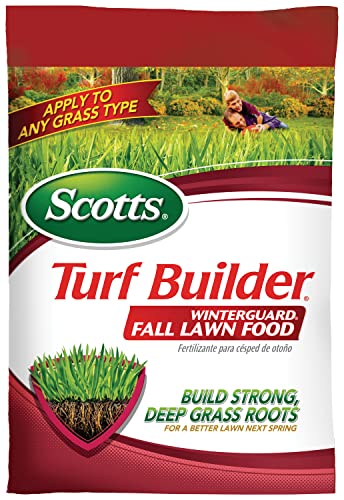
3. Scotts Turf Builder WinterGuard Fall Lawn Fertilizer for All Grass Types
Rating: 9.0/10
Get your lawn ready for winter and set it up for amazing growth next spring with Scotts Turf Builder WinterGuard Fall Lawn Fertilizer. This special food helps your grass grow strong, deep roots. It gives your lawn the food it needs to bounce back from the tough summer months.
What We Like:
- It builds strong, deep grass roots for a healthier lawn next spring.
- It helps your lawn recover from summer damage caused by heat, drought, and lots of activity.
- You can put it on your lawn whether it’s wet or dry in the fall.
- It works on all kinds of grass.
- One 10 lb. bag covers a large area, up to 4,000 square feet.
What Could Be Improved:
- The bag size might be a bit heavy for some people to carry.
- While it’s good for all grass types, results can vary depending on your specific lawn’s condition.
Scotts Turf Builder WinterGuard is a smart choice for any homeowner looking to boost their lawn’s health. It’s an easy way to ensure a greener, more robust lawn come springtime.
4. Scotts Turf Builder Weed & Feed3

Rating: 9.5/10
Tired of pesky weeds taking over your beautiful lawn? Scotts Turf Builder Weed & Feed3 is here to help! This powerful product does double duty, killing existing weeds while also feeding your grass. It helps your lawn grow thicker, which in turn crowds out future weeds. Get ready for a greener, healthier yard with less effort.
What We Like:
- Kills over 50 types of weeds, including common ones like dandelions and clover.
- Feeds your lawn to make it thicker and healthier.
- Easy to use with a Scotts spreader for even coverage.
- Covers a large area, up to 5,000 sq. ft. with one bag.
- Works on many common grass types like fescue and bluegrass.
What Could Be Improved:
- Only works when weeds are actively growing and the lawn is wet.
- You should only use it a maximum of two times per year.
- It can cause temporary discoloration on some types of grass.
- Not suitable for certain grass types, like St. Augustinegrass.
Scotts Turf Builder Weed & Feed3 is a solid choice for tackling lawn weeds and boosting grass health. It offers a convenient way to achieve a more attractive lawn when used correctly.
5. Advanced 16-4-8 Balanced NPK – Lawn Food Quality Liquid Fertilizer – Spring & Summer Concentrated Spray – Any Grass Type – Simple Lawn Solutions (32 Ounce)

Rating: 8.7/10
Give your lawn the boost it needs with Simple Lawn Solutions’ Advanced 16-4-8 Balanced NPK Liquid Fertilizer. This concentrated spray is designed to feed and maintain any grass type, making it simple to achieve a lush, green lawn. Whether it’s spring or summer, this fertilizer provides essential nutrients for healthy growth and vibrant color.
What We Like:
- The 16-4-8 NPK blend is a complete lawn food, providing the key nutrients grass needs.
- It contains beneficial Seaweed & Fish, adding organic matter for better nutrient absorption.
- The formula uses high-quality, feed-grade ingredients for pure liquid nutrients.
- It’s incredibly easy to use, perfect for any homeowner.
- This fertilizer works on all grass types, from Bermuda to Kentucky Bluegrass.
- It’s proudly produced in the USA by a family-owned business with 25 years of turf experience.
- The 16% Nitrogen promotes vibrant green color and dense growth.
- 4% Phosphorus supports strong root development, especially in young grass.
- 8% Potassium helps your lawn withstand tough weather like heat and drought.
- It’s ideal for maintaining your lawn, enhancing greenness, boosting growth, and correcting nutrient deficiencies.
What Could Be Improved:
- The 32-ounce size might require multiple purchases for very large lawns.
- While concentrated, some users might prefer a ready-to-use spray for even greater convenience.
This fertilizer offers a straightforward way to nourish your lawn and see impressive results. It’s a reliable choice for anyone seeking a healthier, more attractive lawn.
Spring Lawn Fertilizer: Your Guide to a Greener Yard
Spring is the perfect time to give your lawn the boost it needs. A good fertilizer helps your grass grow strong and healthy after a long winter. This guide will help you choose the best spring lawn fertilizer for your yard.
Why Fertilize in Spring?
After winter, your lawn is hungry. It needs nutrients to recover and start growing again. Spring fertilizer helps your grass develop deep roots and a vibrant green color. It also makes your lawn more resistant to weeds and diseases.
Key Features to Look For
1. The N-P-K Ratio
You’ll see numbers like 10-10-10 or 20-5-10 on fertilizer bags. These are the N-P-K numbers. They stand for Nitrogen (N), Phosphorus (P), and Potassium (K).
- Nitrogen (N): This is the most important nutrient for green growth. It helps your grass blades grow thick and lush.
- Phosphorus (P): This helps with root development. Strong roots mean a healthier, more resilient lawn.
- Potassium (K): This helps your grass handle stress, like heat or drought. It also boosts disease resistance.
For spring, a fertilizer with a higher nitrogen number is usually best. Look for something like 20-5-10 or 25-3-8. This will give your lawn the energy it needs to grow.
2. Slow-Release vs. Quick-Release Nitrogen
- Quick-Release: This feeds your lawn right away. Your grass will look greener fast. But, it can burn your lawn if you use too much. The green color might not last very long.
- Slow-Release: This feeds your lawn over a longer period. It provides steady nutrients. This is better for preventing burns and keeps your lawn green for weeks.
Many spring fertilizers use a mix of both. This gives you immediate results and then sustained feeding. Slow-release is generally preferred for consistent results.
3. Weed and Feed Products
Some fertilizers also contain weed killers. These products can kill common lawn weeds while feeding your grass. They are convenient. However, make sure the weed killer is safe for your type of grass. Also, avoid using “weed and feed” if you plan to seed new grass. It can prevent seeds from germinating.
Important Materials
The nutrients in fertilizer come from different sources. These can be natural or synthetic.
- Natural Fertilizers: These come from plants or animals. Examples include compost, manure, and bone meal. They improve soil health over time. They release nutrients slowly.
- Synthetic Fertilizers: These are made in factories. They provide nutrients quickly and precisely. They are often more affordable.
For spring, a balanced approach can be good. Synthetic fertilizers give you quick results. Natural fertilizers improve your soil’s long-term health.
Factors That Improve or Reduce Quality
Improving Quality:
- Soil Testing: Knowing what nutrients your soil needs is key. A soil test tells you if you have too much or too little of something. This helps you choose the right fertilizer.
- Proper Application: Follow the instructions on the bag carefully. Using too much can harm your lawn. Use a spreader for even coverage.
- Timing: Apply fertilizer when your grass is actively growing. For spring, this is usually after the last frost.
Reducing Quality:
- Over-fertilizing: Too much fertilizer can burn your grass. It can also pollute waterways.
- Wrong Type: Using a fertilizer not suited for your grass type or soil needs can be ineffective.
- Bad Weather: Applying fertilizer just before heavy rain can wash it away.
User Experience and Use Cases
User Experience:
Most users want a fertilizer that is easy to apply and gives visible results. They appreciate clear instructions. Products that are less likely to burn the lawn are also a big plus. Many homeowners look for a “set it and forget it” type of product.
Use Cases:
- Revitalizing a Dormant Lawn: After winter, lawns can look dull. Spring fertilizer brings back the green color and encourages new growth.
- Weed Prevention: A healthy, thick lawn crowds out weeds. Fertilizing in spring helps achieve this density.
- Preparing for Summer: A well-fed lawn in spring is stronger. It can better withstand the heat and dryness of summer.
- New Lawns: If you’re seeding a new lawn, choose a starter fertilizer. It helps young grass grow strong roots.
Frequently Asked Questions
Q: When is the best time to fertilize my lawn in spring?
A: Apply fertilizer after your grass starts to grow actively. This is usually when the danger of frost has passed and temperatures are consistently above 50°F (10°C).
Q: How much fertilizer should I use?
A: Always follow the instructions on the fertilizer bag. Over-fertilizing can damage your lawn and the environment.
Q: Can I fertilize if I have pets or children?
A: Yes, but it’s best to keep pets and children off the lawn until the fertilizer has been watered in and dried. Read the product label for specific safety instructions.
Q: What if my lawn has bare spots?
A: If you have bare spots, you might need to reseed. Use a starter fertilizer to help the new grass grow.
Q: How often should I fertilize my lawn?
A: This depends on your climate and the type of grass. Most lawns benefit from 2-4 applications per year, with spring being a key time.
Q: Is organic fertilizer better than synthetic?
A: Organic fertilizers improve soil health over time and release nutrients slowly. Synthetic fertilizers offer quicker results. Both can be effective when used correctly.
Q: Can I use fertilizer on newly sodded lawns?
A: Yes, a starter fertilizer is recommended for newly laid sod to help it establish roots.
Q: What does “controlled-release” mean?
A: Controlled-release means the nutrients are released slowly over time. This provides a more consistent feeding for your lawn and reduces the risk of burning.
Q: My lawn is already green, do I still need to fertilize?
A: Yes, green color is just one part of lawn health. Fertilizing provides essential nutrients for root development and disease resistance, even if the grass looks green.
Q: Can I fertilize when it’s very hot outside?
A: It’s generally not recommended to fertilize when temperatures are very high. Wait for cooler weather to avoid stressing your lawn.
In conclusion, every product has unique features and benefits. We hope this review helps you decide if it meets your needs. An informed choice ensures the best experience.
If you have any questions or feedback, please share them in the comments. Your input helps everyone. Thank you for reading.