
Can you replace a lawn mower throttle cable yourself? Yes, you absolutely can replace a lawn mower throttle cable yourself with a few basic tools and some patience. It’s a common repair that can save you money and get your mower back to optimal performance.
A faulty throttle cable can be a frustrating problem. If your mower’s speed control is erratic, or if the throttle isn’t working at all, a damaged or misaligned throttle cable is often the culprit. This guide will walk you through the process of identifying common throttle cable issues, gathering your supplies, and performing a successful lawn mower throttle repair. We’ll cover everything from detaching the old cable to securing the new one, ensuring your mower’s speed control is responsive and accurate.
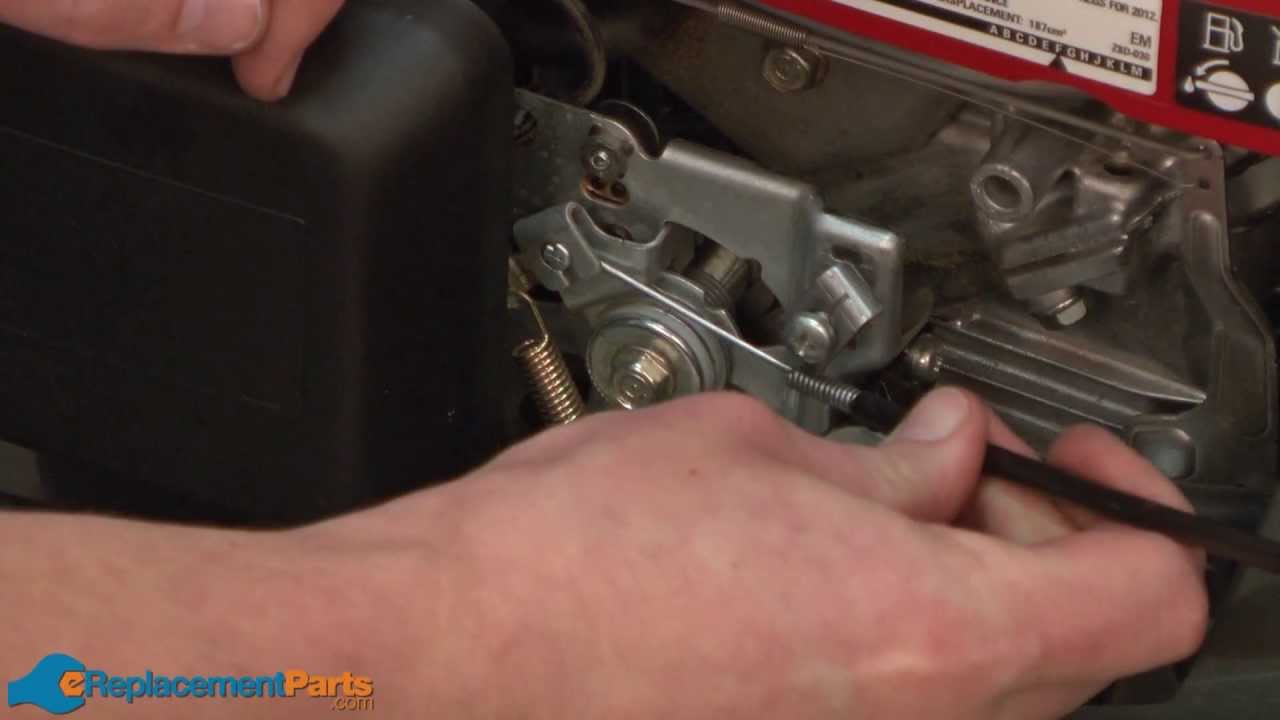
Image Source: i.ytimg.com
Recognizing the Signs of a Bad Throttle Cable
Before diving into a full replace mower throttle cable job, it’s wise to confirm that the throttle cable is indeed the issue. Several symptoms of bad throttle cable can indicate a problem.
- Erratic Speed Control: The engine speed fluctuates wildly, even when the throttle lever is held steady.
- Stuck Throttle: The throttle lever is difficult to move or stuck in one position, preventing you from adjusting the engine speed.
- No Response to Throttle Lever: Moving the throttle lever has no effect on the engine speed.
- Loose or Damaged Cable: Visually inspecting the cable reveals fraying, kinks, or detachment from either the throttle lever or the carburetor linkage.
- Engine Idling Too High or Too Low: Even after adjusting the idle, the engine won’t maintain a stable, appropriate idle speed. This could be due to the cable not allowing the carburetor’s throttle plate to close fully.
- Mower Throttle Not Working: This is the most obvious sign – the primary function of the throttle control is completely unresponsive.
These issues can stem from wear and tear, physical damage, or improper throttle cable adjustment.
Common Causes of Throttle Cable Failure
- Wear and Tear: Over time, the internal wires of the cable can fray, leading to sticking or breakage.
- Kinks and Sharp Bends: Sharp bends or kinks in the cable housing can impede the smooth movement of the inner wire.
- Corrosion: Exposure to moisture and dirt can cause corrosion in the cable, making it stiff and difficult to operate.
- Loose Connections: The fittings at the throttle lever or carburetor can become loose, causing a loss of tension and control.
- Cable Snap: The inner wire can snap completely, rendering the throttle inoperable.
Preparing for the Throttle Cable Replacement
Successfully tackling a lawn mower throttle repair requires a bit of preparation. Gathering the right tools and parts before you start will make the process much smoother and more efficient.
Tools You’ll Need
- Screwdriver Set: Both Phillips head and flathead screwdrivers are essential for removing panels and securing components.
- Wrench Set or Socket Set: You’ll likely need a few common sizes to remove bolts and nuts holding engine covers or the carburetor in place.
- Pliers: Needle-nose pliers are particularly useful for gripping small parts and manipulating the cable ends.
- Wire Cutters or Cable Cutters: For cutting zip ties and, in some cases, trimming excess cable.
- Zip Ties: To help manage and secure the new cable routing.
- Gloves: To protect your hands from grease and sharp edges.
- Safety Glasses: Always wear eye protection when working on machinery.
- Shop Rags or Paper Towels: For cleaning up any spills or grime.
- Optional: Small Mirror and Flashlight: To help see into tight spaces.
Identifying and Obtaining the Correct Replacement Cable
The most crucial part of preparation is getting the correct speed control cable lawn mower replacement. Mower manufacturers use a variety of throttle cable designs, and a cable that’s too long, too short, or has the wrong end fittings will cause problems.
- Consult Your Owner’s Manual: This is your best resource for part numbers. Look for sections on controls or maintenance.
- Identify Your Mower’s Make, Model, and Serial Number: This information is usually found on a sticker on the mower deck or the engine itself. You’ll need this to order the correct part from a dealership or online supplier.
- Compare Old Cable to New Cable: If you have the old cable out, compare its length, the type of ends (e.g., barrel end, ball end), and the overall design to the new one before installing. The mower throttle linkage often has specific connection points that must match.
Step-by-Step: Replacing the Lawn Mower Throttle Cable
This throttle cable replacement guide will take you through the process logically. Remember to work methodically and keep track of where each screw and component came from.
Step 1: Safety First – Disconnect the Spark Plug
Before you touch anything on the engine, always disconnect the spark plug wire. This prevents the engine from accidentally starting while you’re working on it, which could lead to serious injury. Simply pull the boot off the spark plug.
Step 2: Locate and Access the Throttle Cable Connections
The throttle cable typically has two main connection points:
- The Throttle Lever: This is usually located on the handle of your lawn mower.
- The Carburetor: This is where the cable controls the engine’s fuel and air mixture.
You might need to remove plastic shrouds or engine covers to gain access to these points. Look for screws or clips holding these pieces in place.
Step 3: Detach the Old Throttle Cable from the Throttle Lever
- Find the Cable Entry Point: Follow the cable from the handle to where it enters the mower’s control assembly.
- Loosen or Remove the Securing Clip/Screw: Most throttle levers have a small clip, screw, or nut that holds the cable end in place. Use pliers or a screwdriver to loosen or remove this.
- Pull the Cable End Free: Once unsecured, gently pull the end of the throttle cable out of its housing at the lever.
Step 4: Detach the Old Throttle Cable from the Carburetor Linkage
This is often the trickiest part.
- Locate the Carburetor: The carburetor is usually a metal component attached to the engine block, with a fuel line leading to it.
- Identify the Throttle Linkage: You’ll see a lever or arm on the carburetor that is connected to the throttle cable. This lever controls a butterfly valve inside the carburetor that regulates the air/fuel flow.
- Carefully Remove the Cable End: The cable end, often a small barrel or ball, is usually seated in a slot or a small hole on the carburetor’s throttle arm.
- You might need to gently flex the arm or use a pair of needle-nose pliers to carefully pull the cable end out of its seat.
- Be careful not to bend or damage the carburetor throttle arm itself.
- Release Cable Retainer (if present): Some carburetors have a small clamp or screw that holds the cable housing in place. Loosen or remove this if it’s present.
Step 5: Remove the Old Cable from the Mower
With both ends detached, you can now carefully pull the old cable assembly out from the mower. Note the path the cable took. There might be plastic clips or zip ties holding it in place along the frame or engine. You’ll need to cut or remove these.
Step 6: Route the New Throttle Cable
This is where you’ll want to mimic the path of the old cable as closely as possible.
- Start at the Carburetor End: Thread the new cable through any frame guides or clips, working your way towards the handle.
- Avoid Kinks: Ensure the cable runs smoothly without any sharp bends or twists that could impede its movement. This is crucial for proper throttle cable adjustment later.
- Secure as You Go: Use new zip ties or the original clips (if reusable) to hold the cable in place as you route it. Don’t overtighten zip ties, as this can pinch the cable.
Step 7: Connect the New Cable to the Carburetor Linkage
- Align the Cable End: Position the end of the new cable to fit into the same slot or hole on the carburetor’s throttle arm as the old one.
- Seat the Cable End: Gently push or use pliers to seat the cable end securely onto the throttle arm. Ensure it’s firmly in place and won’t pop out.
- Secure Cable Housing: Reinstall any clamp or retainer that holds the cable housing to the carburetor if your model has one.
Step 8: Connect the New Cable to the Throttle Lever
- Thread Cable to Lever: Guide the cable to the throttle lever assembly on the handle.
- Insert Cable End: Place the new cable end into its designated spot on the throttle lever.
- Secure the Cable End: Reinstall the clip, screw, or nut that holds the cable end to the throttle lever. Make sure it’s snug but not so tight that it restricts movement.
Step 9: Perform Initial Throttle Cable Adjustment
Before reassembling everything, it’s vital to do an initial adjust mower throttle check.
- Check for Smooth Movement: Gently move the throttle lever on the handle. The carburetor throttle arm should move smoothly in response, without binding or sticking.
- Check Idle Speed: With the spark plug still disconnected, manually move the throttle lever to the lowest setting. You want to ensure the carburetor’s throttle plate closes almost completely, but not so much that it’s forced.
- Check Full Throttle: Move the throttle lever to the highest setting. The carburetor throttle arm should move to its full open position.
Step 10: Reassemble Mower Components
- Reattach Panels and Covers: Carefully put back any engine covers, shrouds, or panels you removed. Ensure all screws and bolts are tightened.
- Reconnect Spark Plug: Push the spark plug wire boot firmly back onto the spark plug.
Step 11: Test the New Throttle Cable
This is the moment of truth!
- Start the Engine: Start your lawn mower as you normally would.
- Test Throttle Response: Slowly move the throttle lever from idle to full speed and back again.
- Does the engine speed change smoothly and responsively?
- Does the engine hold the set speed without fluctuating?
- Can you set it to a low idle and a high speed?
- Fine-Tune Adjustment: If the throttle is still a bit off, you may need to make minor throttle cable adjustment changes.
Fine-Tuning the Throttle Cable Adjustment
Proper throttle cable adjustment is key to ensuring your mower runs at the correct speeds. Most lawn mowers have an adjustment screw or mechanism near the carburetor or the throttle control housing.
How to Adjust Mower Throttle
- Locate the Adjuster: This is often a barrel-shaped connector with a knurled nut or a screw that allows you to lengthen or shorten the cable housing relative to the inner wire. It might be integrated into the throttle control lever assembly or located where the cable connects to the carburetor.
- Adjusting for Slack: If the throttle is too sluggish or doesn’t reach full speed, there’s likely too much slack in the cable. Loosen the lock nut on the adjuster and turn the adjuster barrel to tighten the cable. This means pulling the inner wire tauter.
- Adjusting for Sticking: If the throttle is sticking or the engine won’t return to idle properly, there might be too little slack. Loosen the adjuster and turn it the other way to create a bit more slack in the cable.
- The Goal: You want the throttle lever on the handle to have a small amount of free play (usually around 1/8 to 1/4 inch) before it starts to move the carburetor linkage. This ensures the cable isn’t constantly pulling on the carburetor.
Table: Common Throttle Cable Adjustment Scenarios
| Symptom | Adjustment Action |
|---|---|
| Throttle not reaching full speed | Tighten cable: Turn adjuster barrel to increase tension on the inner wire. |
| Engine idles too high | Tighten cable: Turn adjuster barrel to increase tension on the inner wire. |
| Engine speed fluctuates | Check for kinks; if clear, tighten cable slightly to reduce slack. |
| Throttle lever feels stiff | Loosen cable slightly: Turn adjuster barrel to create a bit more slack. Check for kinks. |
| Engine won’t return to idle | Loosen cable slightly: Turn adjuster barrel to create a bit more slack. |
| Throttle has too much “play” | Tighten cable: Turn adjuster barrel to increase tension on the inner wire. |
Always make small adjustments, test the throttle response after each change, and retighten any lock nuts to prevent the adjustment from moving.
Special Considerations for Lawn Mower Governor Cable
Some lawn mowers, especially those with more advanced engines, may also have a lawn mower governor cable. This cable works in conjunction with the throttle cable to maintain a consistent engine speed under varying loads. If you suspect issues with engine speed regulation that aren’t fixed by the throttle cable, the governor linkage or cable might be the problem.
The governor mechanism is designed to prevent the engine from over-revving or bogging down. It typically connects the engine’s rotating parts to the throttle plate via a linkage and a flyweight system.
- Governor Linkage: Ensure the governor linkage is not bent, obstructed, or detached.
- Governor Spring: Check the tension of the governor spring. A weak or broken spring can cause erratic speed control.
- Governor Cable Adjustment: If there’s a dedicated governor cable, its adjustment is critical. It usually works in conjunction with the throttle cable to achieve the desired engine RPM. Incorrect adjustment here can lead to the engine running too fast or too slow, regardless of the throttle lever position.
If you’re unsure about the governor system, it’s best to consult your mower’s service manual or seek professional help, as over-adjusting or misadjusting the governor can damage the engine.
Troubleshooting Common Throttle Issues Post-Replacement
Even after a successful replace mower throttle cable operation, you might encounter minor hitches.
Mower Throttle Not Working Correctly After Replacement
- Check Cable Path: Ensure the new cable isn’t snagging on anything or kinked.
- Verify Connections: Double-check that both ends of the cable are securely seated in their respective levers and linkages.
- Cable Tension: Revisit the throttle cable adjustment. Too much or too little tension is a common cause of poor performance.
- Throttle Lever Obstruction: Make sure the throttle lever itself isn’t binding against the handle or control panel.
Engine Speed Issues
- Incorrect Cable Length: If the new cable is slightly off, it might prevent full throttle or proper idle. This often requires a different replacement cable.
- Carburetor Problems: If the throttle plate on the carburetor is sticking, dirty, or damaged, it can mimic throttle cable issues. Cleaning the carburetor might be necessary.
- Governor Issues: As mentioned, a malfunctioning governor can affect engine speed regulation.
Frayed or Broken New Cable
- Installation Error: This is rare with a new cable, but if it happened during installation, check for sharp edges on the mower frame or clips that could have damaged it.
- Defective Part: While uncommon, the new cable itself could be faulty.
Frequently Asked Questions (FAQ)
Q1: How often should I replace my lawn mower throttle cable?
A1: There’s no set schedule. You should replace it when you notice symptoms of a bad throttle cable, such as sticking, fraying, or unresponsiveness.
Q2: Can I use a universal throttle cable?
A2: While universal kits exist, it’s always best to use the exact replacement cable specified for your mower’s make and model. Universal cables might require modifications and may not offer the perfect fit or function.
Q3: What happens if my throttle cable breaks while mowing?
A3: If the cable breaks at the carburetor, the engine may return to idle speed. If it breaks at the lever, the throttle might be stuck at whatever speed it was previously set to, which could be dangerous. Immediately shut off the engine by turning the ignition key or using the kill switch.
Q4: Is the throttle cable the same as the choke cable?
A4: No. The throttle cable controls engine speed by adjusting the carburetor’s throttle plate. The choke cable (if your mower has one) controls a separate plate in the carburetor that enriches the fuel mixture for starting in cold conditions. They are distinct components with different functions.
Q5: My mower runs fine, but the throttle lever feels loose. What’s wrong?
A5: This usually indicates slack in the throttle cable. You likely need a minor throttle cable adjustment to take up the slack and make the lever responsive.
Replacing your lawn mower’s throttle cable is a manageable DIY project that can restore your mower’s control and performance. By following these steps carefully, you can effectively handle this common lawn mower throttle repair and keep your equipment running smoothly.