
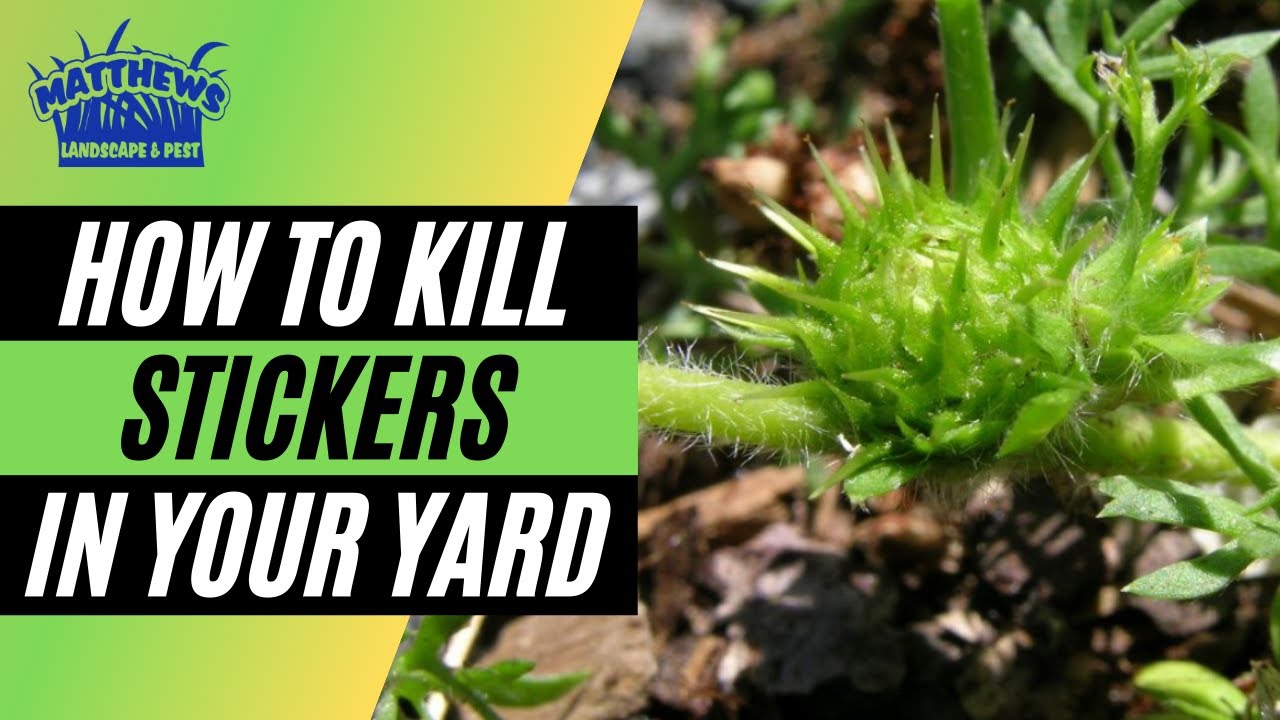
Image Source: i.ytimg.com
How To Kill Stickers In Yard: Get Rid Now
What are stickers in the yard? Stickers in the yard are thorny, spiky weeds that attach themselves to your shoes, clothing, and pets, making yard work and playtime a painful experience. Can I get rid of stickers naturally? Yes, you can get rid of stickers naturally through manual removal and by encouraging healthy lawn growth. Who is most affected by stickers in the yard? Anyone who spends time in their yard, including homeowners, children, and pet owners, is affected by stickers.
Dealing with stickers in your yard can be a real pain, literally. These unwelcome guests, often identified by their spiky seed pods, have a knack for latching onto everything and anything that brushes against them. Whether they’re the notorious goatheads (puncturevine), sandburrs, or other prickly nuisances, the goal is the same: sticker removal yard. This article will guide you through effective strategies to get rid of sticker weeds and reclaim your lawn. We’ll explore everything from manual removal to targeted treatments, ensuring your lawn care stickers woes are a thing of the past.
Identifying Your Sticker Weeds
Before you can effectively tackle sticker weeds, it’s crucial to identify what you’re dealing with. Different types of stickers require slightly different approaches.
Common Sticker Weeds
- Puncturevine (Tribulus terrestris): Famous for its incredibly sharp, woody burrs that can easily puncture bicycle tires and bare feet. It’s a low-growing, spreading annual weed with small yellow flowers. This is often what people refer to when they ask about the best weed killer for goatheads.
- Sandburr (Cenchrus spp.): These grassy weeds produce spiny burs that are tough and irritating. They can spread aggressively and are a common problem in sandy soils and well-trafficked areas.
- Bur Clover (Medicago spp.): While it has clover-like leaves and yellow flowers, its seed pods are small, spiky burs. It’s a nitrogen-fixer, meaning it can actually improve soil, but its spikiness makes it undesirable in many lawns.
- Bindweed (Convolvulus arvensis): While not always producing the most painful stickers, bindweed has small, spiny seed capsules that can be irritating. It’s a persistent perennial vine with deep roots, making bindweed removal yard a challenging task.
The Impact of Stickers on Your Yard
Stickers aren’t just a minor inconvenience; they can have a significant negative impact on your yard’s usability and health.
Why Stickers Are a Problem
- Pain and Injury: The most obvious issue is the discomfort and potential for injury to people and pets. Stepping on stickers or having them embed in paws and fur is a painful experience.
- Damage to Belongings: Stickers can damage clothing, upholstery, and even lawn equipment.
- Spread of Weeds: The burs and stickers are the reproductive parts of these plants. When they attach to clothing or pets, they are easily transported to new areas, spreading the infestation.
- Reduced Lawn Health: Sticker weeds compete with your desirable lawn grasses for water, nutrients, and sunlight. This can lead to thin, weak turf that is more susceptible to diseases and other pests.
- Aesthetic Decline: A lawn overrun with sticker weeds is unsightly and detracts from the beauty of your landscape.
Strategies for Sticker Removal Yard
Now that we know the enemy, let’s explore how to win the war against stickers. A multi-pronged approach is often the most effective for thorough sticker removal yard.
1. Manual Removal: The First Line of Defense
For smaller infestations or when stickers are just starting to appear, manual removal is a viable option. This is also a key component of natural sticker weed removal.
Methods for Manual Removal
- Gloves are Essential: Always wear thick gloves to protect your hands from the sharp spines.
- Digging Out: For young plants, carefully dig them out by the root using a trowel or a weeding tool. Ensure you get as much of the root system as possible, especially for perennial weeds like bindweed.
- Bagging and Disposal: Place the removed weeds directly into a plastic bag. Seal the bag tightly and dispose of it in your outdoor trash bin. Do not compost sticker weeds, as the seeds or burs can survive and reinfect your garden.
- Leaf Blower Tactics: After mowing (when the ground is dry), a powerful leaf blower can help gather many of the fallen burs into piles for easier collection. This is particularly useful for removing fallen burs before they have a chance to germinate.
- Vacuuming: A shop vac with a hose attachment can be surprisingly effective at picking up burs from paved areas or even short, dense grass. Empty the vacuum bag immediately into a sealed trash bag.
When Manual Removal is Best
- Early Stages of Infestation: Catching sticker weeds when they are young and before they have gone to seed is key.
- Small Infestations: If you only have a few plants, manual removal is efficient and avoids the use of chemicals.
- Around Sensitive Plants: Manual removal allows you to be precise and avoid damaging desirable plants.
2. Chemical Treatments: Targeted Lawn Weed Treatment Stickers
When manual removal isn’t enough, or the infestation is widespread, targeted lawn weed treatment stickers can be necessary. The key is to use the right weed killer for stickers at the right time.
Types of Weed Killers for Stickers
- Pre-emergent Herbicides: These are applied before the sticker weeds germinate. They create a barrier in the soil that prevents seeds from sprouting. Timing is crucial for pre-emergents. They are typically applied in early spring before temperatures consistently reach the 60s Fahrenheit.
- Common Active Ingredients: Dithiopyr (e.g., Dimension), Pendimethalin (e.g., Halts), Prodiamine (e.g., Barricade).
- Best Use: To prevent future infestations, especially if you know certain areas are prone to stickers.
- Post-emergent Herbicides: These are applied to actively growing weeds. For stickers, you want to target them when they are young and actively growing but before they produce their spiky burs.
- Broadleaf Weed Killers: Many common sticker weeds are broadleaf plants. Herbicides containing 2,4-D, MCPP, Dicamba, or Triclopyr are effective against many broadleaf weeds. Always check the product label to ensure it’s safe for your specific lawn type (e.g., fescue, bermuda, zoysia).
- Specific Weed Killers: Some herbicides are formulated to target specific types of weeds, including grassy weeds that might produce stickers (like sandburrs). Glyphosate is a non-selective herbicide that will kill any plant it contacts, so it should only be used as a spot treatment in areas where you don’t have desirable grass or plants.
- Best Use: To eliminate existing sticker weeds that have already emerged.
Applying Weed Killers Safely and Effectively
- Read the Label: This cannot be stressed enough. Every product has specific instructions for application rates, timing, and safety precautions.
- Timing is Everything: Apply post-emergent herbicides when weeds are actively growing and temperatures are moderate (usually between 60-85°F). Avoid applying when rain is expected, as it can wash the herbicide away.
- Spot Treatment: Whenever possible, use spot treatments rather than broadcasting herbicides over your entire lawn. This minimizes chemical use and protects beneficial insects and your lawn grass.
- Mow Before Applying: For some herbicides to be effective, mowing beforehand can help the product penetrate the weed. Check the label.
- Watering: Some herbicides require the weed to be moist for absorption, while others work best on dry leaves. Again, consult the product label.
- Target Goatheads: If puncturevine (goatheads) is your primary concern, look for herbicides that specifically list it as a target weed. Products with Dicamba, 2,4-D, and MCPP are often recommended for puncturevine.
3. Cultural Practices: Building a Stronger Lawn
A healthy, dense lawn is your best defense against weeds, including sticker weeds. Good cultural practices starve weeds of resources and make it harder for them to establish.
Key Cultural Practices
- Proper Mowing:
- Mow High: Set your mower to the highest recommended setting for your grass type. Taller grass shades the soil, preventing weed seeds from germinating and outcompeting weeds for sunlight.
- Sharp Blades: Dull mower blades tear grass, leaving it susceptible to disease and stress. Sharp blades make clean cuts, promoting healthier growth.
- Leave Grass Clippings: Grass clippings are a natural fertilizer and help retain soil moisture.
- Adequate Watering:
- Deep and Infrequent: Water your lawn deeply but less often. This encourages deeper root growth, making your grass more drought-tolerant and able to compete with weeds.
- Avoid Overwatering: Overwatering can create conditions favorable for some weed growth.
- Fertilization:
- Soil Testing: Get your soil tested to determine its nutrient needs.
- Balanced Fertilization: Feed your lawn with the right type and amount of fertilizer at the correct times of year to promote vigorous growth. A strong, healthy lawn can naturally suppress weed germination and growth.
- Aeration: Aerating your lawn relieves soil compaction, allowing water, air, and nutrients to reach the root zone. This promotes deeper root systems for your grass, making it more resilient.
- Overseeding: Filling in thin or bare patches with grass seed, especially in the fall, helps create a dense turf that leaves little room for weeds to establish.
4. Natural Sticker Weed Removal and Prevention
For those who prefer to avoid chemicals, there are effective natural sticker weed removal methods.
Natural Methods
- Boiling Water: For small, isolated weeds in cracks or along paths, pouring boiling water directly onto the plant can kill it. Be careful not to splash yourself or desirable plants.
- Vinegar: Horticultural vinegar (with a higher acetic acid concentration, typically 10-20%) can be effective as a contact killer for young weeds. Household vinegar (5%) is less potent but can still work on very young plants.
- Caution: Vinegar is non-selective and can damage grass and other plants. Use it as a spot treatment and avoid spraying on windy days. It may also affect soil pH.
- Salt: Salt can kill weeds by dehydrating them. However, it also sterilizes the soil, making it difficult for anything to grow there for a long time. Use this method very sparingly and only in areas where you want nothing to grow, such as cracks in driveways.
- Corn Gluten Meal: This is a natural pre-emergent that inhibits root formation in germinating seeds. It’s typically applied in early spring. It’s also a natural fertilizer.
- Encouraging Beneficial Organisms: Healthy soil is teeming with life. Encourage earthworms and beneficial microorganisms by avoiding harsh chemicals and promoting good soil health. These organisms help break down organic matter and can even consume weed seeds.
5. Addressing Specific Sticker Weed Challenges
Some sticker weeds require special attention.
Puncturevine Control
Puncturevine (goatheads) is notorious for its painful seeds. Effective puncturevine control requires early intervention.
- Timing: The best time to treat puncturevine is when it is young and actively growing, usually in late spring or early summer, before it produces its spiky burs.
- Herbicides: Pre-emergent herbicides applied in early spring can prevent germination. Post-emergent broadleaf herbicides containing 2,4-D, MCPP, or Dicamba are often effective.
- Manual Removal: Crucial for small patches. Ensure you remove the entire plant, including the root system, and dispose of it properly.
- Mowing: While mowing can keep the plant from growing tall, it won’t kill it and can sometimes help spread the burs if not done carefully. It’s best to remove puncturevine before it has a chance to mature and produce burs.
How to Remove Burrs from Lawn
Removing burrs that have already fallen onto your lawn is more about collection than killing the plant.
- Raking: A stiff metal rake can help gather burrs. Rake vigorously in one direction to collect them.
- Leaf Blower: As mentioned earlier, a leaf blower can concentrate burs into piles.
- Vacuuming: A shop vac is very effective for this task.
- Sweeping: For hard surfaces like patios and sidewalks, a stiff broom works well.
Bindweed Removal Yard
Bindweed is a challenging perennial weed with deep, spreading root systems. Bindweed removal yard often requires persistence.
- Manual Digging: This can be effective if done repeatedly. You need to dig out the entire root system, which can be several feet deep. Every small piece of root left behind can sprout a new plant.
- Herbicides: While glyphosate can kill bindweed, it’s a non-selective herbicide. For targeted treatment, apply it carefully to the leaves of the bindweed. Repeat applications are often necessary. Some broadleaf herbicides can also suppress bindweed.
- Smothering: You can try to smother bindweed by covering it with thick mulch or landscape fabric for an extended period (several months to a year). This deprives the plant of sunlight.
A Seasonal Approach to Sticker Weed Management
Managing sticker weeds effectively often involves a year-round strategy.
Spring
- Pre-emergent Application: Apply pre-emergent herbicides to prevent weed seeds from germinating, especially if you’ve had stickers in the past.
- Early Manual Removal: Start scouting for and manually removing any sticker weeds that have emerged.
- Healthy Lawn Foundation: Fertilize and aerate your lawn if needed to promote strong growth.
Summer
- Spot Treatment: Use post-emergent herbicides for any sticker weeds that have emerged. Apply during cooler parts of the day.
- Manual Removal: Continue to pull any remaining sticker weeds before they go to seed.
- Water Wisely: Ensure your lawn is receiving adequate water, but avoid overwatering.
Fall
- Overseeding: Fill in any bare spots with grass seed to create a dense turf for the following year.
- Final Manual Removal: Remove any late-season sticker weeds.
- Leaf Raking: Rake up fallen leaves, which can smother grass and harbor weed seeds.
Winter
- Plan and Prepare: Review your lawn’s performance. Identify areas that were particularly problematic with stickers and plan your strategy for the next season.
- Soil Testing: Consider getting a soil test done during the winter to prepare for spring fertilization.
Choosing the Right Tools for the Job
Having the right equipment can make sticker removal much easier and more efficient.
Essential Tools
- Thick Gardening Gloves: Protect your hands.
- Trowel or Weeding Tool: For digging out weeds.
- Wheelbarrow or Garden Cart: For hauling removed weeds.
- Plastic Bags: For proper disposal of weeds.
- Leaf Blower: For gathering burs.
- Shop Vacuum: For vacuuming burs.
- Spreader: For applying pre-emergent herbicides or granular fertilizers.
- Pump Sprayer: For applying liquid herbicides or natural treatments.
- Rake: For gathering burrs.
Frequently Asked Questions (FAQ)
Q1: When is the best time to kill stickers in my yard?
A1: The best time to kill stickers is when they are young and actively growing, before they produce their spiky burs. For pre-emergent control, apply herbicides in early spring. For post-emergent control, target young weeds in late spring or early summer.
Q2: Are there any natural ways to get rid of sticker weeds?
A2: Yes, natural methods include manual removal (pulling and digging), using horticultural vinegar as a spot treatment on young weeds, and applying boiling water to individual plants. Maintaining a healthy, dense lawn through proper mowing, watering, and fertilization is also a crucial natural deterrent.
Q3: What is the best weed killer for goatheads?
A3: For goatheads (puncturevine), pre-emergent herbicides applied in early spring can prevent germination. Post-emergent broadleaf herbicides containing active ingredients like 2,4-D, MCPP, or Dicamba are often effective when applied to young, actively growing plants. Always check the product label for efficacy against puncturevine.
Q4: How do I remove burrs from my lawn after the weeds have gone to seed?
A4: Once the sticker weeds have produced burs, the focus shifts to collection. Use a stiff metal rake, a powerful leaf blower, or a shop vacuum to gather the burs for proper disposal. Manual removal of the parent plant is still important to prevent future growth.
Q5: Can I prevent stickers from coming back next year?
A5: Yes, prevention is key. Use pre-emergent herbicides in early spring, maintain a dense and healthy lawn through proper cultural practices, and diligently remove any sticker weeds you see before they go to seed. Staying vigilant is the best way to keep stickers at bay.
By combining diligent manual removal, strategic herbicide use, and robust cultural practices, you can effectively tackle sticker weeds and enjoy a pain-free, beautiful yard. Remember, consistency is your greatest ally in the fight against these prickly invaders.