
Yes, you can aerate and overseed your lawn at the same time! This powerful duo is the secret weapon for a lush, healthy green carpet. Aeration helps your soil breathe and improves water and nutrient penetration, while overseeding fills in thinning patches and introduces stronger grass varieties. Together, they revitalize your turf, making it more resilient and vibrant.
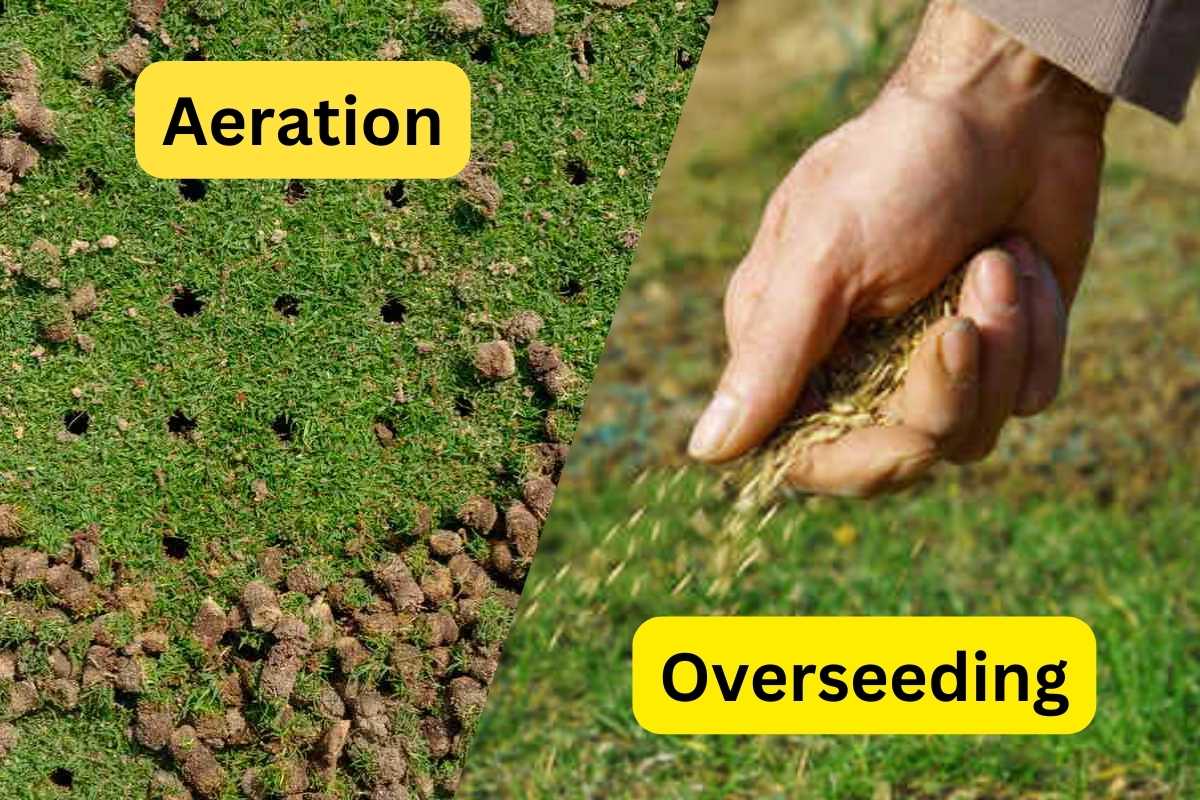
Image Source: www.lawnstarter.com
Why Fuss with Aeration and Overseeding?
Many homeowners wonder about the benefits of a two-pronged approach to lawn care. The truth is, a healthy lawn doesn’t just happen; it’s cultivated. Aerating and overseeding are two crucial steps that significantly improve your lawn’s overall health and appearance.
Lawn Aeration Benefits
Lawn aeration is the process of creating small holes in your lawn’s soil. This might seem counterintuitive – making holes in your lawn? But the advantages are substantial.
- Improved Air Circulation: Compacted soil prevents air from reaching the grass roots. Aeration creates channels for air to flow, allowing roots to “breathe.”
- Better Water Penetration: Water often struggles to seep into hard, compacted soil, leading to runoff. Aeration allows water to reach the root zone more effectively, hydrating the grass and reducing waste.
- Enhanced Nutrient Uptake: Just like air and water, essential nutrients need access to the roots. Aeration opens up pathways, helping fertilizer and organic matter penetrate the soil and be absorbed by the grass.
- Reduced Thatch Buildup: Thatch is a layer of dead and living grass stems, roots, and debris that accumulates on the soil surface. While a thin layer is beneficial, a thick layer can suffocate your lawn. Aeration helps break down this thatch, allowing it to decompose naturally. This ties into the benefits of lawn dethatching, as aeration often achieves similar results without a separate dethatching pass.
- Stronger Root Development: When roots can easily access air, water, and nutrients, they grow deeper and stronger. This creates a more robust and resilient lawn that can better withstand drought, disease, and heavy foot traffic.
- Healthier Grass Growth: By addressing compaction and improving access to vital resources, aeration encourages new grass growth and a denser, greener lawn.
The Power of Overseeding
Overseeding is the process of sowing new grass seed over an existing lawn. This is particularly effective for overseeding a thin lawn.
- Fills Thinning Areas: As lawns age, or due to stress, they can develop bare patches or thin areas. Overseeding introduces new grass to fill these voids, creating a fuller, more uniform look.
- Introduces Improved Grass Varieties: You can choose grass seed varieties that are more resistant to drought, disease, or pests, or that offer a richer green color. This effectively upgrades your lawn’s genetic makeup over time.
- Increases Density: More grass blades mean a denser turf. This density helps outcompete weeds for sunlight, water, and nutrients, naturally suppressing weed growth.
- Enhances Wear Tolerance: A denser lawn with stronger roots is better equipped to handle foot traffic, pet activity, and general wear and tear.
- Restores Color: Over time, grass can lose its vibrant color due to stress or environmental factors. Overseeding with high-quality seed can restore that rich green hue.
When is the Best Time to Aerate and Overseed?
Timing is everything when it comes to lawn care. The best time to aerate and overseed depends on your climate and the type of grass you have. The general rule of thumb is to perform these tasks during the active growing season for your grass type.
Cool-Season Grasses
These grasses thrive in cooler temperatures and include varieties like:
- Kentucky Bluegrass
- Perennial Ryegrass
- Fine Fescues
- Tall Fescue
For cool-season grasses, the ideal time for aeration and overseeding is early fall (late August to October). The soil is still warm enough for germination, but the air temperatures are cooler, which is ideal for new grass growth. This also gives the new seedlings time to establish a strong root system before winter sets in.
A secondary, less ideal, but still viable time is early spring (March to April), after the last frost but before summer heat arrives. However, spring overseeding can face competition from crabgrass and other summer annual weeds.
Warm-Season Grasses
These grasses prefer warmer temperatures and include varieties like:
- Bermuda Grass
- Zoysia Grass
- Centipede Grass
- St. Augustine Grass
For warm-season grasses, the best window is late spring to early summer (May to June), after the danger of frost has passed and the soil has warmed up significantly. This allows the new grass to establish before the intense heat of mid-summer.
Deciphering Aeration and Overseeding Equipment
You have a couple of options when it comes to aeration and overseeding equipment. The choice often depends on your lawn size, budget, and how much physical effort you’re willing to put in.
Aeration Equipment
-
Core Aerator (Spike Aerator): This is the most effective type of aerator. It pulls out small plugs of soil, leaving holes that are typically 1/4 to 3/4 inch in diameter and up to 3 inches deep.
- Manual Core Aerator: These are walk-behind machines that require you to push them forward, and they then punch out plugs. They are great for small to medium-sized lawns but can be physically demanding.
- Tow-Behind or Propelled Core Aerator: These are larger, often gas-powered machines that can be pulled by a riding mower or are self-propelled. They are ideal for larger lawns and significantly reduce the physical labor. You can often rent these from garden centers or tool rental shops.
-
Spike Aerator (without Plug Removal): These machines have spikes that poke holes into the soil. While they provide some aeration, they are less effective than core aerators because they can further compact the soil around the hole. They are generally not recommended for severe compaction issues.
Overseeding Equipment
- Broadcast Spreader: This is the most common tool for spreading grass seed. It distributes seed evenly over a wide area. You can find handheld, walk-behind, or tow-behind models.
- Drop Spreader: This spreader releases seed in a narrow, precise band directly below the machine. It’s good for more controlled application, especially around flower beds or pathways.
- Slice Seeder (Power Seeder): This is a highly effective tool that not only drops the seed but also cuts shallow slits into the soil, ensuring excellent seed-to-soil contact. This significantly increases germination rates. They are available for rent and are excellent for overseeding a thin lawn.
Mastering Soil Aeration Techniques
Effective soil aeration techniques ensure you get the most out of this process.
Core Aeration: The Gold Standard
Core aeration is the most beneficial method. When using a core aerator:
- Mow Your Lawn: Mow your grass to a height of about 2 to 2.5 inches. This makes it easier for the aerator to penetrate the soil and prevents the mower from getting bogged down.
- Water the Lawn (if dry): Lightly water your lawn the day before aerating if the soil is very dry and hard. Moist soil is much easier for the aerator to penetrate. Avoid aerating waterlogged soil, as this can cause excessive damage.
- Operate the Aerator:
- If using a manual aerator, step on the foot pedal to push the tines into the soil. Then, pull the machine backward to remove the plug.
- If using a powered aerator, simply guide it across your lawn.
- Overlap Your Passes: Make sure to overlap each pass by a few inches. This ensures thorough coverage and prevents missed spots.
- Aeration Pattern: Aerate in one direction across your lawn, then turn and aerate perpendicular to your first pass. This creates a crosshatch pattern, allowing for maximum soil penetration.
- Plug Spacing: Aim for holes that are about 2 to 3 inches apart. The plugs themselves should be about 1/2 inch to 3/4 inch in diameter and 2 to 3 inches deep.
What to Do with the Plugs
Don’t rake up the soil plugs immediately! They contain valuable soil and nutrients. As they dry and break down over a week or two, they will naturally fall back into the holes, further enriching the soil. You can gently break them up with a rake if they are very large and impede overseeding, but often it’s best to let nature take its course.
Selecting the Right Grass Seed Types for Overseeding
Choosing the correct grass seed types for overseeding is crucial for success. The best choice depends on your existing grass type, your climate, and the desired characteristics of your lawn.
Cool-Season Grass Seed Options
- Kentucky Bluegrass (KBG): Known for its beautiful, dark green color and excellent cold-season hardiness. It spreads by rhizomes, which helps fill in thin spots naturally. It does require good sunlight and consistent moisture.
- Perennial Ryegrass: Germinates quickly, providing rapid coverage. It’s also very durable and can tolerate moderate shade. However, it doesn’t spread and can struggle in extreme heat or drought.
- Fine Fescues: Includes Chewings Fescue, Creeping Red Fescue, and Hard Fescue. These are excellent for shady areas and tolerate poor soils. They have a fine texture and are quite drought-tolerant once established.
- Tall Fescue: A popular choice for its durability, drought tolerance, and ability to withstand heat and wear. It has a deeper root system than other cool-season grasses. Newer varieties (turf-type tall fescues) have a finer texture and better shade tolerance.
Mixing Seed Types: Often, a blend of these cool-season grasses provides the best results, offering a range of benefits. For example, a mix of Kentucky Bluegrass for density and color, perennial ryegrass for quick establishment, and fine fescues for shade tolerance is a common and effective choice.
Warm-Season Grass Seed Options
- Bermuda Grass: Very heat and drought-tolerant, recovers quickly from damage, and establishes rapidly. It thrives in full sun and can be aggressive.
- Zoysia Grass: Known for its dense growth, excellent drought tolerance, and ability to withstand wear. It establishes slowly but creates a very tough, weed-resistant lawn.
- Centipede Grass: A low-maintenance grass that prefers acidic soils and tolerates shade and poor fertility. It has a slower growth rate and a lighter green color.
- St. Augustine Grass: Popular in warmer climates, it has broad leaves and tolerates shade well. It is not as cold-hardy as other warm-season grasses and can be susceptible to chinch bugs.
Important Consideration: Always try to match the seed type you use for overseeding to your existing lawn type. Overseeding with a different type of grass can result in a patchy, uneven appearance as they grow and mature differently.
Preparing Lawn for Overseeding
Proper preparing lawn for overseeding is a critical step that significantly impacts the success of your efforts.
1. Mow Low
As mentioned earlier, mow your lawn to a lower-than-usual height, around 2 to 2.5 inches. This allows the new grass seed to reach the soil surface and receive sunlight.
2. Remove Debris
Rake your lawn thoroughly to remove any leaves, twigs, rocks, or other debris. This ensures the aerator can penetrate the soil effectively and that the seed will have good contact with the soil.
3. Deal with Weeds
If you have a significant weed problem, it’s best to address it before overseeding.
* Manual Removal: For scattered weeds, pull them by hand, ensuring you get the roots.
* Herbicides: If weeds are widespread, you might consider applying a post-emergent herbicide a week or two before aeration and overseeding. However, be careful, as some herbicides can prevent grass seed from germinating. Read product labels carefully and choose one that is safe for overseeding or apply it well in advance.
4. Dethatch (If Necessary)
While aeration helps with thatch, if you have a very thick thatch layer (more than half an inch), consider dethatching before aerating. Dethatching removes this dense mat of organic matter, allowing air, water, and nutrients to reach the soil more effectively. The benefits of lawn dethatching are similar to aeration in that it improves soil contact and reduces potential suffocation of grass. A power rake or dethatcher can be used for this.
5. Aeration (as detailed above)
After mowing, debris removal, and any necessary weed or thatch control, proceed with core aeration.
The Overseeding Process Steps
With your lawn prepped and aerated, it’s time to get down to the overseeding process steps.
Step 1: Apply Grass Seed
- Calculate Seed Needs: Determine the square footage of your lawn and consult the seed bag for the recommended application rate for overseeding. It’s usually a slightly lower rate than for establishing a new lawn.
- Use a Spreader: Load your broadcast or drop spreader with the chosen grass seed.
- Apply Evenly: Walk at a steady pace, applying the seed in overlapping passes. If using a broadcast spreader, apply half the seed in one direction (e.g., north to south) and the other half in the perpendicular direction (e.g., east to west). This ensures uniform coverage.
Step 2: Ensure Seed-to-Soil Contact
This is arguably the most critical step for successful germination.
- If you used a slice seeder: You’re already set! The machine cuts slits and drops the seed directly into them.
- If you used a spreader:
- Light Raking: Gently rake the lawn to work the seed into the newly created aeration holes and ensure good contact with the soil. Be careful not to bury the seed too deeply.
- Light Roller: For even better contact, you can use a lawn roller over the seeded area. This lightly presses the seed into the soil.
Step 3: Apply Starter Fertilizer (Optional but Recommended)
A starter fertilizer is formulated to provide the nutrients that new grass seedlings need to establish strong root systems. Apply a starter fertilizer according to the product’s instructions. It’s best to apply this after spreading the seed and ensuring seed-to-soil contact, or use a fertilizer that is specifically designed to be applied at the same time as seeding.
Step 4: Water Gently and Consistently
- Initial Watering: Water the lawn lightly immediately after overseeding. The goal is to moisten the top inch of soil.
- Maintain Moisture: Keep the seeded areas consistently moist – not soggy – throughout the germination period. This usually means light watering once or twice a day, depending on the weather.
- Avoid Heavy Watering: Heavy watering can wash the seeds away or cause them to clump.
Lawn Care After Overseeding
The work isn’t over once the seed is down. Proper lawn care after overseeding is essential for healthy germination and establishment.
Watering Schedule
- Germination Phase: As mentioned, keep the soil surface moist but not saturated. This might mean watering lightly daily.
- Seedling Establishment: Once the seedlings start to grow (you’ll see about an inch of growth), you can gradually transition to a less frequent but deeper watering schedule. Water deeply enough to encourage roots to grow down into the soil. Allow the soil surface to dry out slightly between waterings.
- Mowing: Do not mow new seedlings until they reach about 3 inches in height. When you do mow, set your mower to a higher setting, and only remove about one-third of the grass blade’s height. This allows the new grass to continue to grow and strengthen.
Fertilizing
- Starter Fertilizer: If you applied a starter fertilizer at seeding, you likely won’t need to fertilize again for 6-8 weeks.
- Follow-up Fertilization: Once the new grass has been mowed a few times, you can apply a balanced lawn fertilizer according to your grass type’s needs. Avoid high-nitrogen fertilizers on very young seedlings, as this can encourage excessive top growth before the roots are strong enough.
Weed Control
- Avoid Pre-Emergents: Do not use pre-emergent herbicides on your lawn for at least 6-8 weeks after overseeding, as they will prevent the new grass seed from germinating.
- Manual Removal: Continue to pull any weeds that appear by hand.
- Post-Emergents (with caution): If weeds become a major problem, you can use a post-emergent herbicide, but always check the label to ensure it’s safe for new grass.
Foot Traffic
Minimize foot traffic on the newly seeded areas for at least 3-4 weeks. This allows the fragile new grass and its developing root system to establish without being trampled.
Frequently Asked Questions (FAQ)
Q1: Can I aerate and overseed my lawn in the same day?
A1: Yes, absolutely! Aerating first creates an ideal environment for the new seed to establish by improving soil contact and reducing compaction.
Q2: How often should I aerate my lawn?
A2: For most lawns, aerating once a year is sufficient. If your lawn is heavily compacted due to heavy traffic or clay soil, you might aerate twice a year (spring and fall).
Q3: My lawn is very bare. Can overseeding alone fix it?
A3: Overseeding is excellent for filling in thin spots, but if your lawn is severely bare or damaged, you might need to consider sodding or establishing a new lawn. However, for moderate thinning, overseeding is highly effective.
Q4: Will the plugs left by the aerator damage my lawn?
A4: No, the soil plugs left by a core aerator are beneficial. They break down naturally, returning nutrients to the soil. Avoid raking them up unless they are excessively large and impede the overseeding process.
Q5: How long does it take for overseeded grass to grow?
A5: Germination times vary depending on the grass type and environmental conditions. Cool-season grasses can germinate in 5-10 days, while warm-season grasses may take longer. Full establishment can take several weeks to a few months.
Q6: Can I overseed if I have a sprinkler system?
A6: Yes, a sprinkler system is very helpful for maintaining consistent moisture after overseeding. Just ensure your watering schedule is adjusted to keep the top layer of soil moist without causing waterlogging.
By following these detailed steps, you can effectively aerate and overseed your lawn, transforming it into a thick, healthy, and resilient green space that you can enjoy for years to come.