
Figuring out what to charge for lawn care services, often referred to as lawn care pricing, can seem tricky. How much should you charge for lawn mowing costs, landscape service fees, yard work rates, and grass cutting prices? The answer depends on many things, like where you are, what you do, and how much your work costs you. This guide will help you find the right prices.
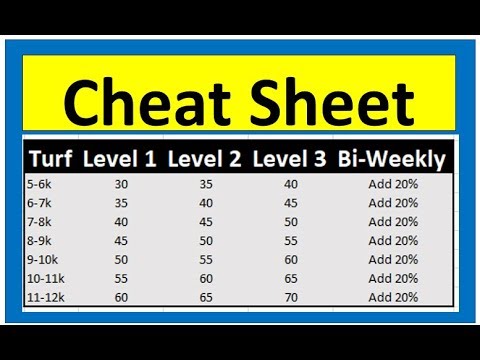
Image Source: i.ytimg.com
Deciphering Your Lawn Care Costs
Before you can set prices, you must know exactly how much it costs you to run your lawn care business. This is crucial for making a profit.
Direct Costs Associated with Each Service
These are the expenses that go up directly with every job you do.
- Fuel: The gas or diesel for your mower, trimmer, edger, blower, and any trucks you use.
- Equipment Wear and Tear: Every time you use your tools, they get a little closer to needing repairs or replacement. This includes blades, tires, engines, and the actual machines.
- Supplies: Things like trimmer line, oil, gas cans, and bags for grass clippings.
- Labor (if you have employees): The wages you pay your workers, including payroll taxes.
Indirect Costs (Overhead)
These are the costs of running your business that aren’t tied to a specific job.
- Insurance: General liability insurance is a must to protect you from accidents. Workers’ compensation is also needed if you have employees.
- Equipment Maintenance and Repairs: Keeping your mowers, trimmers, and other tools in good working order. This includes oil changes, sharpening blades, and fixing broken parts.
- Vehicle Expenses: Payments for trucks, maintenance, insurance, and registration.
- Marketing and Advertising: Costs for flyers, business cards, website hosting, and online ads.
- Office Supplies: Paper, pens, computer, software, phone.
- Licenses and Permits: Any fees required by your local government.
- Professional Development: Training or courses to improve your skills or learn new services.
Calculating Your Hourly Rate
A good way to start is by figuring out what you need to earn per hour to cover all your costs and make a profit.
Formula:
Total Annual Expenses / Total Annual Billable Hours = Minimum Hourly Rate
Example:
Let’s say your total annual expenses (direct and indirect) are $50,000.
If you plan to work 1,000 billable hours in a year (this means hours you are actually working for a client, not driving or doing admin), your minimum hourly rate would be $50,000 / 1,000 hours = $50 per hour.
Remember, this is just the minimum to break even. You need to add a profit margin to this.
Factors Influencing Lawn Care Pricing
Many things affect how much you can and should charge.
Size of the Property
Bigger lawns take more time and effort. This is usually the biggest factor in lawn mowing costs.
- Small Lawns: Often under 1/4 acre. These can sometimes be charged at a flat rate, as the time is predictable.
- Medium Lawns: Between 1/4 acre and 1/2 acre.
- Large Lawns: Over 1/2 acre. These usually require higher rates or more specialized equipment.
Complexity of the Job
Is it just a simple mow, or does it involve more?
- Terrain: Slopes or hills make mowing harder and take longer.
- Obstacles: Lots of trees, flower beds, or landscaping features mean more trimming and careful maneuvering.
- Property Shape: Irregularly shaped yards can be more time-consuming than simple rectangular ones.
Type of Services Provided
Are you just mowing, or are you offering a full suite of services?
- Basic Lawn Mowing: This typically includes mowing, trimming around obstacles, and blowing clippings off hard surfaces.
- Edging: Creating a clean line between the lawn and sidewalks, driveways, or garden beds.
- Blowing: Clearing clippings and debris from walkways and driveways.
- Weed Whacking/Trimming: Cutting grass in areas the mower can’t reach.
Frequency of Service
Customers who schedule regular service (weekly or bi-weekly) might get a slight discount compared to one-time jobs. This helps you plan your schedule and guarantee income.
Your Location and Local Market Rates
Prices vary greatly depending on your geographic area. What people pay in a high-cost-of-living urban area will be different from a rural town. Research what other lawn care pricing services in your area are charging.
Your Experience and Reputation
As you gain experience and build a good reputation, you can often charge more. Clients are willing to pay for reliability, quality work, and professionalism.
Equipment Used
Professional-grade equipment is more efficient and produces better results, but it also costs more to buy and maintain. This cost should be reflected in your yard work rates.
Seasonal Demand
During peak seasons (spring and summer), demand is high. In slower seasons (fall and winter, depending on your location), you might adjust pricing or offer different services.
Common Lawn Care Service Pricing Models
How do you actually present your prices to clients?
Per-Service Pricing
This is the most straightforward. You charge a set amount for each specific task.
-
Lawn Mowing:
- Small Lawn: $40 – $70
- Medium Lawn: $60 – $100
- Large Lawn: $90+
- Note: These are general estimates and can vary significantly.
-
Trimming (Shrubs/Bushes):
- Small Bush: $20 – $40 per bush
- Medium Bush: $40 – $70 per bush
- Large Bush: $60 – $100+ per bush
- Bush trimming prices and hedge trimming cost will depend on density and shape.
-
Tree Trimming (Small Trees/Low Branches):
- Small Tree: $75 – $150
- Note: For larger trees or difficult access, you’ll need a professional arborist’s quote. This is a specialized skill.
-
Edging:
- Per linear foot: $1 – $3
- Flat rate per property: $30 – $60
-
Blowing:
- Often included in mowing, but can be an add-on: $15 – $30
Hourly Rate Pricing
This model charges a set rate for every hour you work on a client’s property. This is good for jobs that are hard to estimate, like extensive yard cleanup or landscape design.
- General Yard Work: $50 – $100 per hour (this covers various yard work rates)
- Specialized Services: Might be higher.
Package or Bundle Pricing
Offer discounts when customers sign up for multiple services or a recurring schedule. This encourages customer loyalty and guarantees income.
-
Basic Lawn Care Package (Mow, Trim, Edge, Blow):
- Weekly: $50 – $90 per visit
- Bi-weekly: $60 – $100 per visit
-
Seasonal Maintenance Package: Could include spring cleanup, regular mowing, fertilization, aeration, and fall cleanup.
Flat Rate Pricing
This is common for basic mowing services on properties with predictable sizes and complexities. It’s easy for customers to budget.
- Factors for Flat Rate: Lawn size, mowing frequency, and basic trimming.
- How to Set a Flat Rate:
- Estimate the time a typical job takes.
- Calculate your desired hourly wage.
- Add a buffer for unexpected issues.
- Add profit margin.
- Example: If a lawn takes 45 minutes, and you want $50/hour, that’s $37.50. Add a 15-minute buffer ($12.50), so $50. Then add 20% profit ($10), making your flat rate $60.
Pricing Specific Lawn Care Services In Detail
Let’s break down costs for popular services.
Lawn Mowing Costs
Grass cutting prices are highly variable. Key factors include:
- Yard Size: The most significant driver.
- Mowing Pattern: Does the customer want a specific pattern? (e.g., striped lawn).
- Clipping Disposal: Do you bag and haul clippings, or mulch them back into the lawn? Bagging adds time and disposal costs.
- Terrain: As mentioned, slopes increase time and effort.
Landscape Service Fees
Landscape service fees can cover a broad range of tasks beyond basic mowing.
-
Mulching:
- Per cubic yard of mulch: $40 – $80 (for the mulch itself, plus delivery if not hauling yourself).
- Labor: $50 – $75 per hour for spreading.
- A typical small to medium bed might cost $150 – $300 for mulch installation.
-
Planting Flowers or Shrubs:
- Depends on the size and type of plants, as well as the complexity of the planting.
- A small shrub might cost $50 – $150 installed.
- A bed of annual flowers could be $100 – $400 depending on size and plant cost.
-
Pruning and Trimming:
- Bush Trimming Prices and Hedge Trimming Cost: Often charged per bush or per linear foot for hedges.
- Small hedges: $30 – $60
- Large hedges: $75 – $150+
- Tree Trimming Cost (for smaller ornamental trees or removal of dead branches): $75 – $250 per tree. For anything significant, use an arborist.
- Bush Trimming Prices and Hedge Trimming Cost: Often charged per bush or per linear foot for hedges.
Fertilization and Weed Control Pricing
These are specialized services that require knowledge of plant health and chemical application.
-
Fertilization Cost:
- Typically charged per application, based on lawn size.
- Small Lawn: $50 – $80 per application
- Medium Lawn: $70 – $120 per application
- Large Lawn: $100 – $200+ per application
- A full season of 4-5 applications could range from $250 to $800+.
-
Weed Control Pricing:
- Can be a standalone service or part of a comprehensive lawn care plan.
- Often charged similarly to fertilization, per application.
- Can also be charged per square foot.
- Spot treatment for weeds might be a lower, flat fee.
-
Combined Lawn Care Programs: Many companies offer bundled services (e.g., a 5-step program including fertilization and weed control) for a set annual price, often billed monthly or quarterly.
Other Services
- Aeration: $75 – $200 depending on lawn size.
- Dethatching: $100 – $300 depending on lawn size.
- Spring/Fall Cleanup: This can be an hourly charge ($50 – $100/hr) or a flat fee based on the amount of debris and work involved ($150 – $500+).
Creating Your Price List and Quotes
How you present your prices can make a big difference.
Developing a Standard Price List
For common services like mowing, have a clear list of prices based on lawn size. This helps customers understand your base rates.
Example Standard Lawn Mowing Pricing:
| Lawn Size (Approx.) | Description | Price Range |
|---|---|---|
| Up to 5,000 sq ft | Small Residential | $40 – $65 |
| 5,000 – 10,000 sq ft | Medium Residential | $55 – $85 |
| 10,000 – 20,000 sq ft | Large Residential | $75 – $120 |
| Over 20,000 sq ft | Estate/Commercial (Call for Quote) | Custom |
- Add-ons: Edging ($25-$40), Trimming Bushes ($30-$70 each), Blowing ($15-$25).
Providing Accurate Quotes
For any work beyond basic mowing, always provide a written quote after assessing the property.
- Site Visit: Essential for complex jobs.
- Detailed Scope of Work: Clearly list what services will be performed.
- Materials: Specify if materials (like mulch) are included and what type.
- Labor Estimate: Break down labor costs or state the hourly rate.
- Total Price: The final cost.
- Payment Terms: When payment is due.
Estimating Time for Jobs
- Measure: Know the approximate square footage of the lawn.
- Walk the Property: Identify obstacles, slopes, gate access, and areas needing extra attention.
- Factor in Travel: How long does it take to get to the client’s location?
- Account for Setup and Cleanup: Time to get equipment out and put it away, and to clean up any debris.
Strategies for Profitability and Growth
Once you have your pricing figured out, focus on making your business thrive.
Focus on Customer Retention
It’s cheaper to keep an existing customer than to find a new one.
- Excellent Service: Always deliver on your promises.
- Communication: Keep clients informed about schedules, changes, or any issues.
- Loyalty Programs: Offer discounts for long-term clients or referrals.
- Feedback: Ask for feedback and act on it.
Upsell and Cross-sell Services
Once you have a satisfied mowing client, offer them other services.
- Fertilization and weed control pricing can be presented as a beneficial program.
- Offer seasonal cleanups, shrub care (bush trimming prices), or even holiday lighting.
Efficient Operations
- Route Optimization: Plan your daily routes to minimize travel time and fuel costs.
- Equipment Maintenance: Well-maintained equipment lasts longer and breaks down less, saving you money and downtime.
- Team Training: Ensure your crew is efficient and knows how to perform services correctly and safely.
Marketing and Branding
A strong brand helps you attract and retain customers.
- Professional Website: Showcases your services and pricing.
- Social Media Presence: Share photos of your work and engage with the community.
- Local Advertising: Flyers, local partnerships, community events.
- Online Reviews: Encourage satisfied customers to leave reviews.
Frequently Asked Questions (FAQ)
Q: What is a good hourly rate for lawn care?
A: A good hourly rate typically falls between $50 and $100, but this can vary significantly based on your location, experience, overhead costs, and the specific services you offer.
Q: How much should I charge for mowing a typical suburban lawn?
A: For a typical suburban lawn (around 5,000-10,000 sq ft), you might charge anywhere from $55 to $85 for a basic mow, trim, and blow service. This price is influenced by the complexity and your local market.
Q: How do I price landscape services if they are not standard mowing?
A: For landscape service fees, it’s best to estimate the time the job will take, the cost of materials (plants, mulch, soil), and then apply your hourly labor rate plus a profit margin. For complex projects, provide a detailed written quote after an on-site assessment.
Q: Can I charge extra for difficult terrain like hills?
A: Yes, absolutely. Jobs with slopes or uneven terrain take more time, effort, and can be more dangerous. Factor this into your yard work rates or add a surcharge to your quote.
Q: What are typical grass cutting prices for commercial properties?
A: Commercial properties are usually priced differently than residential ones. They are often quoted on a contract basis or a per-service fee based on square footage, frequency, and specific requirements. Commercial rates are generally higher than residential due to the larger scale and different expectations.
Q: How much does tree trimming cost if I do it?
A: For basic trimming of small trees or low-hanging branches, a general tree trimming cost might range from $75 to $250 per tree. However, if it involves significant height, large branches, or hazardous conditions, you need to hire a certified arborist, and their rates will be considerably higher.
Q: What are common bush trimming prices?
A: Bush trimming prices vary by size and density. Small bushes might be $20-$40, medium ones $40-$70, and larger or denser bushes $60-$100+. For hedges, hedge trimming cost is often calculated per linear foot, perhaps $1-$3 per foot.
Q: How do I determine fertilization cost?
A: Fertilization cost is typically based on the square footage of the lawn and the number of applications per year. Expect to charge $50-$120 per application for most residential lawns, with annual programs offering a package discount.
Q: What is weed control pricing like?
A: Weed control pricing is often similar to fertilization costs, charged per application and based on lawn size. Some services might offer spot treatment for weeds at a lower flat rate.
Q: Should I offer discounts for regular customers?
A: Yes, offering discounts for recurring services (weekly or bi-weekly mowing) or bundled packages is a great strategy to encourage customer loyalty and ensure consistent business.