
How much grass seed do you need per acre? Typically, you’ll need between 3 to 10 pounds of grass seed per 1,000 square feet, which translates to roughly 130 to 435 pounds of seed per acre, depending on the grass type and whether you are establishing a new lawn or overseeding.
Laying down a lush, green carpet of grass across an acre of land can seem daunting, but with the right information, it’s an achievable goal. A key piece of this puzzle is knowing precisely how much grass seed to buy. This guide will walk you through everything you need to know about grass seed coverage per acre, helping you achieve a healthy, vibrant lawn.
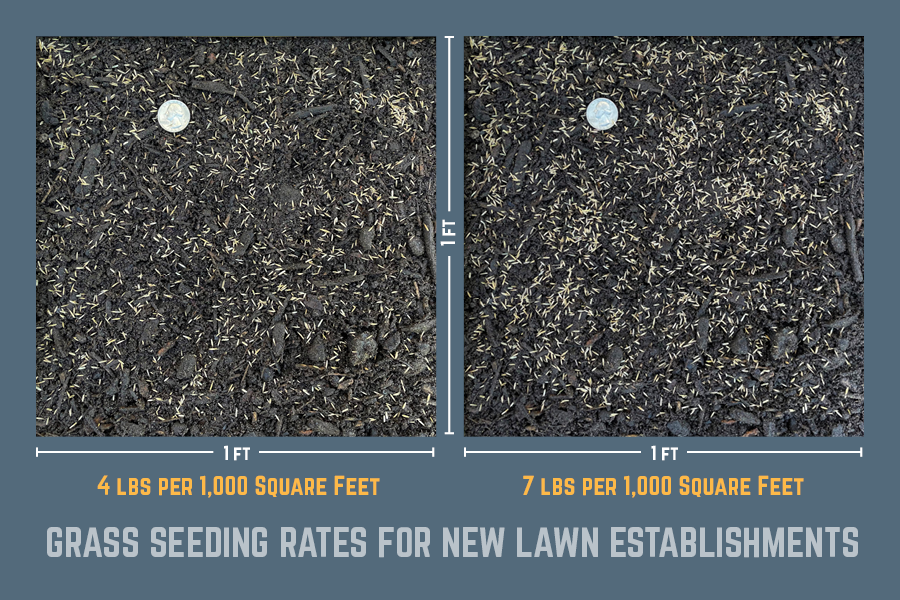
Image Source: alseed.com
Fathoming Your Seeding Needs: Factors at Play
Several factors influence how much seed you’ll need. It’s not a one-size-fits-all answer. Let’s break down the crucial elements that affect your lawn seeding rate.
Grass Type Matters
Different grass species have varying seed sizes and germination rates. Some seeds are larger and require more weight per area to achieve good coverage, while others are smaller and more dense.
- Fine Fescues (Creeping Red, Chewings, Hard): These have smaller seeds. You might need around 3-5 lbs per 1,000 sq ft.
- Ryegrass (Perennial, Annual): Ryegrass seeds are medium-sized. A common rate is 4-6 lbs per 1,000 sq ft.
- Kentucky Bluegrass: Known for its slower germination and spreading habit, it often requires a slightly higher seeding rate, around 1-2 lbs per 1,000 sq ft. However, it’s often blended with other grasses.
- Tall Fescue: This grass has larger seeds. Seeding rates are typically 6-8 lbs per 1,000 sq ft.
- Bermuda Grass: Often planted by sod or plugs, but if seeding, rates can be around 1-2 lbs per 1,000 sq ft.
When you purchase seed, the bag will usually provide a recommended seeding rate. Always check this information!
New Lawn vs. Overseeding
The purpose of your seeding project significantly impacts the amount of seed required.
- Establishing a New Lawn: This requires a denser application to ensure full coverage and crowd out weeds from the start. You’re essentially creating a brand new sward.
- Overseeding an Existing Lawn: This process involves adding seed to an already established lawn to improve its density, fill in bare patches, and introduce new grass varieties. You don’t need as much seed because you already have grass present. The goal here is to enhance overseeding lawn density.
Environmental Conditions and Goals
- Climate: Your local climate plays a role. In areas with extreme conditions, you might opt for a slightly higher seeding rate to give the grass a better chance to establish.
- Soil Health: Good soil supports vigorous growth. Poor soil might require more seed to compensate for less-than-ideal conditions.
- Desired Density: Do you want a very thick, golf-course-like lawn, or are you aiming for a more natural, less dense look? Denser lawns require more seed.
Calculating Your Seed Needs: From Square Feet to Acres
Most grass seed bags provide seeding rates per 1,000 square feet. To convert this to a per-acre figure, you need to know the total square footage of your area.
Key Conversion: 1 Acre = 43,560 square feet
To calculate your total seed requirement:
- Determine the square footage of your lawn. If you have an irregular shape, break it down into smaller, manageable rectangles or squares and add their areas together.
- Find the recommended seeding rate per 1,000 square feet on your chosen grass seed bag. Let’s call this ‘R’.
- Calculate the total number of 1,000 sq ft units in your acre: 43,560 sq ft / 1,000 sq ft = 43.56 units.
- Multiply the rate per 1,000 sq ft by the number of units: Total Seed (lbs) = R * 43.56
Example:
If a grass seed blend recommends 5 lbs per 1,000 sq ft for a new lawn:
Total Seed (lbs) = 5 lbs/1,000 sq ft * 43.56 (1,000 sq ft units in an acre)
Total Seed (lbs) = 217.8 lbs per acre
For overseeding, the rates are usually lower. If the same blend recommends 2 lbs per 1,000 sq ft for overseeding:
Total Seed (lbs) = 2 lbs/1,000 sq ft * 43.56
Total Seed (lbs) = 87.12 lbs per acre
Table: Estimated Grass Seed Needs Per Acre
| Grass Type | New Lawn (lbs/1,000 sq ft) | Overseeding (lbs/1,000 sq ft) | New Lawn (lbs/acre) | Overseeding (lbs/acre) |
|---|---|---|---|---|
| Fine Fescues | 3-5 | 1.5-2.5 | 131-218 | 65-109 |
| Perennial Ryegrass | 4-6 | 2-3 | 174-262 | 87-131 |
| Kentucky Bluegrass | 1-2 | 0.5-1 | 44-87 | 22-44 |
| Tall Fescue | 6-8 | 3-4 | 262-349 | 131-174 |
| Bermuda Grass (Seed) | 1-2 | 0.5-1 | 44-87 | 22-44 |
Note: These are estimates. Always refer to the specific product’s recommended seeding rate.
Preparing the Ground: The Foundation for Success
Before you even think about spreading seed, proper soil preparation for seeding is paramount. This step significantly impacts germination and the long-term health of your lawn.
Testing Your Soil
- pH Level: Grass thrives in a slightly acidic to neutral pH range (6.0-7.0). A soil test will reveal your pH and suggest amendments if needed (like lime to raise pH or sulfur to lower it).
- Nutrient Levels: Soil tests also identify deficiencies in essential nutrients like nitrogen, phosphorus, and potassium, which are crucial for seedling growth.
Site Preparation Steps
- Clear the Area: Remove any debris, rocks, weeds, or old grass clippings. For new lawns, this might involve removing sod.
- Loosen the Soil: Till or cultivate the soil to a depth of at least 4-6 inches. This breaks up compaction, allowing roots to penetrate easily and improving drainage and aeration.
- Level the Ground: Rake the soil to create a smooth, even surface. Fill in any low spots and remove high spots to prevent water pooling and ensure consistent seed-to-soil contact.
- Amend the Soil: Based on your soil test, incorporate compost or other organic matter to improve soil structure, fertility, and moisture retention.
- Fertilize (Pre-seeding): Apply a starter fertilizer. These fertilizers are typically high in phosphorus (the middle number in N-P-K ratios), which is vital for root development. Follow the application rate recommended on the fertilizer bag.
Choosing the Right Grass Seed
Selecting the best grass seed for acreage involves considering your climate, sunlight exposure, intended use of the lawn, and desired aesthetics.
Cool-Season vs. Warm-Season Grasses
- Cool-Season Grasses: Thrive in cooler temperatures (spring and fall). Examples include Kentucky Bluegrass, Perennial Ryegrass, and Fescues. They go dormant in extreme heat or cold.
- Warm-Season Grasses: Prefer warmer temperatures and go dormant in the winter. Examples include Bermuda Grass, Zoysia Grass, and St. Augustine Grass.
Seed Blends and Mixtures
Most lawn seed products are not pure species but rather blends or mixtures.
- Blends: Contain different varieties of the same grass species (e.g., three different types of Perennial Ryegrass). This offers disease resistance and adaptability.
- Mixtures: Combine different grass species (e.g., Kentucky Bluegrass, Perennial Ryegrass, and Fine Fescue). This is often the best approach for general lawn care, as different grasses perform well in different conditions, providing resilience. The grass seed mixture ratios are designed to create a balanced lawn.
When choosing lawn seed, consider the following:
- Sunlight: Does the area get full sun, partial shade, or dense shade?
- Traffic: Will the lawn experience heavy foot traffic or is it more for aesthetics?
- Watering: How much water can you commit to providing? Some grasses are more drought-tolerant than others.
Applying the Seed: The Art of Coverage
Once your ground is prepared and you have your seed, it’s time for application. Proper seed application per acre ensures an even distribution, which is crucial for a uniform lawn.
Tools for Spreading Seed
- Broadcast Spreader: These are excellent for covering large areas like an acre. They cast seed in a wide arc. They can be walk-behind models or tractor-pulled.
- Drop Spreader: These are more precise and drop seed in a narrow band. They are better for smaller areas or when you need to be very controlled.
- Hand-Spreading: For very small patches, you can simply use your hands, but this is impractical for an acre.
Spreading Techniques for Even Coverage
- Calibrate Your Spreader: This is the most important step! Read the instructions on your seed bag and your spreader. Adjust the settings to match the recommended rate. Test it in a small area first to ensure you’re applying the correct amount.
- Divide Your Seed: If you have a large area and a broadcast spreader, divide your total seed amount in half.
- First Pass: Spread the first half of the seed by walking in one direction (e.g., north to south) across your entire lawn.
- Second Pass: Spread the remaining half of the seed by walking in a perpendicular direction (e.g., east to west). This cross-hatching ensures much more even coverage and minimizes streaks or missed spots.
Ensuring Seed-to-Soil Contact
This is perhaps the most critical factor for successful germination. Seed needs to be in direct contact with the soil to absorb moisture and nutrients.
Methods to Improve Seed-to-Soil Contact
- Light Raking: After spreading the seed, lightly rake the area. This gently pushes the seed into the soil and covers it with a thin layer of soil (about 1/8 to 1/4 inch). Too much soil will hinder germination.
- Rolling: After raking, use a lawn roller filled with water to press the seed firmly into the soil. This eliminates air pockets and ensures excellent contact. Be careful not to roll too heavily on very wet soil, as this can cause compaction.
- Mulching (Optional but Recommended): A thin layer of straw or specialized seed mulch can help retain moisture, protect seeds from birds, and keep the soil at a more consistent temperature. Ensure the mulch is light enough that you can still see the soil underneath.
Watering: The Lifeblood of New Seed
Watering is crucial for germination and the establishment of young grass.
Watering New Seed
- Initial Watering: After seeding and any raking/rolling, water the area thoroughly but gently. The goal is to moisten the soil to a depth of about 2-3 inches.
- Keep Seed Moist: For the next 1-3 weeks, until the grass is well-established (about 1 inch tall), keep the seedbed consistently moist. This means watering lightly several times a day, especially in warm or windy weather. Avoid letting the seedbed dry out completely, as this will kill germinating seeds.
- Gradual Reduction: As the grass grows, gradually reduce the frequency of watering but increase the duration of each watering. This encourages deeper root growth.
Fertilizing Grass Seed: Nurturing Growth
Fertilizing grass seed at the right time and with the right nutrients can significantly boost establishment.
Starter Fertilizers
As mentioned in soil preparation, a starter fertilizer applied before seeding is key. These fertilizers are formulated to promote root development, which is vital for young grass. Look for a high middle number (phosphorus) in the N-P-K ratio.
Post-Seeding Fertilization
Once the grass has been mowed for the first time (usually when it reaches about 2-3 inches tall), you can apply a light feeding of a balanced fertilizer. This will help the grass thicken and become more robust. Continue with a regular fertilizing schedule for your lawn type once it’s fully established.
Overseeding Lawn Density: Revitalizing Your Existing Turf
If your goal is to improve an existing lawn, overseeding lawn density is the objective. This involves the same principles of preparation and application, but with a slightly different approach.
Preparation for Overseeding
- Mow Low: Mow the existing lawn shorter than usual. This allows the new seed to reach the soil surface more easily.
- Aerate: Core aeration is highly recommended before overseeding. It creates small holes in the soil, which improves water and nutrient penetration and, most importantly, provides excellent seed to soil contact.
- Dethatch (if necessary): If you have a thick layer of thatch (more than 1/2 inch), dethatch the lawn to remove it. Thatch can prevent seed from reaching the soil.
- Fertilize (Optional Pre-seeding): You can apply a starter fertilizer before overseeding, but some recommend waiting until after the new grass is established to avoid feeding the existing grass too much.
Overseeding Application
- Use a lower seeding rate than for a new lawn (refer to the overseeding rates in the table).
- Use a spreader for even distribution, and consider a cross-hatch pattern.
- Lightly rake or use a dethatcher to lightly work the seed into the soil, ensuring good seed to soil contact.
- Water diligently, keeping the surface moist until germination.
Best Grass Seed for Acreage: Making the Right Choice
When dealing with acreage, you’re often looking for hardy, low-maintenance grasses that can tolerate varying conditions.
Popular Choices for Large Areas
- Tall Fescue: This is a workhorse grass for many regions. It has deep roots, tolerates shade and drought relatively well, and holds up to traffic. Blends of Tall Fescue are excellent for acreage.
- Kentucky Bluegrass: While it takes longer to establish and needs more care in its first year, KBG spreads by rhizomes, creating a dense, beautiful turf that can self-repair. It’s best in cooler climates and areas with good moisture. Often mixed with Ryegrass and Fescues.
- Perennial Ryegrass: Known for its quick germination and establishment, it’s often used in blends to provide immediate color and density. It’s also relatively hardy.
- Fine Fescues: These are excellent for shady areas and lower-maintenance landscapes. They are drought-tolerant once established and don’t require as much mowing.
Considering Mixtures for Resilience
For acreage, grass seed mixture ratios are often designed for maximum resilience. A common and effective mix might include:
- 40% Tall Fescue (for toughness and drought tolerance)
- 30% Perennial Ryegrass (for quick establishment and color)
- 30% Fine Fescue (for shade tolerance and low maintenance)
Always choose a seed that is rated for your specific climate zone and soil conditions. Look for “certified seed” for guaranteed purity and germination rates.
Frequently Asked Questions (FAQ)
Q1: When is the best time to seed an acre of lawn?
The best time to seed depends on your grass type. For cool-season grasses (Kentucky Bluegrass, Fescues, Ryegrass), fall (late August to mid-October) is generally ideal because the soil is still warm enough for germination, but the air temperatures are cooler, and there’s more natural rainfall. Spring (March to May) is the second-best option, but you risk heat stress as summer approaches. For warm-season grasses, late spring and early summer are best when temperatures are consistently warm.
Q2: How do I calculate the square footage of an irregularly shaped acre?
Break down the irregular shape into smaller, regular geometric shapes like rectangles, squares, and triangles. Calculate the area of each shape and then add them all together. For example, a rectangle’s area is length × width, and a triangle’s area is 0.5 × base × height.
Q3: Can I just scatter seed by hand over an acre?
While technically possible, scattering seed by hand over an acre is highly discouraged. It’s extremely difficult to achieve an even distribution, leading to patchy growth, areas with too much seed (which can lead to competition and weak seedlings), and areas with too little seed (bare spots). Using a calibrated broadcast spreader is essential for proper seed application per acre.
Q4: What if I have a lot of bare patches in my existing lawn? Should I use more seed?
Yes, for bare patches, you should increase the seeding rate in those specific areas. Focus on ensuring good seed to soil contact in the bare spots by lightly loosening the soil before applying seed at a higher density than the general overseeding rate. This helps the new grass establish quickly and outcompete any weed seeds that might be present.
Q5: How long does it take for grass seed to germinate?
Germination times vary significantly by grass type and environmental conditions.
* Perennial Ryegrass: Often germinates in 5-10 days.
* Tall Fescue: Typically germinates in 7-14 days.
* Kentucky Bluegrass: Can take 14-28 days, or even longer, as it requires specific conditions and often germinates in stages.
* Fine Fescues: Usually 10-20 days.
Consistent moisture and proper soil temperature are key for successful germination.
By following this comprehensive guide, you’ll be well-equipped to determine the correct amount of grass seed needed for your acreage and to implement the steps for a beautifully seeded lawn. Happy seeding!