
A yard of 57 stone, a common construction aggregate, typically weighs between 2,400 and 2,700 pounds. This weight can vary based on the specific type of rock, its moisture content, and how tightly it’s packed.
When you’re planning a construction project, knowing the weight of materials is crucial. This is especially true for aggregate weight, like the gravel weight per cubic yard you might need. One of the most frequently used types of aggregate is “57 stone.” But if you’re asking yourself, “How much does a yard of 57 stone weigh?” you’re not alone. This question pops up for homeowners, contractors, and landscapers alike. Let’s dive deep into the factors that influence this weight and provide you with the answers you need to plan your projects effectively.
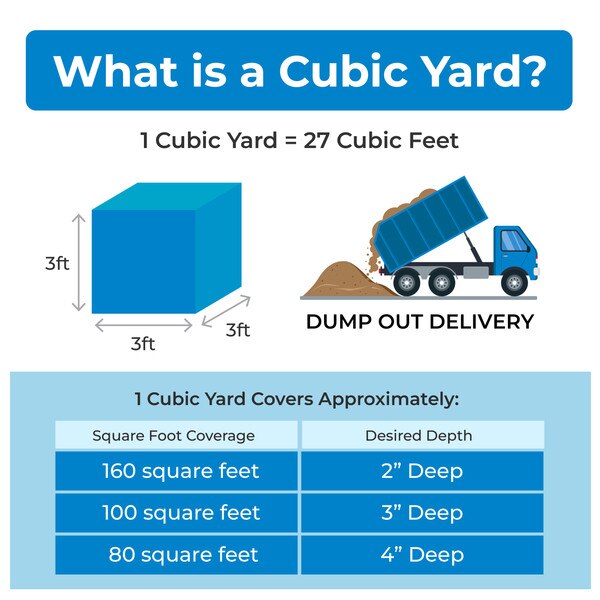
Image Source: www.cumminlandscapesupply.com
Deciphering 57 Stone: What It Is
Before we get to the weight, let’s clarify what 57 stone actually is. In the world of construction and landscaping, aggregate sizes are often given numbers. These numbers correspond to specific gradations, or sizes, of crushed stone.
The Common Gradation: Size Matters
57 stone refers to a specific crushed stone size. It’s typically a mix of stone ranging from 3/4 inch to 1.5 inches in size, with some fines (smaller particles) and larger pieces mixed in. This makes it a versatile material.
- Key Characteristics of 57 Stone:
- Size Range: Primarily 3/4 inch to 1.5 inches.
- Shape: Crushed, not rounded like river rock. This angularity helps it lock together well.
- Composition: Usually made from granite, limestone, or other hard rocks quarried from the earth.
- Uses: Drainage, backfill, concrete mixes, pathways, driveways, and decorative landscaping.
From Quarry to Crushing: The Origin of 57 Stone
57 stone starts its life as larger rocks extracted from a quarry. These large rocks are then crushed in stages. The crushing process breaks down the stone into smaller pieces. Screens are then used to separate the crushed material into different sizes. 57 stone is a product of this precise crushing and screening process, ensuring a consistent size range. The quarry stone weight before crushing is massive, and the process of crushing and screening leads to the specific aggregate we call 57 stone.
Fathoming the Weight: Factors Influencing Cubic Yard Density
The weight of a cubic yard of 57 stone isn’t a single fixed number. Several factors play a role in determining the crushed stone density and, consequently, its weight per cubic yard.
The Role of Rock Type and Limestone Density
Different types of rock have different inherent densities. For example, granite is generally denser than limestone. If your 57 stone is primarily made from granite, a cubic yard will likely weigh more than a cubic yard of 57 stone made from limestone.
- Granite: Known for its strength and density.
- Limestone: Often lighter than granite, but its density can still vary.
- Other Rocks: Basalt, sandstone, and other quarried rocks also have their own densities.
The limestone density itself can vary depending on its composition and formation. This means that even if you know you’re getting limestone 57 stone, the exact weight can still fluctuate.
Moisture Content: The Hidden Weight
One of the most significant variables affecting the weight of 57 stone is its moisture content. Freshly quarried or washed stone will contain some amount of water. This water adds considerable weight.
- Dry Stone: Will weigh less.
- Wet Stone: Will weigh more due to the absorbed water.
When you purchase stone, it might have been exposed to rain or stored in a way that allows it to retain moisture. This is why a cubic yard of stone might weigh differently on a sunny, dry day compared to a rainy one. The bulk stone weight is directly impacted by how much water is present within the stone and in the spaces between the stones.
Compaction and Packing Density
How the stone is loaded into the cubic yard measure also affects its weight. If the stone is dumped loosely, there will be more air space between the pieces. If it’s vibrated or compacted, more stone can fit into the same volume, increasing the weight.
- Loose Fill: Less dense, lower weight per cubic yard.
- Vibrated/Compacted: More dense, higher weight per cubic yard.
Suppliers usually load stone in a relatively loose state for a cubic yard. However, the exact method of loading can introduce minor variations.
Calculating the Tonnage of Stone: Estimating the Weight
Now that we’ve explored the influencing factors, let’s get to the core question: how much does a yard of 57 stone weigh?
Typical Weight Ranges for 57 Stone
Based on the factors discussed, a common estimate for the weight of one cubic yard of 57 stone is:
- Average: 2,500 pounds per cubic yard.
- Range: 2,400 to 2,700 pounds per cubic yard.
To convert this to tons (where 1 ton = 2,000 pounds):
- Average: 1.25 tons per cubic yard.
- Range: 1.2 to 1.35 tons per cubic yard.
So, if you need to order, for example, 10 cubic yards of 57 stone, you can estimate needing between 24,000 and 27,000 pounds, or 12 to 13.5 tons.
Using a Stone Weight Calculator
To make things easier, many suppliers and online resources offer a stone weight calculator. These tools typically ask for the type of stone (e.g., crushed stone, gravel) and the quantity (in cubic yards), and then provide an estimated weight. While these are helpful, remember they rely on average densities.
- How a Stone Weight Calculator Works:
- Select the type of material (e.g., 57 Stone, Gravel).
- Input the volume needed (e.g., 5 cubic yards).
- The calculator uses pre-programmed average densities for that material.
- It then calculates the estimated weight in pounds or tons.
Understanding Aggregate Density
The term aggregate density is key here. It refers to the mass of the aggregate per unit volume. For crushed stone, we often talk about “loose bulk density” or “compacted density.”
- Loose Bulk Density: The weight of the material when it’s simply piled or dumped, including air spaces. This is what you usually get when ordering a yard.
- Compacted Density: The weight of the material after it has been compacted, reducing air spaces. This is important for applications where the stone will be settled, like in a road base.
For 57 stone, the loose bulk density is typically in the range that gives us our 2,400-2,700 lb/yd³ estimate.
Concrete Examples of Construction Aggregate Weight
Let’s look at how different types of aggregates might weigh per cubic yard:
| Aggregate Type | Typical Weight per Cubic Yard (lbs) | Typical Weight per Cubic Yard (tons) | Notes |
|---|---|---|---|
| 57 Stone | 2,400 – 2,700 | 1.2 – 1.35 | Crushed stone, common for many uses. |
| Gravel (Pea) | 2,500 – 2,800 | 1.25 – 1.4 | Rounded stone, denser than some crushed. |
| Crushed Granite | 2,600 – 2,900 | 1.3 – 1.45 | Denser due to granite composition. |
| Sand (Dry) | 2,500 – 2,800 | 1.25 – 1.4 | Very fine aggregate. |
| Dirt/Topsoil | 2,000 – 2,600 | 1.0 – 1.3 | Highly variable, can be much lighter. |
Note: These are approximate values and can vary significantly based on specific composition, moisture, and packing.
Why This Weight Matters: Practical Applications
Knowing the weight of a cubic yard of 57 stone is not just an academic exercise. It has direct implications for your projects.
Ordering and Transportation
- Vehicle Capacity: If you’re using a pickup truck or a trailer, you need to know the weight limit to avoid overloading. A standard half-ton pickup truck has a payload capacity of around 1,000-1,500 lbs. You can likely only haul about half a cubic yard of 57 stone at a time.
- Delivery Costs: Stone is often sold by the cubic yard or by the ton. If it’s sold by the yard, understanding the weight helps you gauge the true volume you’re getting, especially if moisture content is high. If it’s sold by the ton, this calculation is even more direct.
- Dump Truck Loads: Larger construction projects often involve dump trucks. Knowing the tonnage of stone per cubic yard allows for accurate loading to stay within legal weight limits for roads.
Project Planning and Budgeting
- Quantity Estimation: Accurately estimating the amount of stone needed is vital. Ordering too much leads to waste and extra cost. Ordering too little can halt a project. Understanding the weight per volume helps refine these estimates.
- Sub-base Calculations: For driveways or patios, 57 stone is often used as a sub-base. The ability of the ground to support weight (load-bearing capacity) can be influenced by the density of the material placed upon it.
Structural Considerations
- Load Bearing: In certain applications, the sheer weight of the stone might be a factor. For instance, when used as fill or in retaining wall construction, the dead load the stone imposes on the ground or supporting structures needs to be considered.
Getting the Most Accurate Information
While average weights are helpful, sometimes you need more precision.
Consulting Your Supplier
The best source for precise weight information is your stone supplier. They deal with specific quarries and know the typical densities of the materials they sell.
- Ask About Their Gradations: Inquire about the specific sources of their 57 stone and any known density variations.
- Moisture Content Policies: Ask if they typically sell stone with a certain moisture level or if they can provide estimates for dry weight.
Performing Your Own Test (If Necessary)
For critical projects, you might want to verify the weight yourself.
- Get a Tare Weight: Weigh an empty, clean container (like a bucket or a small tote).
- Fill the Container: Fill the container with 57 stone from the batch you’re interested in, packing it as it would typically be used.
- Weigh the Filled Container: Weigh the filled container.
- Subtract Tare Weight: Subtract the empty container’s weight to get the net weight of the stone.
- Calculate Volume: Measure the precise volume of the container (e.g., in cubic feet).
- Convert to Cubic Yard: Convert the volume to cubic yards (1 cubic yard = 27 cubic feet).
- Calculate Density: Divide the net weight by the volume in cubic yards to get the weight per cubic yard.
This method gives you a localized density reading for the specific batch of stone you have.
Common Questions About 57 Stone Weight
Here are some frequently asked questions that often come up:
What is the average weight of a cubic yard of 57 stone?
On average, a cubic yard of 57 stone weighs between 2,400 and 2,700 pounds (1.2 to 1.35 tons).
Does moisture affect the weight of 57 stone?
Yes, moisture significantly increases the weight of 57 stone. Wet stone will be heavier than dry stone of the same volume.
How do I calculate how much stone I need?
First, determine the volume needed by multiplying the length, width, and depth of your project area (e.g., Length x Width x Depth = Volume). Ensure all measurements are in the same units (feet) and then divide by 27 to convert cubic feet to cubic yards. Then, use the estimated weight per cubic yard to calculate the total tonnage required.
Is 57 stone the same as gravel?
While 57 stone is a type of crushed gravel, not all gravel is 57 stone. Gravel can be rounded river rock or have different size gradations. 57 stone specifically refers to a crushed stone with a defined size range (typically 3/4″ to 1.5″).
Can I haul a cubic yard of 57 stone in a standard pickup truck?
A standard half-ton pickup truck typically has a payload capacity of 1,000-1,500 pounds. Since a cubic yard of 57 stone weighs around 2,400-2,700 pounds, you can usually only haul about half a cubic yard at a time without exceeding the truck’s limits. Always check your specific truck’s payload capacity.
What are the common uses for 57 stone?
57 stone is a versatile aggregate used in drainage systems, as a base for driveways and walkways, in concrete mixes, for backfill around foundations, and as a decorative landscaping stone.
Conclusion: Plan with Precision
When working with construction materials, precision in your estimates leads to efficiency and cost savings. Knowing that a yard of 57 stone weighs approximately 2,400 to 2,700 pounds allows you to accurately plan your material orders, transportation, and project budget. Always consider the potential impact of moisture and consult with your supplier for the most accurate information relevant to your specific needs. With this knowledge, you can confidently tackle any project requiring this essential aggregate.