
A “yard” of dirt, in the context of purchasing landscaping materials, refers to a cubic yard of soil. This is the standard unit used when buying bulk dirt for projects like gardens, lawn renovations, or filling holes.
When you’re embarking on a landscaping project, understanding how much dirt you actually need can feel like deciphering a secret code. The term “yard of dirt” is tossed around casually, but what does it truly mean in practical terms? It’s crucial to get this right, as over-ordering can lead to wasted money and storage headaches, while under-ordering can bring your project to a grinding halt. This guide is designed to demystify the concept of a “yard of dirt” and provide you with the knowledge to accurately estimate your landscaping soil quantity. We’ll dive deep into the dirt measurement unit, explore how to measure dirt effectively, and explain the conversions you’ll need for buying bulk dirt.
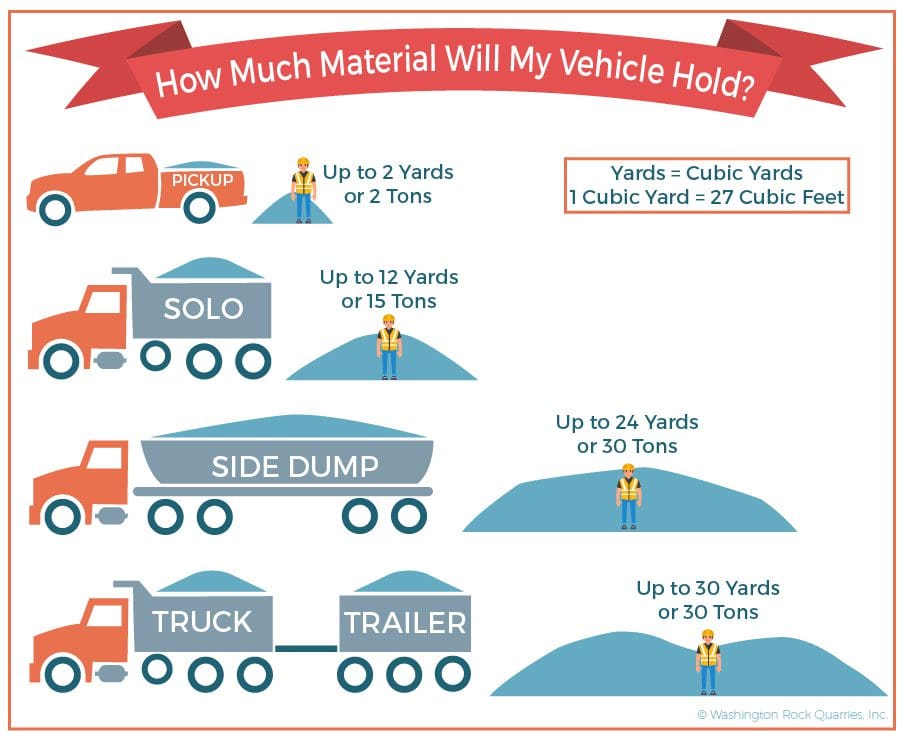
Image Source: www.wa-rock.com
Fathoming the Cubic Yard of Soil
At its core, a cubic yard of soil is a measurement of volume, not weight. Imagine a cube. If each side of that cube is three feet long, then the total volume enclosed by that cube is one cubic yard.
- Length: 3 feet
- Width: 3 feet
- Height: 3 feet
The formula for volume is Length × Width × Height. So, for a cubic yard, it’s 3 feet × 3 feet × 3 feet = 27 cubic feet.
This measurement is vital because landscaping materials, including topsoil, mulch, compost, and gravel, are typically sold by the cubic yard. Whether you’re looking for a yard of topsoil for your flower beds or a larger quantity for a major excavation, this fundamental understanding of the dirt measurement unit is your starting point.
Why Accurate Estimation Matters
Why go through the trouble of calculating? Because it directly impacts your budget and the success of your project.
Budgeting Precision
Knowing your exact needs prevents overspending. Buying too much dirt means paying for material you won’t use, and often, bulk deliveries come with a minimum charge.
Project Timeline Protection
Running out of soil mid-project is a common frustration. It leads to delays while you reorder and wait for delivery, disrupting your workflow and potentially impacting plant health if you’re working with live materials.
Resource Management
Excessive soil can be difficult to store. It takes up space, can become waterlogged, and may attract pests. Proper estimation ensures you only acquire what you can manage.
Deciphering How to Measure Dirt for Your Project
The most common scenario where you’ll need to measure dirt is when filling a specific area. This could be a raised garden bed, a flower bed, a hole you need to fill, or an entire lawn that needs a new layer of topsoil.
Measuring Length and Width
First, measure the length and width of the area you need to cover. Use a reliable tape measure. It’s best to measure in feet, as this will simplify the subsequent calculations.
- For rectangular or square areas: Measure the longest side (length) and the shortest side (width).
- For irregular shapes: Break the area down into smaller, more manageable shapes (rectangles, squares, triangles). Measure each section individually and sum their areas.
Determining Depth
The depth is how high you want the soil to be. This is crucial. Are you adding a light dusting of topsoil, or are you creating a deep, nutrient-rich bed for vegetables?
- For shallow layers: Measure the desired thickness in inches (e.g., 2 inches, 4 inches).
- For deeper fills: Measure in feet if the depth is significant (e.g., 1 foot, 2 feet).
It’s important to be realistic about your depth requirements. A common depth for amending existing soil or for general planting is 4 to 6 inches. For new garden beds or areas needing significant elevation, you might go deeper.
Calculating Soil Volume: From Inches to Feet
Since a cubic yard is measured in feet, you’ll need to convert your depth measurement from inches to feet.
Conversion: 1 foot = 12 inches
To convert inches to feet, divide the number of inches by 12.
- Example: 4 inches / 12 inches/foot = 0.33 feet
- Example: 6 inches / 12 inches/foot = 0.5 feet
The Soil Volume Calculator: Your Essential Tool
Once you have your measurements in feet (Length, Width, and Depth), you can calculate the volume in cubic feet.
Volume in Cubic Feet = Length (ft) × Width (ft) × Depth (ft)
Converting Cubic Feet to Cubic Yards
Remember, the landscaping industry standard is the cubic yard. So, your final step is to convert your calculated cubic feet into cubic yards.
Conversion: 1 cubic yard = 27 cubic feet
To convert cubic feet to cubic yards, divide your cubic feet volume by 27.
Volume in Cubic Yards = Volume in Cubic Feet / 27
Practical Examples
Let’s walk through a few common scenarios:
Scenario 1: Creating a Rectangular Garden Bed
- Dimensions: 10 feet long, 4 feet wide, 6 inches deep.
- Convert depth to feet: 6 inches / 12 = 0.5 feet
- Calculate volume in cubic feet: 10 ft × 4 ft × 0.5 ft = 20 cubic feet
- Convert to cubic yards: 20 cubic feet / 27 cubic feet/cubic yard ≈ 0.74 cubic yards
For this garden bed, you would need just over three-quarters of a cubic yard of soil. It’s often wise to round up slightly to account for settling and minor inaccuracies, so ordering 1 cubic yard would be a safe bet.
Scenario 2: Filling a Circular Hole
- Dimensions: 5 feet in diameter, 2 feet deep.
For a circle, you’ll need the radius, which is half the diameter.
- Calculate radius: 5 feet / 2 = 2.5 feet
- Calculate the area of the circle: Area = π × radius² (using π ≈ 3.14)
Area = 3.14 × (2.5 ft)² = 3.14 × 6.25 sq ft ≈ 19.63 square feet - Calculate volume in cubic feet: 19.63 sq ft × 2 ft = 39.26 cubic feet
- Convert to cubic yards: 39.26 cubic feet / 27 cubic feet/cubic yard ≈ 1.45 cubic yards
For this hole, you’ll need about 1.5 cubic yards of soil. Again, rounding up to 1.5 or 2 cubic yards would be prudent.
Scenario 3: Adding a Layer of Topsoil to a Lawn
- Area: 500 square feet
- Desired depth: 3 inches
- Convert depth to feet: 3 inches / 12 = 0.25 feet
- Calculate volume in cubic feet: 500 sq ft × 0.25 ft = 125 cubic feet
- Convert to cubic yards: 125 cubic feet / 27 cubic feet/cubic yard ≈ 4.63 cubic yards
For this lawn project, you’d need approximately 4.63 cubic yards. Ordering 5 cubic yards would be the most practical approach.
Using an Online Soil Volume Calculator
Many online retailers and landscaping supply companies offer a soil volume calculator on their websites. These tools are incredibly helpful. You simply input your dimensions (length, width, depth) and the unit of measurement, and the calculator does the conversion for you, often directly outputting the required cubic yards. This is a fantastic resource for anyone who prefers not to do the manual calculations.
Estimating Soil Needs for Large Projects
For larger projects like regrading an entire yard, creating multiple garden beds, or establishing a new lawn, estimating soil needs requires a more comprehensive approach.
Breaking Down the Project
Divide your entire project area into logical sections. Measure each section, noting its dimensions and the desired soil depth for that specific area.
Accounting for Compaction and Settling
Soil, especially when freshly delivered and disturbed, will settle over time. This is due to air pockets being released and the soil particles compacting under their own weight and gravity. The amount of settling can vary depending on the type of soil and how it’s handled, but it’s generally good practice to add an extra 10-15% to your initial estimate to compensate.
Considering Different Soil Types
The type of soil you’re buying also matters.
- Topsoil: This is the uppermost layer of soil, rich in organic matter and nutrients. A yard of topsoil is ideal for general gardening and lawn amendments.
- Fill Dirt: This is typically subsoil, less rich in organic matter. It’s often used for leveling larger areas or filling significant holes where the quality of the soil is less critical.
- Compost/Amendments: These are often added to existing soil to improve its structure, drainage, and fertility. They are usually measured in cubic feet or in bags, but when buying in bulk, they will be priced per cubic yard.
When you’re buying bulk dirt, ask your supplier about their specific recommendations for settling based on the soil blend they offer.
Purchasing Dirt by the Yard: What to Expect
When you’re ready to buy dirt by the yard, you’ll find that suppliers offer various options:
Bulk Delivery
This is the most common and cost-effective way to purchase larger quantities of soil. Dirt is delivered by a dump truck directly to your property. You’ll typically need to specify the quantity and the type of soil. Some suppliers may have a minimum order quantity for delivery.
Bagged Soil
For smaller projects or when precise quantities are needed, bagged soil is an option. Bags typically contain 1, 1.5, or 2 cubic feet of soil. You’ll need to do the math to figure out how many bags you need. For example, if you need 5 cubic yards (which is 135 cubic feet), and bags are 2 cubic feet each, you’ll need 135 / 2 = 67.5 bags, so you’d buy 68 bags. This is generally more expensive per cubic yard than bulk delivery.
Choosing a Reputable Supplier
- Quality: Ask about the composition of their soil. Is it screened? Does it contain organic matter?
- Pricing: Compare prices per cubic yard from different suppliers. Factor in delivery fees.
- Delivery: Confirm their delivery schedule and any access requirements for their trucks.
Common Mistakes to Avoid
- Only measuring surface area: Forgetting to factor in the depth is the most frequent error.
- Ignoring settling: Not adding extra volume for compaction means you might run short.
- Not converting units: Mixing feet, inches, and yards in your calculations will lead to incorrect amounts.
- Underestimating irregular shapes: Failing to break down complex areas into simpler geometric forms can cause measurement errors.
- Buying the wrong type of soil: Ensure the soil you purchase is suitable for your intended purpose (e.g., don’t use fill dirt for a vegetable garden).
Frequently Asked Questions (FAQ)
Q1: How much does a cubic yard of dirt weigh?
A1: The weight of a cubic yard of dirt can vary significantly depending on its moisture content and composition. However, a common estimate for moist topsoil is around 2,000 to 2,700 pounds (1 to 1.35 tons). This is why it’s sold by volume (yard) and not weight.
Q2: Can I just eyeball how much dirt I need?
A2: While you might get lucky, it’s highly discouraged. Eyeballing can lead to significant over- or under-ordering, costing you time and money. Accurate measurement is key.
Q3: What’s the difference between topsoil and fill dirt?
A3: Topsoil is the nutrient-rich surface layer of the earth, ideal for gardening and lawns. Fill dirt is typically subsoil, often used for bulkier tasks like leveling land or filling large holes where soil quality is less important.
Q4: How deep should I make my garden beds?
A4: For most vegetables and flowers, a depth of 6 to 12 inches is recommended to allow for good root development. For amending existing soil, a 4-inch layer is often sufficient.
Q5: My area is an odd shape, how do I measure it?
A5: Break the odd shape into simpler geometric shapes like rectangles, squares, and triangles. Measure each of these shapes individually, calculate their areas, and then add them together to find the total surface area.
Q6: Do I need to add extra dirt for settling?
A6: Yes, it’s a good practice to add an extra 10-15% to your calculated volume to account for soil settling and compaction.
Q7: What if I only need a small amount of soil?
A7: For small projects, you can purchase bagged soil from garden centers. Remember to calculate how many bags you’ll need based on the cubic feet per bag and your project’s volume requirements.
Q8: Are there online tools to help me calculate?
A8: Absolutely! Many landscaping supply websites offer a soil volume calculator where you can input your project’s dimensions and it will automatically tell you how many cubic yards you need.
By following this guide, you’ll be well-equipped to confidently calculate your landscaping soil quantity and make informed decisions when buying bulk dirt. No more guesswork, just accurate planning for a beautiful and successful outdoor space!