
A typical lawn mower battery operates at 12 volts (V). This is the standard voltage for most push mowers, riding mowers, and even many electric lawn mower battery systems.
When you’re looking to power up your yard work, the battery is the heart of the operation, especially for modern mowers. Gone are the days when the only option was a pull-cord start; today’s machines often rely on electrical power, and that power is measured in volts. So, how many volts does a lawn mower battery actually have? For the vast majority of gasoline-powered mowers that use a battery for starting and powering accessories, you’ll find a 12-volt battery. This is similar to the batteries found in cars, designed to deliver the initial surge of power needed to crank the engine. For electric lawn mowers, the voltage can vary much more significantly, depending on the mower’s power and design.
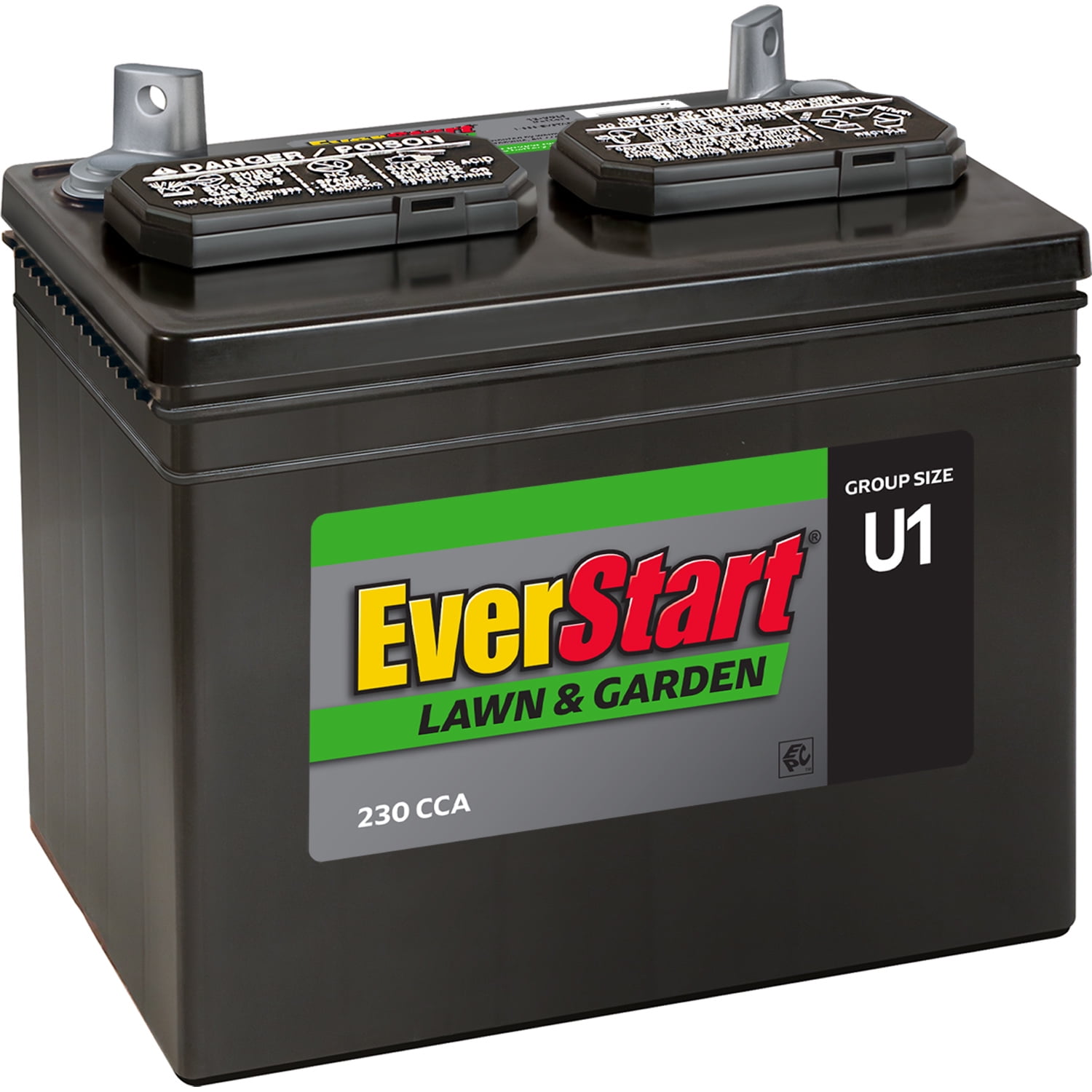
Image Source: i5.walmartimages.com
Deciphering Lawn Mower Battery Voltage
The heart of any gasoline-powered mower that isn’t purely recoil-start lies in its battery. This small but mighty component is responsible for a crucial task: getting your engine going. The question of lawn mower battery voltage is a fundamental one for anyone maintaining their equipment.
The Standard: 12-Volt Powerhouses
For most traditional riding mowers and many larger push mowers with electric start features, the answer is almost universally 12 volts. This voltage is chosen because it provides a good balance between power delivery for starting the engine and the battery’s size and weight. Think of it like this: a 12V battery has enough “oomph” to turn over the engine, but it’s not so large that it makes the mower unwieldy or excessively heavy.
Why 12 Volts?
- Starting Power: The internal combustion engine in a lawn mower needs a strong burst of energy to overcome initial resistance and begin running. A 12V system, coupled with the right cranking amps, can deliver this.
- Component Compatibility: Many of the starter motors, solenoids, and charging systems used in small engines are designed to operate at 12 volts.
- Size and Weight: Compared to higher voltage systems, 12V batteries are generally smaller and lighter, making them easier to fit into the mower’s chassis.
Electric Mowers: A Different Voltage Landscape
When we talk about electric lawn mowers, the concept of voltage gets a bit more diverse. Electric lawn mower battery power isn’t as standardized as its gasoline-powered counterparts.
- Cordless Mowers: These typically use rechargeable battery packs. The voltage for a cordless mower battery can range significantly.
- Lower Voltage (18V, 36V, 40V): Often found in lighter-duty push mowers designed for smaller yards. These batteries are usually designed for ease of use and portability.
- Higher Voltage (60V, 80V, even 100V+): Common in more powerful push mowers and robotic mowers. Higher voltage often translates to more power and longer run times, similar to how a more powerful engine works. These systems might use multiple batteries or a single, larger, high-voltage pack.
- Corded Electric Mowers: These don’t have an onboard battery to worry about voltage; they draw power directly from a wall outlet via an extension cord. Their power is measured in watts (W) or amperage (A), not volts in the context of an onboard battery.
Comprehending Amps and Their Role
While voltage tells us the “pressure” of electricity, amperage (A) tells us the “flow” or quantity of electrical current. For a riding mower battery, amps are crucial, particularly cranking amps (CA) and cold cranking amps (CCA).
- Cranking Amps (CA): This is the number of amps a battery can deliver for 30 seconds at a specified temperature (usually 32°F or 0°C) while maintaining a voltage of at least 7.2V.
- Cold Cranking Amps (CCA): This is a more rigorous test, measuring the amps a battery can deliver for 30 seconds at 0°F (-18°C) and still maintain at least 7.2V. This is more relevant if you live in a colder climate and want to start your mower on a chilly morning.
A higher amp rating means the battery can provide more power for starting, which is essential for larger engines or engines that might be a bit stubborn to turn over.
Typical Lawn Mower Battery Size and Type
Typical lawn mower battery size refers to the physical dimensions and the specific group size of the battery. These are often standardized to ensure they fit correctly in the mower’s battery tray.
Common Battery Types
- Flooded Lead-Acid (FLA): These are the most traditional type of battery. They require periodic checks of the electrolyte level and topping up with distilled water. They are generally the most affordable upfront.
- Sealed Lead-Acid (SLA): Also known as maintenance-free lead-acid batteries. They are sealed to prevent spills and don’t require the addition of water. They are a good compromise between cost and convenience.
- Absorbent Glass Mat (AGM): These are a type of SLA battery where the electrolyte is absorbed in fiberglass mats. AGM batteries are known for their durability, vibration resistance, and ability to deliver high cranking amps. They are a premium option.
- Lithium-ion (Li-ion): Becoming increasingly common, especially in higher-end electric mowers and some newer gasoline mowers. Lithium-ion batteries are lighter, have a longer lifespan, and can deliver consistent power. However, they are typically more expensive.
Battery Group Sizes
Lawn mower batteries come in various group sizes, indicated by a number. Some common sizes include:
- Group U1: A very common size for many riding mowers.
- Group 35: Often used in larger riding mowers and garden tractors.
- Group 24: Another size that might be found in larger tractors.
Always check your mower’s manual or the label on your existing battery to determine the correct group size.
Battery Voltage for Zero Turn Mowers
Zero-turn mowers, due to their larger engines and often more robust construction, typically use the same battery voltage for zero turn mower applications as other riding mowers: 12 volts.
However, the cranking amps required for a zero-turn mower’s engine will generally be higher than for a standard riding mower. This is because zero-turn mowers often feature larger displacement engines (e.g., 20+ horsepower) that need more torque to start. Therefore, a zero-turn mower battery will often have a higher CCA rating than a battery for a smaller mower.
Small Engine Battery Charge: Maintaining Peak Performance
A small engine battery charge is critical for ensuring your mower starts reliably and its electrical components (lights, electric PTO clutch) function correctly.
Charging Methods
- Mower’s Alternator/Charging System: Most gasoline mowers have an alternator (or stator) that generates electricity as the engine runs. This electricity is used to power the mower’s systems and recharge the battery.
- External Battery Charger: For batteries that have been discharged, or for seasonal storage, using a dedicated battery charger is essential.
- Trickle Chargers: Provide a low, constant charge. Good for maintaining a charge over long periods.
- Smart/Automatic Chargers: Monitor the battery’s state of charge and adjust the charging rate accordingly, preventing overcharging.
- Jump Starters: Can provide a temporary power boost to start a dead battery.
Tips for Maintaining Battery Charge
- Regular Use: Running the mower regularly helps keep the battery topped up.
- Clean Terminals: Corroded battery terminals can impede the flow of electricity, hindering charging and starting. Clean them with a wire brush.
- Storage: If storing the mower for an extended period (e.g., winter), disconnect the battery or use a trickle charger to maintain its charge.
- Check Connections: Ensure all battery cables are tight and secure.
The Voltage of Garden Tractor Batteries
Similar to riding mowers and zero-turn mowers, the voltage of garden tractor battery units is almost exclusively 12 volts. Garden tractors are essentially workhorses designed for more demanding tasks like tilling, snow blowing, and mowing large areas.
Their engines are typically larger and more powerful than those on standard riding mowers, meaning the batteries need to be robust enough to handle the starting demands. You’ll often find garden tractor batteries with higher amperage ratings (CCA) to ensure reliable starts in various conditions. The physical size (group size) might also be larger to accommodate the increased capacity.
Cordless Mower Battery Specifications: Beyond Just Voltage
When considering a cordless mower battery, voltage is just one piece of the puzzle. Other crucial specifications include:
- Amp-Hours (Ah): This indicates the battery’s capacity – how much energy it can store. A higher Ah rating means the battery can power the mower for longer on a single charge.
- Watt-Hours (Wh): Often calculated by multiplying voltage (V) by amp-hours (Ah). This gives a more complete picture of the total energy stored. For example, a 40V, 5Ah battery stores 200Wh of energy.
- Battery Chemistry: Most cordless mowers use Lithium-ion batteries, which offer good energy density and a long lifespan. Different types of Li-ion (e.g., NMC, LFP) have varying characteristics.
- Charging Time: How long it takes to fully recharge the battery.
- Compatibility: Whether the battery can be used with other tools in the same brand’s ecosystem.
Grass-Cutting Power: Push Mower Battery Power
The push mower battery power varies greatly depending on whether it’s a gasoline mower with electric start or a fully electric model.
Gasoline Push Mowers with Electric Start
These typically use a 12V battery, similar to riding mowers, but often a smaller group size (like Group U1R or similar compact designs). The primary function is engine starting, and sometimes powering a small headlight.
Fully Electric Push Mowers
- Corded Electric: No onboard battery voltage to consider.
- Cordless Electric: As discussed earlier, these can range from 18V to 80V or higher.
- 18V-40V: For lighter-duty mowing, smaller yards. Often use a single battery pack.
- 60V-80V+: For more power, longer runtimes, and ability to handle thicker grass. May use one or more high-capacity battery packs.
The voltage here directly influences the motor’s power output and the mower’s ability to tackle challenging mowing conditions.
Interpreting Lawn Mower Battery Types
The choice of battery type significantly impacts performance, longevity, and maintenance.
| Battery Type | Pros | Cons | Best For |
|---|---|---|---|
| Flooded Lead-Acid (FLA) | Lowest upfront cost, widely available. | Requires regular maintenance (checking water levels), shorter lifespan, can be sensitive to deep discharges. | Budget-conscious users with basic maintenance routines. |
| Sealed Lead-Acid (SLA) | Maintenance-free, spill-proof, good vibration resistance. | Can be more expensive than FLA, lifespan can be shorter than AGM or Li-ion. | Users seeking a lower-maintenance lead-acid option. |
| AGM (Absorbent Glass Mat) | Maintenance-free, excellent vibration resistance, high CCA ratings, faster charging. | More expensive than FLA/SLA. | Mowers requiring high starting power, vibration-prone terrains. |
| Lithium-ion (Li-ion) | Lightweight, long lifespan, no memory effect, consistent power delivery, fast charging. | Highest upfront cost, sensitive to extreme temperatures, requires specific charging systems. | High-end electric mowers, users prioritizing performance and longevity. |
The Battery Voltage for Zero Turn Mower: A Closer Look
When you invest in a zero-turn mower, you’re investing in power and maneuverability. The electrical system, including the battery, is designed to support these demands. The battery voltage for zero turn mower units is consistently 12 volts. This is because the starter motors and onboard electrical systems of these powerful machines are built around this standard.
What does differ is the capacity and quality of that 12V battery. Zero-turn mowers often have larger engines that require more torque to start, especially in cooler weather. This means the battery needs a higher Cold Cranking Amps (CCA) rating. A higher CCA allows the battery to deliver a stronger burst of power, ensuring the engine ignites quickly and efficiently.
Think of it as a heavy-duty appliance needing a robust power source. While the voltage remains the same as a smaller mower, the battery’s ability to deliver sustained high current (measured in amps) is paramount.
Frequently Asked Questions (FAQ)
Q1: Can I use a higher voltage battery in my lawn mower?
A1: No, absolutely not. Using a battery with a higher voltage than your mower is designed for can severely damage the electrical components, including the starter motor, alternator, and control modules. Always use the voltage specified in your owner’s manual.
Q2: What happens if my lawn mower battery voltage is too low?
A2: If your lawn mower battery voltage is too low, the mower may struggle or fail to start. You might hear a clicking sound when you try to start it, or nothing at all. The charging system might also not function correctly.
Q3: How long should a lawn mower battery last?
A3: The lifespan of a lawn mower battery can vary depending on the type, usage, maintenance, and climate. Generally, lead-acid batteries can last 3-5 years, while high-quality AGM or Lithium-ion batteries can last longer, often 5-7 years or more.
Q4: What does “CCA” mean for my lawn mower battery?
A4: CCA stands for Cold Cranking Amps. It’s a measure of how much current a battery can deliver in cold temperatures (0°F or -18°C) for 30 seconds while maintaining a minimum voltage. A higher CCA rating means better starting power, especially in cooler weather.
Q5: Can I use a car battery in my lawn mower?
A5: While both might be 12V, car batteries are designed for different applications (higher CCA, different discharge cycles) and are often physically larger and heavier than lawn mower batteries. It’s best to use a battery specifically designed for lawn mower or powersport applications for proper fit and performance.
Q6: How do I check my lawn mower battery voltage?
A6: You can check your lawn mower battery voltage using a multimeter. Connect the red probe to the positive (+) terminal and the black probe to the negative (-) terminal. A fully charged 12V lead-acid battery should read around 12.6 volts or slightly higher when the engine is off.
Q7: My electric lawn mower battery isn’t holding a charge. What should I do?
A7: If you have an electric lawn mower battery that’s not holding a charge, it might be an old battery nearing the end of its life, or there could be an issue with the charger or the mower’s charging system. If it’s a Lithium-ion battery, extreme temperatures can affect its performance. Consult your mower’s manual or the battery manufacturer’s guidelines.