
Can you fertilize your lawn in the fall? Yes, you can and often should fertilize your lawn in the fall. This period, often referred to as autumn fertilization or fall lawn feeding, is a crucial time for preparing your grass for the colder months and ensuring a strong start in the spring. This guide will delve into the specifics of late season fertilizing, dormant feeding, and winterizing lawn practices, helping you determine the best time to fertilize lawn and the last fertilizing window for optimal results.
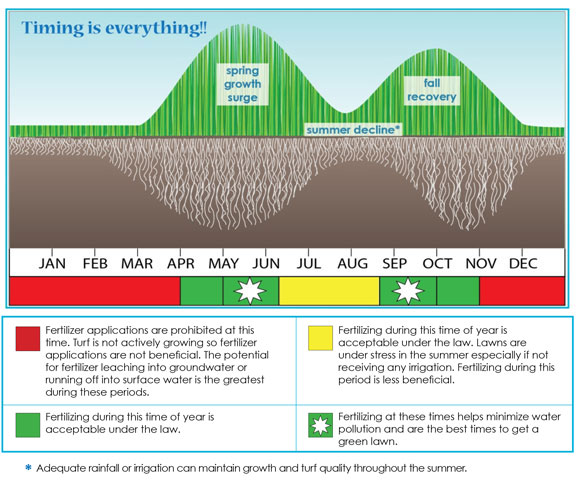
Image Source: healthylawns.suffolkcountyny.gov
The Importance of Fall Lawn Feeding
Many homeowners focus their lawn care efforts on the spring and summer, overlooking the significant benefits of fertilizing before frost and fertilizing before winter. Fall is a period of transition for your lawn. While the top growth slows down, the roots continue to grow and store energy. This is the prime time to provide your lawn with the nutrients it needs to thrive through the stress of winter and bounce back vigorously when warmer weather arrives.
Why Fall Fertilization Matters
- Root Development: Cooler soil temperatures in the fall are ideal for root growth. Fertilizers applied during this time provide the necessary elements for roots to deepen and strengthen, making the grass more resilient.
- Nutrient Storage: Grass plants absorb and store nutrients in their roots and crowns during the fall. These stored reserves will fuel new growth in the spring, giving your lawn a head start.
- Winter Hardiness: Proper fall feeding helps the grass blades and crowns withstand the harsh conditions of winter, including cold temperatures, ice, and snow.
- Weed Suppression: A healthy, dense lawn is less susceptible to weed invasion. Fall fertilization promotes turf density, which can help crowd out winter annual weeds.
- Disease Resistance: Balanced nutrition strengthens the grass plant, making it more resistant to common lawn diseases that can strike in the fall and spring.
Determining the “How Late” Aspect: Timing is Key
The question of “how late” you can fertilize your lawn is directly tied to your local climate and the specific type of grass you have. The general principle is to fertilize before the ground freezes and the grass enters true dormancy.
Key Factors Influencing Timing
- First Frost Date: The average date of your first killing frost is a significant marker. You want to fertilize before this event.
- Grass Type: Cool-season grasses (like fescue, ryegrass, and bluegrass) have different needs and growth patterns than warm-season grasses (like Bermuda, zoysia, and St. Augustine).
- Cool-Season Grasses: These grasses actively grow in the cooler temperatures of spring and fall. The late fall feeding for these types is particularly critical for overwintering and spring green-up.
- Warm-Season Grasses: These grasses go dormant in the winter. While they benefit from early fall feeding to store energy, they are less responsive to late-season applications as their growth significantly slows.
- Soil Temperature: The ideal time to fertilize is when soil temperatures are consistently below 50°F (10°C) but the grass is still green and actively growing. This encourages root growth without stimulating excessive top growth that could be damaged by frost.
The Critical Late Fall Fertilization Window
For most cool-season lawns in temperate climates, the last fertilizing window typically falls between mid-October and late November. This is often referred to as the “dormant feeding” period or fertilizing before winter. The goal is to apply fertilizer when the grass is still metabolically active enough to absorb the nutrients, but when the top growth has significantly slowed or stopped.
What is dormant feeding? Dormant feeding refers to applying fertilizer to cool-season grasses in late fall, after growth has ceased or significantly slowed, but before the ground freezes. The nutrients are then available to the roots as soon as temperatures rise in early spring.
Can I fertilize when the grass is dormant? While the term “dormant feeding” implies fertilizing when the grass is dormant, the most effective application is just before it goes fully dormant. Applying to already dormant, frozen turf is generally ineffective.
Types of Fertilizers for Late Season Feeding
The type of fertilizer you choose for fall lawn care is as important as the timing. Look for fertilizers with a higher percentage of slow-release nitrogen and a good amount of potassium.
Fertilizer Components and Their Role
- Nitrogen (N): Promotes leafy green growth. In the fall, slow-release nitrogen is preferred to avoid a surge of top growth that could be vulnerable to frost.
- Phosphorus (P): Essential for root development and establishment. Many soils are already rich in phosphorus, so check your soil test results before adding more.
- Potassium (K): Crucial for overall plant health, disease resistance, and winter hardiness. Potassium helps the grass withstand stress from cold, drought, and disease.
Recommended Fertilizer Ratios for Fall
A common recommendation for fall fertilization is a fertilizer with a ratio like 20-5-10 or 24-0-12, emphasizing nitrogen and potassium. Some lawn care professionals recommend fertilizers with a high potassium content for winterizing lawn applications.
Table 1: Fertilizer Component Roles in Fall
| Nutrient | Primary Role in Fall Lawn Care |
|---|---|
| Nitrogen | Supports root growth, helps the grass recover from summer stress. |
| Phosphorus | Crucial for root development and establishment. |
| Potassium | Enhances winter hardiness, disease resistance, and drought tolerance. |
Slow-Release vs. Quick-Release Nitrogen
For late season fertilizing, opt for slow-release nitrogen fertilizers. These release nutrients gradually over several weeks, providing sustained feeding without encouraging weak, rapid growth that is susceptible to winter damage. Quick-release nitrogen can lead to a flush of tender new growth that is easily damaged by frost.
Practical Application: How to Fertilize
Applying fertilizer correctly ensures maximum benefit and avoids potential damage to your lawn or the environment.
Steps for Effective Application
- Mow the Lawn: Mow your lawn a day or two before fertilizing. This ensures the fertilizer granules fall to the soil surface and reach the roots, rather than sticking to the grass blades.
- Calibrate Your Spreader: Whether you use a broadcast spreader or a drop spreader, it’s essential to calibrate it according to the fertilizer bag’s instructions. This ensures an even application at the recommended rate.
- Apply Evenly: Walk at a steady pace, overlapping your passes slightly to avoid streaks or missed spots. If using a broadcast spreader, walk back and forth across the lawn in a pattern. If using a drop spreader, walk in straight, parallel lines.
- Water In (Usually): Most granular fertilizers need to be watered in to dissolve and move into the soil. Check the product label. Watering helps prevent the fertilizer from burning the grass. However, if you are applying very late in the season, closer to dormancy, and precipitation is expected, watering might be less critical.
- Clean Up Spills: Sweep or blow any fertilizer that lands on hard surfaces (sidewalks, driveways) back onto the lawn. Fertilizer runoff can pollute waterways.
Spreader Types Explained
- Broadcast Spreader: Casts fertilizer out in a wide arc. Best for large, open areas. Requires careful calibration and overlap to avoid uneven distribution.
- Drop Spreader: Drops fertilizer directly below the spreader. Excellent for precise application along borders and in smaller or irregularly shaped areas.
Table 2: Spreader Types and Suitability
| Spreader Type | Best For | Pros | Cons |
|---|---|---|---|
| Broadcast | Large, open lawns | Covers large areas quickly | Can be difficult to control spread pattern |
| Drop | Small to medium lawns, borders | Precise application, good for edges | Slower coverage, requires more effort |
Timing: The “How Late” Question Answered More Precisely
Let’s break down the timing for different regions and grass types to answer the “how late” question definitively.
Cool-Season Grasses
For cool-season grasses, the ideal last fertilizing window is typically when you anticipate the soil temperature to consistently drop below 50°F (10°C), but before the ground freezes solid. This is often referred to as the dormant feeding window.
- Northern Regions: In areas with harsh winters, this might be as early as mid-October.
- Mid-Atlantic/Midwest Regions: The window could extend into early to mid-November.
- Pacific Northwest: Similar to the Midwest, with variations based on elevation and microclimates.
The key is that the grass is still green and has a few weeks of potential root growth before winter sets in. Applying fertilizer too early in the fall for cool-season grasses might encourage top growth that can be damaged by early frosts.
Warm-Season Grasses
Warm-season grasses enter dormancy in the fall as temperatures drop. Their primary need for fall lawn feeding is earlier in the season, typically September or early October, to help them store energy for winter. Fertilizing too late for warm-season grasses is generally not beneficial and can even be detrimental, as it might stimulate growth that won’t have time to harden off before winter.
Can I fertilize my lawn after the first frost? For cool-season grasses, yes, you can fertilize for a short period after the first light frost, as long as the ground is not frozen and the grass is still green. For warm-season grasses, it’s best to avoid fertilizing after the first frost.
Common Mistakes to Avoid in Late Season Fertilizing
Even with the best intentions, improper timing or product selection can lead to negative outcomes.
Fertilizing Too Late
- Problem: Applying fertilizer when the ground is frozen or the grass is completely dormant.
- Outcome: The fertilizer won’t be absorbed and can be washed away by winter rains or snowmelt, leading to waste and potential water pollution. It may also encourage root growth when the soil is too cold to sustain it.
Fertilizing Too Early in Fall
- Problem: Applying fertilizer while temperatures are still warm and the grass is actively growing vigorously.
- Outcome: This can promote excessive top growth, which is tender and susceptible to frost and disease. It can also deplete the grass’s stored energy reserves before winter.
Using the Wrong Fertilizer
- Problem: Using a high-nitrogen, quick-release fertilizer.
- Outcome: This encourages rapid, weak top growth that is easily damaged by cold weather. It doesn’t provide the necessary potassium for winter hardiness.
Over-Fertilizing
- Problem: Applying more fertilizer than the lawn needs or the bag recommends.
- Outcome: Can lead to fertilizer burn, salt damage to the grass, and environmental pollution.
Winterizing Lawn: The Broader Picture of Fall Care
Winterizing lawn is more than just the last fertilizer application. It encompasses a suite of practices that prepare your turf for the challenges of winter.
Components of Winterizing Lawn
- Mowing: Continue mowing until the grass stops growing. Aim for a slightly higher than normal height (e.g., 3 inches) for cool-season grasses to help shade the crown and prevent early weed growth.
- Aeration: If your soil is compacted, aeration in early fall can improve air, water, and nutrient penetration to the roots.
- Overseeding: For cool-season lawns, fall is the prime time for overseeding to fill in thin spots and improve turf density.
- Leaf Management: Remove fallen leaves promptly. A thick layer of leaves can smother the grass, promote disease, and harbor pests.
- Final Fertilization: This is where autumn fertilization plays its critical role.
The Role of Fertilizing Before Winter
The fertilizing before winter application is a cornerstone of a successful winterizing lawn strategy. It provides the essential nutrients for root development and stored energy, ensuring the grass has the best chance to survive and thrive through the cold months.
Frequently Asked Questions About Late Season Fertilizing
Here are some common questions about fertilizing your lawn late in the season.
Q1: When is the absolute latest I can fertilize my lawn?
A1: The absolute latest you can fertilize is just before the ground freezes solid. For cool-season grasses, this is typically late November or early December in many northern climates. However, the effectiveness decreases the closer you get to the ground freezing, as the grass’s ability to absorb nutrients diminishes. Early to mid-November is generally a safer bet for optimal results.
Q2: Can I fertilize if my grass is already starting to turn brown?
A2: If your grass is a cool-season type and is starting to go dormant due to cooler temperatures but is not yet completely brown and frozen, you can still fertilize. The goal is to apply nutrients when the roots are still active, even if top growth has slowed. If the grass is completely dormant (brown and brittle) and the ground is frozen, fertilizing will likely not be beneficial.
Q3: What type of fertilizer should I use for late fall feeding?
A3: Look for a slow-release nitrogen fertilizer with a good amount of potassium. An N-P-K ratio like 20-5-10 or similar, emphasizing the last two numbers (phosphorus and potassium), is often recommended. The potassium is key for winter hardiness.
Q4: Does it matter if I fertilize before or after the last mowing?
A4: It’s generally best to fertilize after your last mowing or a few days before it. This ensures that the fertilizer granules fall to the soil level, where they can be absorbed by the roots, rather than getting stuck on grass blades and potentially causing burning.
Q5: My lawn is mostly weeds. Should I still fertilize in the fall?
A5: If your lawn is heavily infested with weeds, you might consider a pre-emergent herbicide application in early fall to control winter annual weeds, followed by a broad-spectrum herbicide for existing weeds. After addressing the weeds, fertilizing can help the desirable grass species compete and thicken up. If weeds are the overwhelming issue, tackling them first is often more effective.
Q6: How late can I fertilize my warm-season grass?
A6: For warm-season grasses, the best time for fall fertilization is typically in September or early October, before they go dormant. Fertilizing late into the fall, after the grass has started to shut down for winter, is not recommended as it won’t be effectively utilized and could potentially harm the grass.
Q7: Will fertilizing late in the season cause my grass to stay green longer?
A7: A late fall fertilization with slow-release nitrogen can help the grass maintain some green color for a bit longer into the fall. However, the primary goal isn’t extended greenness but root development and nutrient storage for overwintering and spring green-up. The main benefit is internal preparation for winter stress, not superficial appearance.
By carefully considering your grass type, local climate, and the specific recommendations for fall lawn care, you can determine the optimal time for autumn fertilization and ensure your lawn is well-prepared for the winter ahead. This proactive approach is a key part of a successful winterizing lawn strategy, leading to a healthier, more resilient lawn come spring.