
Image Source: stonegarden-nc.com
How Is A Yard Of Mulch Measured For Your Garden?
A yard of mulch is measured by volume, specifically a cubic yard measurement. This means it’s a three-dimensional measurement of length, width, and height. Understanding this cubic yard measurement is crucial for accurately calculating how much mulch you need for your garden beds and ensuring you buy the correct mulch delivery quantity.
Many gardeners find themselves staring at piles of mulch, wondering how much is truly in that big delivery or how much they need to buy to cover their garden beds. It’s not as simple as just saying “I need a yard.” While a cubic yard measurement is the standard, knowing how to translate that into real-world garden coverage can be a bit tricky. This guide will break down the process, helping you master determining mulch quantity and avoid the common pitfalls of over or under-ordering.
The Basics of Mulch Measurement: Cubic Yards Explained
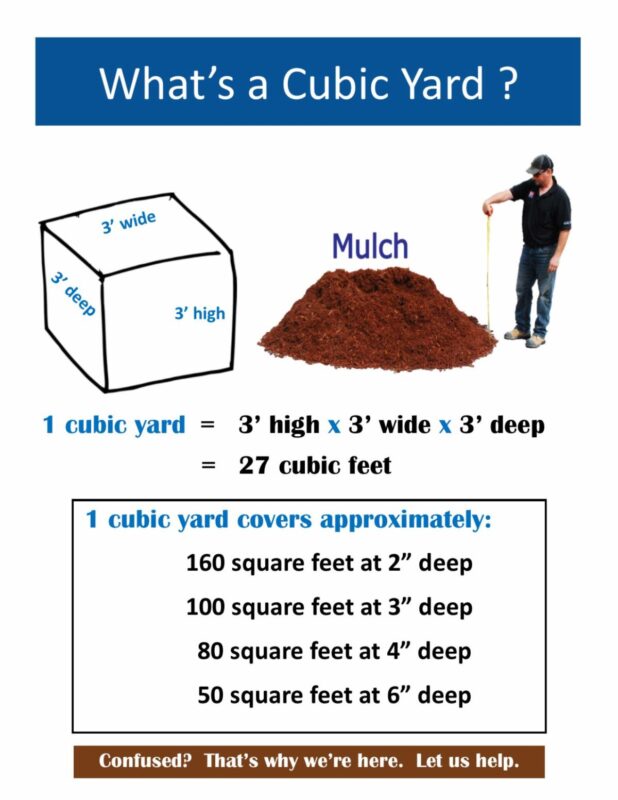
At its core, a yard of mulch refers to a cubic yard measurement. Think of it like this: if you had a cube with sides that are each 3 feet long (1 yard), that cube would hold exactly one cubic yard of material.
- Length: 3 feet
- Width: 3 feet
- Height: 3 feet
So, 1 cubic yard = 3 feet x 3 feet x 3 feet = 27 cubic feet. This conversion from cubic feet to cubic yards is a fundamental piece of information for any gardener.
Most bulk mulch suppliers sell their products by the cubic yard. This makes it the most common way to purchase landscaping mulch volume. When you order a cubic yard of mulch, you’re ordering a quantity that occupies a space of 27 cubic feet.
Converting Cubic Feet to Cubic Yards: Your Go-To Formula
Knowing that 1 cubic yard equals 27 cubic feet is helpful, but how do you use it to estimate your needs? The process involves measuring the area you want to cover and the desired depth of the mulch.
1. Measure Your Garden Area:
- Rectangular Beds: Measure the length and width of your garden bed in feet.
- Formula: Area = Length (ft) × Width (ft)
- Circular Beds: Measure the diameter of the circle in feet. You’ll need to find the radius first by dividing the diameter by 2.
- Formula: Radius (ft) = Diameter (ft) / 2
- Formula: Area = π × Radius (ft)² (Use π ≈ 3.14)
2. Determine Your Desired Mulch Depth:
The ideal mulch depth can vary depending on the type of mulch and your specific gardening goals, but a common recommendation is 2 to 4 inches.
- For most applications, 3 inches is a good average.
3. Convert Depth to Feet:
Since your area measurements are in feet, you’ll need to convert your desired mulch depth from inches to feet.
- Conversion: 1 inch = 1/12 feet
- Example: 3 inches = 3/12 feet = 0.25 feet
4. Calculate the Volume in Cubic Feet:
Now, multiply your garden area (in square feet) by your desired mulch depth (in feet).
- Formula: Volume (cubic feet) = Area (square feet) × Depth (feet)
5. Convert Cubic Feet to Cubic Yards:
Finally, divide your calculated cubic feet by 27 to get the volume in cubic yards.
- Formula: Volume (cubic yards) = Volume (cubic feet) / 27
This comprehensive approach to calculating mulch coverage ensures you’re not guessing.
A Practical Example: Calculating Mulch for a Rectangular Bed
Let’s say you have a rectangular garden bed that is 10 feet long and 5 feet wide. You want to apply mulch at a depth of 3 inches.
-
Step 1: Measure the Area:
- Length = 10 feet
- Width = 5 feet
- Area = 10 ft × 5 ft = 50 square feet
-
Step 2: Desired Depth:
- 3 inches
-
Step 3: Convert Depth to Feet:
- Depth = 3 inches / 12 inches/foot = 0.25 feet
-
Step 4: Calculate Volume in Cubic Feet:
- Volume (cubic feet) = 50 sq ft × 0.25 ft = 12.5 cubic feet
-
Step 5: Convert to Cubic Yards:
- Volume (cubic yards) = 12.5 cubic feet / 27 cubic feet/yard ≈ 0.46 cubic yards
So, for this 10×5 foot bed needing 3 inches of mulch, you would need approximately 0.46 cubic yards. It’s often practical to round up slightly to ensure you have enough, meaning you’d likely order 0.5 cubic yards. This helps account for minor variations in depth and settling.
Mulch Bags vs. Bulk: Making the Right Choice
When it comes to buying mulch, you’ll generally have two options: buying in bags or buying in bulk. The mulch bag calculation is straightforward once you know what’s in a bag.
-
Bagged Mulch: Mulch is typically sold in bags that contain 2 or 3 cubic feet of material. To figure out how many bags you need, you’ll use the same cubic feet calculation as above and then divide by the cubic feet per bag.
- Example: If you need 12.5 cubic feet of mulch and bags contain 2 cubic feet each:
- Number of Bags = 12.5 cubic feet / 2 cubic feet/bag = 6.25 bags
- You’d round up to 7 bags.
- Example: If you need 12.5 cubic feet of mulch and bags contain 2 cubic feet each:
-
Bulk Mulch: This is purchased by the cubic yard. Suppliers will usually deliver it in a large truck. This is often the more economical choice for larger areas. When you’re buying by the cubic yard, you’re directly purchasing landscaping mulch volume.
Which is better?
-
Bagged Mulch:
- Pros: Convenient for small areas, easier to transport yourself, variety of specialty mulches often found in bags.
- Cons: Can be more expensive per cubic yard, more waste from plastic bags, harder to get a precise amount for larger projects.
-
Bulk Mulch:
- Pros: More cost-effective for larger areas, less waste, often a wider selection of basic mulch types.
- Cons: Requires a larger space for delivery, might need a wheelbarrow and shovel for distribution, minimum order quantities may apply.
When you’re considering a significant landscaping project, buying in bulk is almost always the way to go for better value and ease of application once it’s delivered. The mulch delivery quantity is typically expressed in cubic yards.
Creating a Mulch Estimating Guide for Your Garden Beds
A good mulch estimating guide will help you plan effectively. Here’s a simple process to follow:
1. Sketch Your Garden Layout: Draw a simple map of your garden, marking out the areas you intend to mulch. This includes flower beds, around trees, and any pathways where mulch is used.
2. Measure Each Area: Use a tape measure and note down the dimensions (length, width, or diameter) for each distinct area.
3. Calculate the Area for Each Section: Apply the appropriate area formulas (rectangle, square, circle) for each section. Keep a running total of your square footage.
4. Decide on Mulch Depth: Consider the type of mulch and its purpose.
* General Weed Suppression: 2-3 inches is usually sufficient.
* Moisture Retention & Soil Improvement: 3-4 inches can be beneficial.
* Around Trees: 3-4 inches, but keep it a few inches away from the trunk itself to prevent rot.
5. Convert Depth to Feet: Remember to convert your chosen depth from inches to feet (divide by 12).
6. Calculate Total Volume in Cubic Feet: For each section, multiply the area (sq ft) by the depth (ft). Sum these values to get your total cubic feet needed.
7. Convert Total Volume to Cubic Yards: Divide your total cubic feet by 27.
8. Add a Buffer: It’s always wise to add a small buffer (5-10%) to your final landscaping mulch volume estimate. This accounts for settling, uneven application, and ensures you don’t run out.
Table: Mulch Coverage Guide (Approximate)
This table provides a helpful reference for calculating mulch coverage for common depths. Remember that these are averages, and actual coverage can vary based on how compacted the mulch is and the specific product.
| Mulch Depth (Inches) | Mulch Depth (Feet) | Cubic Feet per Square Foot | Cubic Yards per Square Foot |
|---|---|---|---|
| 1 | 0.083 | 0.083 | 0.003 |
| 2 | 0.167 | 0.167 | 0.006 |
| 3 | 0.250 | 0.250 | 0.009 |
| 4 | 0.333 | 0.333 | 0.012 |
How to use the table: If you have a garden bed that is 80 square feet and you want 3 inches of mulch, find the row for 3 inches. The table shows you need approximately 0.250 cubic feet per square foot.
* Total cubic feet needed = 80 sq ft × 0.250 cu ft/sq ft = 20 cubic feet.
* Total cubic yards needed = 20 cu ft / 27 cu ft/yard ≈ 0.74 cubic yards.
* Add a buffer: 0.74 * 1.05 ≈ 0.78 cubic yards. You’d likely order 0.75 or 1 cubic yard.
Why Proper Mulch Measurement Matters
Accurate determining mulch quantity isn’t just about saving money; it’s also about the health of your garden.
- Prevents Plant Suffocation: Too much mulch piled too high can suffocate plant roots by blocking air and moisture.
- Discourages Pests and Diseases: A mulch layer that is too thick or too close to the plant stem can create damp environments that encourage fungal diseases and pests.
- Optimal Weed Suppression: The right depth of mulch is key to blocking sunlight that germinating weeds need to grow. Too little mulch won’t be effective.
- Moisture Retention: Mulch helps retain soil moisture, reducing the need for frequent watering. The correct depth ensures this benefit is maximized.
- Aesthetic Appeal: A well-mulched garden looks tidy and professional. Consistent depth across all beds enhances the visual appeal.
When you’re planning your purchase, especially if you’re dealing with a significant mulch delivery quantity, getting the calculation right the first time saves you from having to order more or deal with excess.
Practical Tips for Accurate Estimating
- Measure Twice, Buy Once: This old adage is especially true for gardening supplies. Double-check your measurements.
- Consider the Mulch Type: Some mulches compact more than others. Loosely piled mulch might appear to be more volume than it is once it settles.
- Factor in Existing Mulch: If you’re topping up existing mulch, you might only need a shallower layer, affecting your calculating mulch coverage.
- Use Online Calculators: Many garden supply websites offer mulch calculators that can help simplify the math. You input your dimensions and desired depth, and they provide the cubic yard measurement needed.
- Talk to Your Supplier: If you’re unsure, don’t hesitate to ask your local garden center or bulk mulch provider. They can offer advice based on their products.
Frequently Asked Questions about Mulch Measurement
Q: What is the standard depth for mulch?
A: The standard depth for most garden beds is between 2 and 4 inches. For general weed suppression and moisture retention, 3 inches is a common and effective depth.
Q: How do I convert mulch bag calculation to cubic yards?
A: First, determine the total cubic feet of mulch you need by measuring your area and desired depth. Then, divide that total cubic feet by the cubic feet per bag to find the number of bags. To convert the total cubic feet needed to cubic yards, divide by 27.
Q: Can I estimate mulch using square feet?
A: Yes, you can calculate the square footage of your garden area, but you still need to factor in the desired depth to determine the volume in cubic feet or cubic yards. You can’t simply buy mulch based on square footage alone.
Q: How much mulch is in a typical mulch bag?
A: Most standard mulch bags contain either 2 or 3 cubic feet of material. Always check the bag for the exact volume.
Q: What is the best way to calculate mulch for irregular shapes?
A: For irregular shapes, break them down into smaller, more manageable geometric shapes (squares, rectangles, triangles, circles). Calculate the area of each section and then add them together for a total area. Then proceed with the depth calculation.
Q: Does mulch settle after application?
A: Yes, mulch does settle over time, especially after rain or if it’s a finer textured mulch. It’s why adding a small buffer to your estimate is a good idea.
Q: How do I calculate mulch for a tree?
A: Measure the area around the tree in a circle, extending out to the drip line (the outer edge of its branches) or the desired mulching area. Then, calculate the volume needed for the desired depth, remembering to keep the mulch a few inches away from the tree trunk.
By taking the time to accurately measure and calculate your needs, you ensure your garden gets the benefits of a properly mulched landscape, looking its best and thriving. This thorough approach to determining mulch quantity will save you time, money, and effort in the long run, making your gardening experience more enjoyable.