
The speed of a lawn mower varies greatly, but most push mowers move at a walking pace of 1-3 mph, while riding mowers can go from 3-7 mph, with some specialized models reaching up to 10 mph.
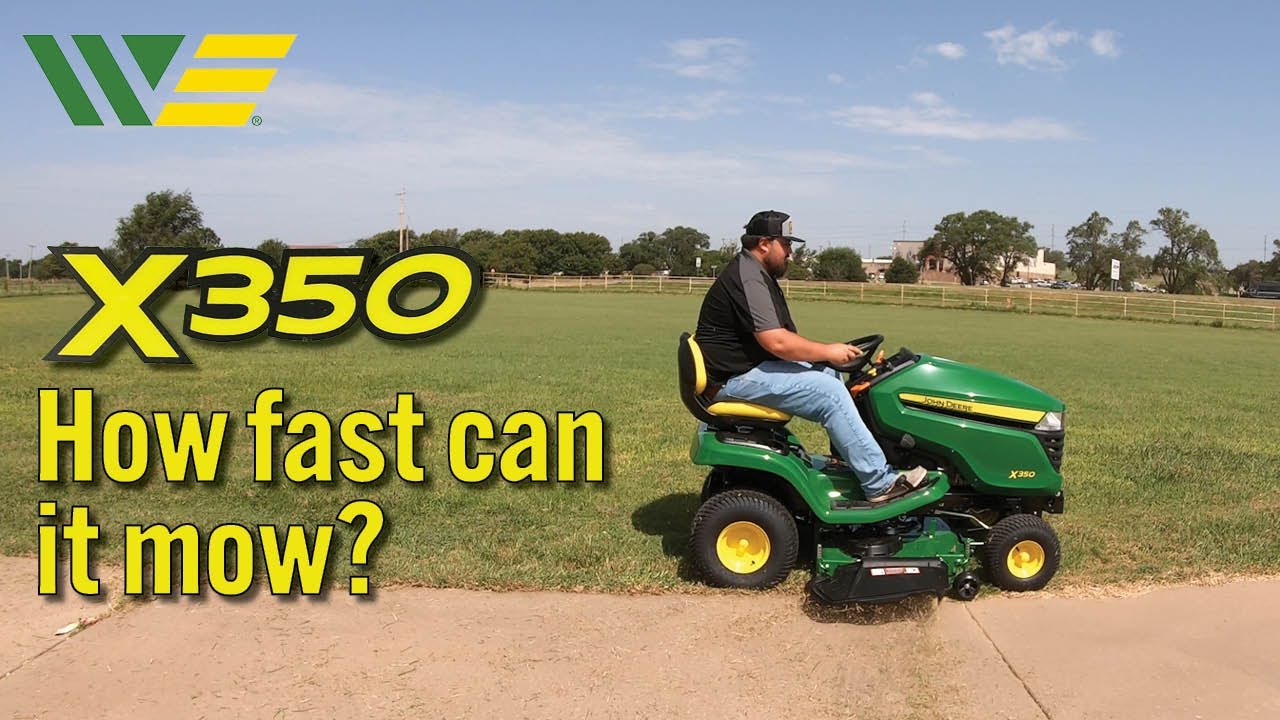
Image Source: i.ytimg.com
Deciphering Lawn Mower Speeds
Many factors influence how fast a lawn mower moves. These range from the type of mower to the terrain you’re cutting on and even your own comfort level. Let’s break down the typical speeds you can expect from different kinds of lawn mowers and explore what affects their velocity.
The Pace of a Push Mower
Push mowers are the most basic type of lawn mower. You provide the power to push them forward.
- Manual Reel Mowers: These are the simplest and slowest. Their speed is entirely dependent on your walking pace. Typically, this falls between 1 mph and 2 mph. They are great for small, flat lawns and are very eco-friendly.
- Self-Propelled Push Mowers: These mowers take some of the effort out of mowing. They have a drive system that propels the mower forward, often with adjustable speeds.
- Variable Speed: Many self-propelled mowers allow you to control the forward speed. You can often set them to match your natural walking pace.
- Typical Speed Range: You can expect these to move between 2 mph and 4 mph. Some models might have a slightly higher top speed, but it’s usually designed to be comfortable for walking behind.
- Cutting Speed: The actual cutting speed lawn mower for a self-propelled push mower is influenced by how fast you set the drive system and the density of the grass. You want to move at a speed that allows the blades to cut the grass cleanly without bogging down the engine or the blades.
The Velocity of a Riding Mower
Riding mowers are designed for larger properties and offer a more comfortable mowing experience. Their speeds are generally higher than push mowers.
- Lawn Tractors: These are common for residential use. They offer a good balance of power and maneuverability.
- Average Lawn Mower Speed: Most lawn tractors have a top speed somewhere between 3 mph and 6 mph.
- Gearing and Speed Control: Many riding mowers have transmissions that allow for different speed settings, similar to a car. You might have a gear shifter or a hydrostatic transmission with a foot pedal for speed control.
- Factors Affecting Speed: The engine size, transmission type, and tire size can all influence how fast a lawn tractor can go.
- Zero-Turn Mowers: Known for their agility and speed, zero-turn mowers are a favorite for professional landscapers and homeowners with complex yards.
- Higher Lawn Mower MPH: Zero-turn mowers typically have higher top speeds than lawn tractors, often ranging from 5 mph to 8 mph. Some high-performance models can reach 10 mph or even more.
- Hydrostatic Transmissions: Most zero-turn mowers use hydrostatic transmissions, which offer smooth, continuous speed adjustments with a foot pedal. This allows for precise control and quick acceleration.
- Maneuverability: Their ability to turn on a dime means you can cut grass more efficiently, often reducing mowing time.
Factors Influencing Lawn Mower Speed
Several elements play a role in determining the actual lawn mower velocity you achieve when mowing.
- Engine Power and Size: A more powerful engine can generally support higher speeds and handle tougher conditions. Small engines on push mowers are designed for efficient cutting at walking speeds.
- Transmission Type:
- Manual (Gear) Transmissions: Offer distinct speed settings.
- Automatic (Friction Drive): Often found on older or simpler self-propelled mowers, these can be less smooth.
- Hydrostatic Transmissions: Provide infinite speed control and are common on higher-end riding mowers and zero-turns. They allow for precise adjustments based on terrain and grass conditions.
- Wheel Size and Traction: Larger wheels can sometimes allow for higher speeds, and good tire tread is crucial for maintaining traction, especially on slopes or wet grass.
- Terrain:
- Flat Surfaces: Allow mowers to reach their maximum potential speed.
- Slopes: Require slower speeds for safety and control. Driving too fast uphill can strain the engine, and driving too fast downhill can lead to loss of control.
- Rough Terrain: Uneven ground can slow you down and potentially damage the mower if you’re going too fast.
- Grass Conditions:
- Thick, Tall Grass: Will require you to slow down the cutting speed lawn mower to ensure a clean cut and prevent the engine from stalling.
- Wet Grass: Can be slippery, reducing traction and making it harder for the mower to move efficiently.
- Operator Comfort and Control: The most important factor is mowing at a speed that is comfortable and allows you to maintain control of the machine.
Calculating Your Mowing Speed
While there isn’t a readily available “mowing speed calculator” built into most mowers, you can easily estimate your lawn mower mph.
- Measure a Known Distance: Find a straight section of your lawn, perhaps 50 or 100 feet long. Mark the start and end points.
- Time Your Pass: With the mower set to your typical mowing speed, time how long it takes to travel from the start mark to the end mark.
-
Use the Formula: Speed = Distance / Time.
- Example: If you measured 100 feet and it took you 20 seconds to travel that distance:
- Time in hours = 20 seconds / 3600 seconds/hour = 0.00556 hours
- Speed = 100 feet / 0.00556 hours = 18,000 feet per hour
- Convert to mph: 18,000 feet/hour / 5280 feet/mile ≈ 3.4 mph
Most people naturally walk at around 3 mph, so self-propelled mowers often have settings that align with this. Riding mowers are designed to be faster, making them suitable for covering larger areas more quickly.
- Example: If you measured 100 feet and it took you 20 seconds to travel that distance:
Safe Mowing Speed
Safety is paramount when operating any lawn mower. What constitutes a safe mowing speed is critical.
- Maintain Control: Always operate the mower at a speed that allows you to maintain full control. This means you should be able to stop the mower quickly and safely if needed.
- Terrain Considerations: On slopes, significantly reduce your speed. Never mow across steep slopes with a riding mower; mow up and down.
- Visibility: Ensure you can see clearly what you are mowing and any obstacles.
- Operator Fatigue: If you are tired, slow down. Fatigue can impair judgment and reaction time.
- Manufacturer Recommendations: Always consult your mower’s owner’s manual for recommended operating speeds and safety guidelines. They often provide specific advice for different models.
- Grass Density: If the mower is struggling to cut, slowing down the cutting speed lawn mower is essential. Pushing the mower too fast through thick grass can damage the engine, blades, and drivetrain.
Lawn Mower Speed vs. Cutting Performance
There’s a direct relationship between how fast you move and how well the mower cuts.
- Too Fast: If you go too fast, the blades may not have enough time to cut the grass cleanly. This results in torn grass blades, which look unsightly and can make the grass more susceptible to disease. The engine might also bog down, leading to uneven cutting or stalling.
- Too Slow: While generally less detrimental than going too fast, mowing too slowly might not be efficient, especially on large areas. However, for very thick or wet grass, a slower speed can sometimes allow the blades to cut more effectively than a high speed.
- Optimal Speed: The ideal cutting speed lawn mower is the one that allows the blades to spin at their intended speed and cut the grass cleanly without being overwhelmed. This is often a brisk walking pace for push mowers and a steady, controlled pace for riding mowers.
Common Lawn Mower Speeds in Summary
Here’s a quick look at typical lawn mower speeds:
| Mower Type | Typical Speed Range (MPH) | Notes |
|---|---|---|
| Manual Reel Mower | 1-2 | Dependent on user’s walking pace. |
| Self-Propelled Push Mower | 2-4 | Often adjustable to match walking pace. |
| Lawn Tractor | 3-6 | Varies by engine size and transmission. |
| Zero-Turn Mower | 5-8+ | Higher speeds, more agile. |
Conclusion: Finding Your Mowing Pace
The question of “how fast does a lawn mower go?” doesn’t have a single answer. It’s a blend of engineering, user control, and environmental factors. Whether you’re pushing a small reel mower or piloting a powerful zero-turn, the key is to find a speed that is safe, efficient, and results in a beautifully cut lawn. Always prioritize control and clean cutting over raw speed. By considering the type of mower you have, the conditions of your lawn, and basic safety principles, you can determine the optimal lawn mower velocity for your yard work.
Frequently Asked Questions (FAQ)
Q1: What is the average lawn mower speed?
A1: The average lawn mower speed varies by type. Push mowers typically move at 1-4 mph, while riding mowers usually range from 3-8 mph, with some specialized models going faster.
Q2: Can I make my lawn mower go faster?
A2: For most push mowers, speed is dictated by your walking pace or the self-propel system’s settings. For riding mowers, you might be able to achieve higher speeds by using higher gears or adjusting the speed control, but always ensure it’s safe and within the mower’s capabilities. Modifying the mower beyond its design specifications can be dangerous and void warranties.
Q3: Who sets the speed limits for lawn mowers?
A3: There aren’t official “speed limits” set by external bodies for lawn mowers in the same way there are for cars. The speed is determined by the mower’s design and the operator’s control. However, manufacturers provide operating guidelines, and responsible operators set their own safe mowing speed based on conditions.
Q4: Is it bad to mow my lawn too fast?
A4: Yes, mowing too fast can be detrimental. It often leads to uneven cutting, torn grass blades, and can strain the mower’s engine and blades, potentially causing damage or requiring more frequent maintenance. It also reduces your control and increases the risk of accidents.
Q5: How can I find a lawn mower mowing speed calculator?
A5: While dedicated “mowing speed calculators” aren’t common, you can easily estimate your lawn mower mph by timing how long it takes to cover a known distance (e.g., 50 or 100 feet) at your usual mowing pace. Use the formula Speed = Distance / Time.
Q6: What is a safe mowing speed for slopes?
A6: For slopes, you must significantly reduce your speed. For riding mowers, it’s generally recommended to mow straight up and down the slope, not across it, and at a slow, controlled pace to prevent tipping or loss of control. Always refer to your mower’s manual for specific slope operating instructions.