
Imagine vibrant, tropical blooms gracing your garden, a splash of fiery red or sunny yellow against lush green leaves. That’s the dream for any hibiscus lover! But sometimes, our hibiscus plants don’t quite reach their full, show-stopping potential. You might be wondering why your flowers are small, or why your plant isn’t growing as vigorously as you’d hoped.
Choosing the right fertilizer can feel like a puzzle. So many bags and bottles line the garden center shelves, each promising amazing results. It’s easy to feel overwhelmed and unsure which one will truly nourish your hibiscus and encourage those spectacular blooms. You want the best for your plant, but the sheer variety can lead to confusion and sometimes, disappointment.
This post is here to clear the air and make fertilizing your hibiscus simple and effective. We’ll break down exactly what your hibiscus needs to thrive. By the time you finish reading, you’ll understand the secrets to picking the perfect food for your plant, so you can finally enjoy those breathtaking blossoms you’ve been dreaming of.
Our Top 5 Fertilizer For Hibiscus Plants Recommendations at a Glance
Top 5 Fertilizer For Hibiscus Plants Detailed Reviews
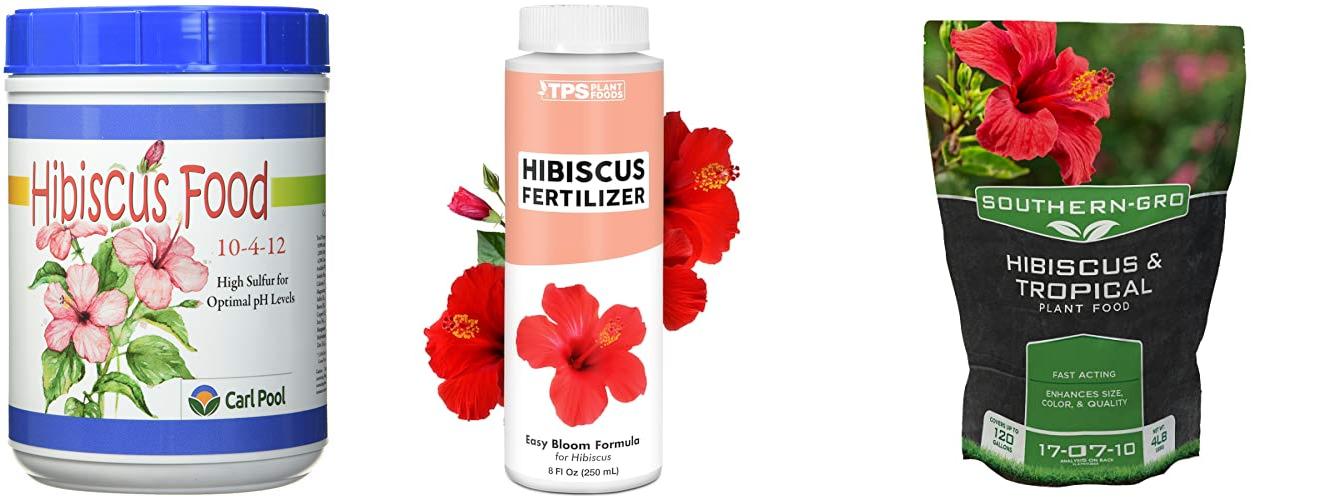
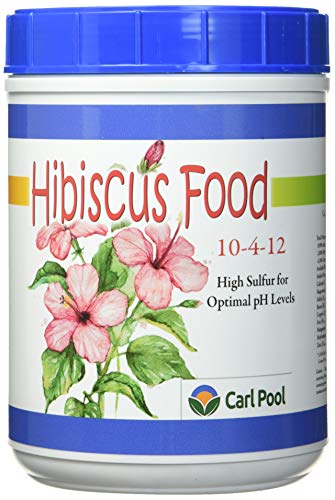
1. Carl Pool Hibiscus Plant Food 10-4-12 4 Lbs
Rating: 8.9/10
Are your hibiscus plants looking a little sad? Do you want to see them burst with vibrant blooms? The Carl Pool Hibiscus Plant Food 10-4-12 4 Lbs is here to help! This special fertilizer is made to give your hibiscus the best possible chance to grow big and beautiful. You can easily find it on Amazon. It’s designed to work for every kind of hibiscus, so no matter what variety you have, this food will be a great choice. Plus, it has tiny amounts of important minerals called trace elements that your plants need to stay healthy.
What We Like:
- It is scientifically made for healthy plant growth.
- It works well for all types of hibiscus plants.
- It contains fritted trace elements for added nutrition.
- It is readily available for purchase on Amazon.
What Could Be Improved:
- The 4 lb bag might be a bit small for very large gardens.
- The instructions could be a little clearer for absolute beginners.
If you want to give your hibiscus the best care, this plant food is a fantastic option. Your plants will thank you with stunning flowers!
2. Hibiscus Fertilizer for Tropical and Flowering Plants

Rating: 8.9/10
Give your tropical and flowering plants the boost they need with this specially formulated Hibiscus Fertilizer. This liquid plant food comes in an 8 oz (250mL) bottle, making it easy to measure and mix for vibrant growth and stunning blooms. It’s designed to nourish a wide variety of tropical and flowering plants, helping them thrive.
What We Like:
- Makes plants grow bigger and stronger.
- Helps flowers become more colorful and bloom more often.
- It’s easy to mix with water and use.
- Good for many different kinds of tropical and flowering plants.
- The bottle is a good size and lasts a while.
What Could Be Improved:
- The instructions could be a little clearer for beginners.
- It would be nice if it came in a larger size option.
This fertilizer is a fantastic way to help your plants reach their full potential. You’ll see a noticeable difference in their health and beauty.
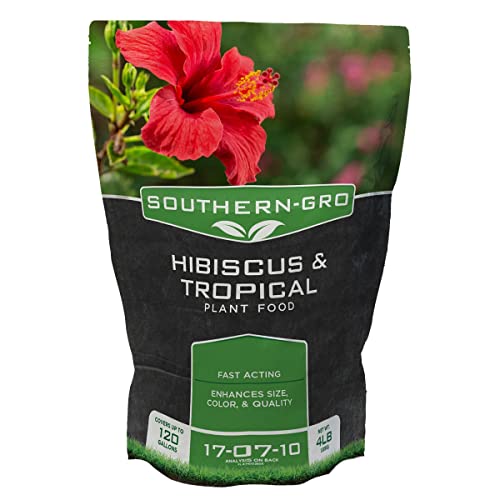
3. SouthernGRO Hibiscus & Tropical Plant Food 4lb. Bag (17-07-10 5.8% S 1.95% MG 1.5% FE .26% MN .26% ZN .05% CU)
Rating: 9.3/10
Get ready for bigger, brighter blooms with SouthernGRO Hibiscus & Tropical Plant Food! This 4lb bag is packed with everything your hibiscus and tropical plants need to thrive. Its special 17-07-10 formula, along with sulfur, magnesium, iron, manganese, zinc, and copper, works fast to boost your plants. You’ll see a real difference in their size, color, and overall health.
What We Like:
- Fast-acting formula: Your plants respond quickly to this food, showing results in no time.
- Enhances bloom size: Expect larger, more impressive flowers that will be the envy of your neighbors.
- Boosts vibrant color: The food brings out the richest, most beautiful colors in your hibiscus and tropical plants.
- Improves overall quality: Plants look healthier, stronger, and more robust.
- Balanced nutrients: The 17-07-10 NPK ratio is ideal, and the added micronutrients like iron and magnesium are crucial for tropical plants.
What Could Be Improved:
- Bag size options: While 4lb is a good start, larger or smaller bag sizes might be helpful for different garden sizes.
- Application instructions clarity: More visual aids or examples for different plant types could make application even easier for beginners.
If you want stunning hibiscus and tropical plants, this SouthernGRO plant food is a fantastic choice. It delivers on its promise of bigger, more colorful, and healthier blooms.
4. BGI HIBISGAIN 2lb Bag

Rating: 8.8/10
Unlock the full potential of your hibiscus plants with the BGI HIBISGAIN 2lb Bag, Hibiscus Fertilizer. This special blend is made just for hibiscus, helping them grow strong and bloom beautifully. It’s the same fertilizer that expert growers in sunny Homestead, Florida, trust for their award-winning plants.
What We Like:
- Specially made for hibiscus plants.
- Trusted by professional growers in Florida.
- Super easy to use – just sprinkle it on top.
- No messy mixing needed.
- The bag reseals easily to keep the fertilizer fresh.
- Helps your hibiscus grow big and produce lots of flowers.
What Could Be Improved:
- The 2lb bag might be a bit small for very large gardens.
- Availability might be limited outside of certain regions.
This hibiscus fertilizer makes feeding your plants simple and effective. Give your hibiscus the boost it deserves and enjoy a garden bursting with vibrant blooms.
5. 16oz Hibiscus Fertilizer – Makes 16 Gallons of Hibiscus Flowers Plant Food Outdoor – Indoor Plant Fertilizer Liquid for Vibrant

Rating: 8.8/10
This 16oz Hibiscus Fertilizer is a game-changer for anyone wanting to grow beautiful, vibrant hibiscus plants. It’s a liquid plant food that works wonders both indoors and outdoors. You can make a whole 16 gallons of this powerful plant food from just one bottle, meaning you get a lot of value for your money. It’s designed to help your hibiscus plants grow bigger, bloom more, and look healthier overall.
What We Like:
- 2X More Value: One 16oz bottle makes 16 gallons of plant food, giving you plenty to nourish your plants.
- Boosts Blooms & Growth: It has the right mix of nutrients (nitrogen, phosphorus, and potassium) to make leaves greener, roots stronger, and flowers more colorful and showy.
- Powerful Formula: This fertilizer is packed with essential nutrients that strengthen your plants and encourage healthy, steady growth.
- Fixes Nutrient Deficiencies: It helps fix problems like pale leaves and slow growth by giving your plants the vital nutrition they need.
- For All Hibiscus Varieties: Whether you have a Rose of Sharon or a Tropical Hibiscus, this food works for all types.
- Easy to Use: You just mix it with water and apply it to your plants. It’s simple to use during growing seasons and less often in cooler months.
What Could Be Improved:
- The instructions for mixing could be clearer for absolute beginners.
- It would be helpful to have a small measuring cup included in the bottle.
This hibiscus fertilizer is an excellent choice for making your hibiscus plants the star of your garden or indoor space. Your plants will thank you with stunning blooms and lush greenery.
Choosing the Best Fertilizer for Your Hibiscus Plants
Hibiscus plants are beautiful, tropical flowers. They bring vibrant color to any garden. To keep them healthy and blooming, they need the right food. This guide will help you pick the best fertilizer for your hibiscus.
1. Key Features to Look For
Balanced Nutrients
Hibiscus plants need a good mix of nutrients. Look for fertilizers with three main numbers, called N-P-K. These stand for Nitrogen (N), Phosphorus (P), and Potassium (K).
- Nitrogen (N): This helps leaves grow green and strong.
- Phosphorus (P): This helps flowers bloom big and bright.
- Potassium (K): This helps the whole plant stay healthy and fight off sickness.
A good N-P-K ratio for hibiscus is often around 10-10-10 or 20-20-20. Some fertilizers are made specifically for flowering plants, which can also work well.
Slow-Release Formula
Slow-release fertilizers feed your plants over a longer time. This means you don’t have to fertilize as often. It also prevents the plant from getting too much food all at once, which can hurt it.
Micronutrients
Besides the main N-P-K, hibiscus also need small amounts of other nutrients. These are called micronutrients. Things like iron, magnesium, and manganese are important. Many good hibiscus fertilizers include these.
2. Important Materials
Organic vs. Synthetic
Fertilizers come in two main types: organic and synthetic.
- Organic fertilizers come from natural sources like compost, manure, or bone meal. They feed the soil and the plant slowly. They also improve soil health over time.
- Synthetic fertilizers are made in factories. They provide nutrients quickly. They are often cheaper and easier to find.
Both can work well. Organic options are better for the environment. Synthetic ones give faster results.
Water-Soluble vs. Granular
Fertilizers also come in different forms.
- Water-soluble fertilizers mix with water. You pour this mixture on the soil. They are absorbed by the plant quickly.
- Granular fertilizers are small pellets. You spread them on the soil. They release nutrients slowly as they break down.
Choose the form that best fits how you like to care for your plants.
3. Factors That Improve or Reduce Quality
Ingredients
High-quality fertilizers have pure, readily available nutrients. They should not contain a lot of filler materials. Check the ingredient list. It should clearly show the N-P-K ratio and any added micronutrients.
Brand Reputation
Trusted brands usually make better products. Look for reviews from other gardeners. A good brand stands behind its products.
Storage and Packaging
Fertilizers should be stored in a dry place. The packaging should keep the product from getting wet or damaged. This helps it last longer.
4. User Experience and Use Cases
Ease of Use
Some fertilizers are very easy to use. You just sprinkle them on the soil. Others require mixing with water. Think about how much time you want to spend fertilizing.
Results
The best fertilizer will make your hibiscus plants grow healthier. You will see more blooms. The leaves will be a richer green. Happy plants mean a beautiful garden.
Use fertilizer during the growing season. This is usually from spring to fall. Avoid fertilizing in the winter when the plant is resting.
Always follow the instructions on the fertilizer package. Too much fertilizer can burn the roots of your plant. Too little means it won’t get the food it needs.
Frequently Asked Questions about Hibiscus Fertilizer
Q: What is the best N-P-K ratio for hibiscus?
A: A balanced ratio like 10-10-10 or 20-20-20 is usually good. Fertilizers for flowering plants also work well.
Q: How often should I fertilize my hibiscus?
A: During the growing season (spring to fall), fertilize about once a month. Check the specific product instructions for your chosen fertilizer.
Q: Can I use regular plant food for my hibiscus?
A: Yes, many general-purpose plant foods work. However, fertilizers made for flowering plants or hibiscus may give even better results.
Q: What happens if I use too much fertilizer?
A: Too much fertilizer can “burn” the roots of your hibiscus. This can damage or even kill the plant. Always follow the directions carefully.
Q: Should I fertilize my hibiscus in winter?
A: No, you should not fertilize your hibiscus in winter. The plant is resting during this time and does not need extra food.
Q: Are organic fertilizers better for hibiscus?
A: Organic fertilizers are great for the soil and feed the plant slowly. They are a good choice for long-term plant health. Synthetic fertilizers offer quicker nutrient delivery.
Q: How do I know if my hibiscus needs fertilizer?
A: Signs include slow growth, pale or yellowing leaves, and few or no blooms. A healthy, well-fed hibiscus has vibrant green leaves and lots of flowers.
Q: Can I use fertilizer on newly planted hibiscus?
A: Wait a few weeks after planting before fertilizing. This allows the roots to settle in. Start with a mild fertilizer solution.
Q: What are micronutrients and why are they important?
A: Micronutrients are essential vitamins for plants. They are needed in small amounts. They help with things like leaf color and disease resistance. Iron and magnesium are important examples.
Q: Where should I store my hibiscus fertilizer?
A: Store fertilizer in a cool, dry place, away from children and pets. Keep it in its original packaging to protect it from moisture.
In conclusion, every product has unique features and benefits. We hope this review helps you decide if it meets your needs. An informed choice ensures the best experience.
If you have any questions or feedback, please share them in the comments. Your input helps everyone. Thank you for reading.