

Do your flowers look a little sad? Are they not blooming as brightly as you’d hoped? You’re not alone! Many gardeners dream of vibrant, colorful flowerbeds, but sometimes, even with the best intentions, our blooms just don’t reach their full potential. It can be frustrating when you’ve watered and weeded, but the flowers still seem to be missing something.
Choosing the right fertilizer for your flowers can feel like a puzzle. There are so many different types, and it’s hard to know which one will actually help your plants thrive. Some fertilizers promise miracles, while others seem to do nothing at all. This confusion can lead to wasted money and, worse, disappointing flowers.
But what if you could unlock the secret to lusher leaves and more spectacular blooms? In this post, we’ll break down the world of flower fertilizers. You’ll learn what your flowers really need and how to pick the perfect food to make them happy and healthy. Get ready to transform your garden into a colorful paradise!
Our Top 5 Fertilizer For Flowers Recommendations at a Glance
Top 5 Fertilizer For Flowers Detailed Reviews
1. Miracle-Gro Water Soluble All Purpose Plant Food

Rating: 9.3/10
Are you dreaming of a garden bursting with vibrant flowers, delicious vegetables, or lush trees? The Miracle-Gro Water Soluble All Purpose Plant Food is your secret weapon. This powerful fertilizer is packed with all the essential nutrients your plants crave. It works instantly, giving your plants a direct boost to grow bigger and more beautiful than ever before. You can feed your plants every one to two weeks, making it easy to keep them thriving. This food is incredibly versatile, working wonders for all your flowers, vegetables, trees, shrubs, and even your indoor houseplants. Plus, you can use it with the handy Miracle-Gro Garden Feeder or simply mix it into your watering can. Best of all, it’s guaranteed not to burn your plants when you follow the simple instructions.
What We Like:
- Instantly feeds plants with essential nutrients.
- Promotes bigger, more beautiful growth compared to unfed plants.
- Easy feeding schedule of every 1-2 weeks.
- Works with the Miracle-Gro Garden Feeder or a watering can.
- Suitable for all types of plants, from flowers and vegetables to trees and houseplants.
- Guaranteed not to burn plants when used as directed.
What Could Be Improved:
- The 3 lb. size might be a bit large for very small gardens or just a few houseplants.
- Requires regular application for best results, which some gardeners might find time-consuming.
This Miracle-Gro plant food is a fantastic and reliable way to give your plants the nourishment they need. It truly makes a noticeable difference in plant health and beauty.
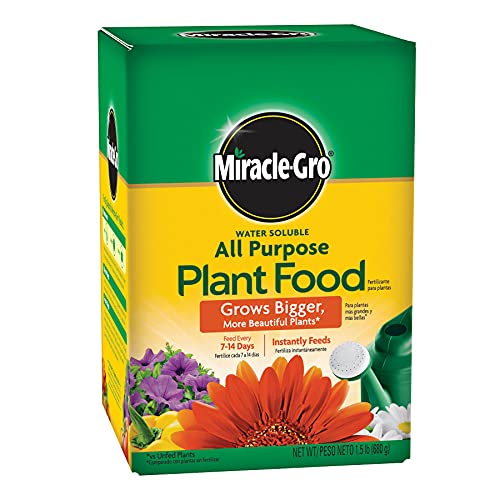
2. Miracle-Gro Water Soluble All Purpose Plant Food
Rating: 8.9/10
Are you looking for a simple way to make all your plants happy and healthy? The Miracle-Gro Water Soluble All Purpose Plant Food is your answer! This plant food works wonders for every kind of plant, whether they live inside your home or out in the garden. From colorful roses and tasty vegetables to lush houseplants and sturdy trees, this food helps them all grow bigger and more beautiful.
What We Like:
- Feeds every plant you have: It works for indoor and outdoor plants, including flowers, vegetables, houseplants, trees, and shrubs.
- Grows bigger, better plants: You’ll see a difference quickly, with plants that are noticeably larger and more vibrant compared to plants that don’t get fed.
- Starts working right away: This plant food is designed to deliver fast results, so you don’t have to wait long to see your plants thrive.
- Packed with essential nutrients: The fertilizer contains Nitrogen (N), Phosphorus (P), and Potassium (K), which are the key building blocks plants need to grow strong.
- Easy to use for any plant: You can easily mix it with water for your indoor plants or use it with a garden feeder for your outdoor beds.
- Covers a large area: One container is enough to feed about 600 square feet of garden space, making it a great value.
What Could Be Improved:
- Measuring can be tricky for some: The amount you need to mix varies for indoor and outdoor plants, which might require a little extra attention.
This Miracle-Gro plant food offers a straightforward solution for boosting the health and beauty of your entire plant collection. It’s a reliable choice for anyone wanting to achieve impressive garden results.
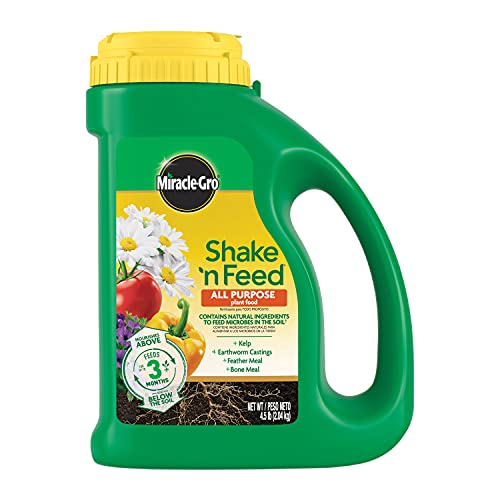
3. Miracle-Gro Shake ‘N Feed All Purpose Plant Food
Rating: 8.7/10
Tired of dull plants? Miracle-Gro Shake ‘N Feed All Purpose Plant Food promises to bring your garden back to life, feeding your plants for up to three months. It nourishes your plants both above and below the soil, giving them the nutrients they need to thrive. This food works with almost any plant, whether it’s in a pot or in the ground. You can use it on flowers, vegetables, and herbs. It’s designed to help you grow stronger, more vibrant, and more productive plants.
What We Like:
- Feeds plants for up to 3 months with just one application.
- Nourishes plants both above and below the soil for complete care.
- Contains vital micronutrients for stronger, more vibrant, and productive plants.
- Works with a wide variety of plants, including flowers, vegetables, and herbs.
- Suitable for both in-ground and container plants, offering great versatility.
- Easy to apply by just shaking it onto the soil and working it in.
- Uses natural ingredients to feed and nourish your plants.
What Could Be Improved:
- Application requires watering after use to activate the feeding process.
- Needs to be reapplied every 3 months, which might be a bit frequent for some gardeners.
This plant food is a simple way to boost your garden’s health and beauty. Give your plants the food they need for a season of vibrant growth.
4. Miracle-Gro 1-Pound 1360011 Water Soluble Bloom Booster Flower Food

Rating: 8.7/10
Get ready to see your flowers explode with color and life! This Miracle-Gro 1-Pound 1360011 Water Soluble Bloom Booster Flower Food, 10-52-10, 1 Pack is designed to give all your blooming plants the boost they need for stunning results. It’s super easy to use and quickly feeds your plants, making them healthier and more beautiful.
What We Like:
- Works for all kinds of blooming plants, from roses to petunias.
- You see beautiful results fast because it feeds instantly.
- Just feed your plants every two weeks for amazing growth.
- It’s made to prevent overfeeding and burning your plants when you follow the instructions.
- The 1-pound pack is a good size for many gardens.
What Could Be Improved:
- You need to mix it with water, which takes a little extra time.
- For very large gardens, you might need more than one pack.
This bloom booster is a fantastic way to encourage more flowers and brighter colors in your garden. It’s a simple solution for healthier, more vibrant blooming plants.
5. Miracle-Gro Water Soluble Bloom Booster Flower Food

Rating: 9.4/10
Dreaming of a garden bursting with vibrant color? The Miracle-Gro Water Soluble Bloom Booster Flower Food promises just that! This handy plant food is designed to give your annual and perennial flowers the boost they need to produce more blooms. Whether your flowers are in the ground or in pots, this formula works wonders. It’s great for all sorts of flowering plants, from classic roses and hydrangeas to cheerful daisies and colorful petunias. You can even use it for your indoor plants!
What We Like:
- It makes flowers bloom more, bringing extra color to your garden compared to plants that don’t get fed.
- The food works right away. You can feed your plants every 7 to 14 days to keep them happy and blooming.
- It’s super versatile. Use it for any flowering plants, whether they’re in pots or in the ground.
- Feeding is easy. Mix it with water in a watering can for indoor plants or use a special feeder for your outdoor garden.
- A little goes a long way! One big container can feed about 2,200 square feet of garden space.
What Could Be Improved:
- The Miracle-Gro Garden Feeder is sold separately, so you’ll need to buy that if you want to use it for outdoor feeding.
This Bloom Booster is a simple way to achieve a more colorful and lively flower garden. Get ready to enjoy more blooms than ever before!
The Ultimate Buying Guide: Blooming Beautiful Flowers
Want your flowers to look their absolute best? Choosing the right fertilizer makes a big difference. This guide will help you pick the perfect plant food for vibrant blooms and healthy growth.
Key Features to Look For
When you’re shopping for flower fertilizer, keep these important features in mind.
Nutrient Balance (NPK Ratio)
What is the NPK Ratio?
NPK stands for Nitrogen (N), Phosphorus (P), and Potassium (K). These are the three main nutrients plants need to grow.
- Nitrogen (N): Helps with leafy green growth.
- Phosphorus (P): Important for strong roots and beautiful flowers.
- Potassium (K): Boosts overall plant health and disease resistance.
Different flowers need different amounts of each nutrient. Look for a fertilizer with an NPK ratio that fits your flower’s needs.
Slow-Release vs. Quick-Release
What’s the Difference?
Quick-release fertilizers give plants nutrients right away. They work fast but can wash away easily. Slow-release fertilizers feed plants over a longer time. This gives them a steady supply of food.
For most flowers, slow-release is a great choice. It prevents overfeeding and keeps your plants happy for weeks.
Formulation (Granular, Liquid, or Stakes)
Which Form is Best?
Fertilizers come in different forms:
- Granular: These are little pellets you mix into the soil. They release nutrients slowly.
- Liquid: You mix these with water and pour them on. They work fast.
- Stakes: These are sticks you push into the soil. They release nutrients slowly.
Granular and stakes are easy to use and provide steady feeding. Liquid is good for a quick boost when plants need it.
Important Materials
Besides NPK, other materials can make a fertilizer even better.
Micronutrients
What are Micronutrients?
These are nutrients plants need in smaller amounts, like iron, manganese, and zinc. They help flowers grow strong and colorful.
Good fertilizers include these micronutrients. They support healthy plant functions.
Organic vs. Synthetic
What’s the Difference?
Organic fertilizers come from natural sources like compost or manure. They improve soil health over time. Synthetic fertilizers are made in a lab. They provide nutrients directly to the plant.
Both can work well. Organic options are good for long-term soil health. Synthetic ones often provide a faster response.
Factors That Improve or Reduce Quality
What makes a fertilizer great or not so great?
Ingredient Quality
Why Does it Matter?
High-quality ingredients mean your plants get the nutrients they need effectively. Cheap ingredients might not break down well or could contain harmful substances.
Look for fertilizers with clear ingredient lists. Reputable brands usually use better materials.
pH Level
How Does pH Affect Fertilizer?
The pH of your soil affects how well plants absorb nutrients. Some fertilizers can change soil pH.
Using a fertilizer with a balanced pH or one that suits your soil’s pH is important. This ensures your plants can actually use the food you give them.
Storage and Freshness
Does Fertilizer Go Bad?
Fertilizers can lose their effectiveness if stored improperly. Keep them in a cool, dry place away from direct sunlight.
Old or improperly stored fertilizer might not provide the promised nutrients. Always check the expiration date if there is one.
User Experience and Use Cases
How do people use flower fertilizers, and what do they experience?
Ease of Use
How Easy is it to Apply?
Most gardeners want fertilizers that are simple to apply. Granular and stake fertilizers are very user-friendly. Liquid fertilizers require mixing but are also straightforward.
Clear instructions on the packaging help users apply the correct amount. This prevents mistakes.
Results and Effectiveness
What Results Can You Expect?
Users look for noticeable improvements in their flowers. This includes bigger blooms, brighter colors, and healthier plants.
Good fertilizers help flowers grow stronger and resist pests and diseases. This leads to more beautiful gardens.
Frequently Asked Questions (FAQ)
Q: How often should I fertilize my flowers?
A: It depends on the fertilizer and the type of flower. Many slow-release fertilizers are applied once or twice a season. Quick-release liquids might be used every 2-4 weeks. Always follow the product’s instructions.
Q: Can I use fertilizer for vegetables on my flowers?
A: Sometimes. However, flower fertilizers are often formulated with more phosphorus to encourage blooms. Vegetable fertilizers might have a different NPK ratio. It’s best to use a fertilizer specifically made for flowers for the best results.
Q: What if my flowers look yellow?
A: Yellow leaves can mean a few things, but often it’s a sign of a nutrient deficiency, especially nitrogen. A balanced flower fertilizer can help correct this.
Q: Is it possible to over-fertilize my flowers?
A: Yes, it is. Too much fertilizer can burn the roots and harm the plant. Always follow the recommended dosage on the package.
Q: Do I need to fertilize indoor flowers differently than outdoor flowers?
A: Yes, indoor flowers often need less fertilizer than outdoor ones. Their growing season is different. Use a fertilizer made for houseplants or a general-purpose one at a weaker strength.
Q: When is the best time to start fertilizing flowers?
A: Begin fertilizing when your flowers start actively growing in the spring. Stop fertilizing in late summer or early fall to allow them to prepare for winter.
Q: Can I use fertilizer on newly planted flowers?
A: Wait until the plants are established, usually a few weeks after planting, before fertilizing. This gives them time to settle into their new home.
Q: What does a “balanced” fertilizer mean?
A: A balanced fertilizer has roughly equal amounts of Nitrogen, Phosphorus, and Potassium. For example, a 10-10-10 fertilizer is balanced.
Q: Should I fertilize flowers in pots differently than those in the ground?
A: Yes. Nutrients can wash out of pots more quickly. You might need to fertilize potted flowers more often, or use a slow-release fertilizer specifically designed for containers.
Q: Are organic fertilizers better for flowers?
A: Organic fertilizers improve soil structure and feed beneficial microbes, which is great for long-term plant health. They release nutrients more slowly. Synthetic fertilizers offer a quicker nutrient boost. Both can lead to beautiful flowers.
In conclusion, every product has unique features and benefits. We hope this review helps you decide if it meets your needs. An informed choice ensures the best experience.
If you have any questions or feedback, please share them in the comments. Your input helps everyone. Thank you for reading.