
Imagine this: You’re ready to make a perfect cut on that beautiful piece of wood, but your table saw is chattering, splintering, and leaving a rough edge. Frustrating, right? The culprit is often hiding in plain sight – your table saw blade. Choosing the right blade can feel like navigating a maze. There are so many types, each promising a different kind of cut, and it’s easy to feel overwhelmed or make the wrong pick, leading to wasted time and materials.
But what if you could unlock the true potential of your table saw? By understanding the different blades available and what makes them tick, you can transform your woodworking projects from “good enough” to “absolutely stunning.” In this post, we’re going to demystify the world of table saw blades. We’ll break down the jargon, explain the key differences, and help you find the perfect blade for any job, big or small.
Get ready to say goodbye to rough cuts and hello to precision. We’ll cover everything you need to know, from tooth count to blade material, so you can confidently select the blade that will make your table saw sing. Let’s dive in and sharpen your knowledge!
Our Top 5 Table Saw Blades Recommendations at a Glance
Top 5 Table Saw Blades Detailed Reviews
1. WEN BL1080 10-Inch 80-Tooth Carbide-Tipped Ultra-Fine Finish Professional Woodworking Saw Blade for Miter Saws and Table Saws

Rating: 8.7/10
The WEN BL1080 10-Inch 80-Tooth Carbide-Tipped Ultra-Fine Finish Professional Woodworking Saw Blade is a tool that helps you make really nice cuts in wood. It’s designed for people who work with wood a lot, like carpenters or serious DIYers.
What We Like:
- It has a 10-inch size and fits most 10-inch saws, like miter saws and table saws.
- The 80 carbide-tipped teeth make your wood cuts super smooth and clean.
- It works well on both hard and soft woods.
- The thin cut (kerf) means you waste less wood and the saw works more easily.
- It can spin up to 6000 RPM, which is fast and efficient.
What Could Be Improved:
- For very rough cuts, you might not need all 80 teeth.
- The ultra-fine finish might mean it takes a little longer than a blade with fewer teeth for some tasks.
This WEN saw blade is a fantastic choice for anyone wanting professional-looking wood cuts. You’ll get smooth, precise results every time you use it.
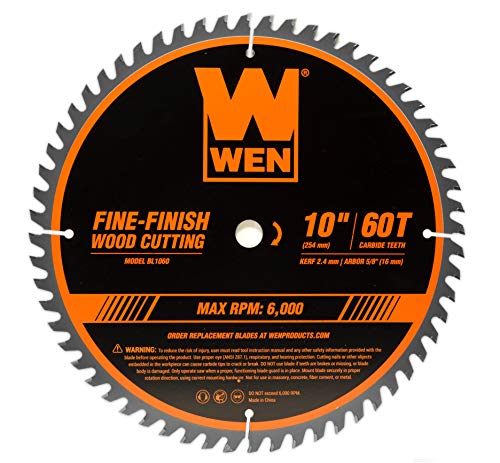
2. WEN BL1060 10-Inch 60-Tooth Fine-Finish Professional Woodworking Saw Blade for Miter Saws and Table Saws
Rating: 8.7/10
Get ready to make your woodworking projects shine with the WEN BL1060 10-Inch 60-Tooth Fine-Finish Professional Woodworking Saw Blade. This blade is built for precision and delivers smooth, clean cuts every time. It’s designed to fit most 10-inch miter saws and table saws, making it a versatile addition to any workshop. Whether you’re working with hard or soft woods, this blade handles it all like a pro.
What We Like:
- It has a 10-inch diameter and a 5/8-inch arbor, fitting most saws.
- The blade spins up to 6000 RPM for fast cutting.
- It cuts through all types of wood, both hard and soft.
- Its ultra-thin 1/10-inch kerf means less wasted wood.
- The 60 carbide-tipped teeth are perfect for fine, smooth finishes.
- It works with most 10-inch miter saws, jobsite saws, and table saws.
What Could Be Improved:
- The silver color, while standard, doesn’t offer any unique aesthetic.
- It’s sold as a single pack, so you might need to buy multiples for different saws or tasks.
For anyone looking to upgrade their cutting game, this WEN saw blade is a solid choice. It brings professional-level performance to your home workshop.
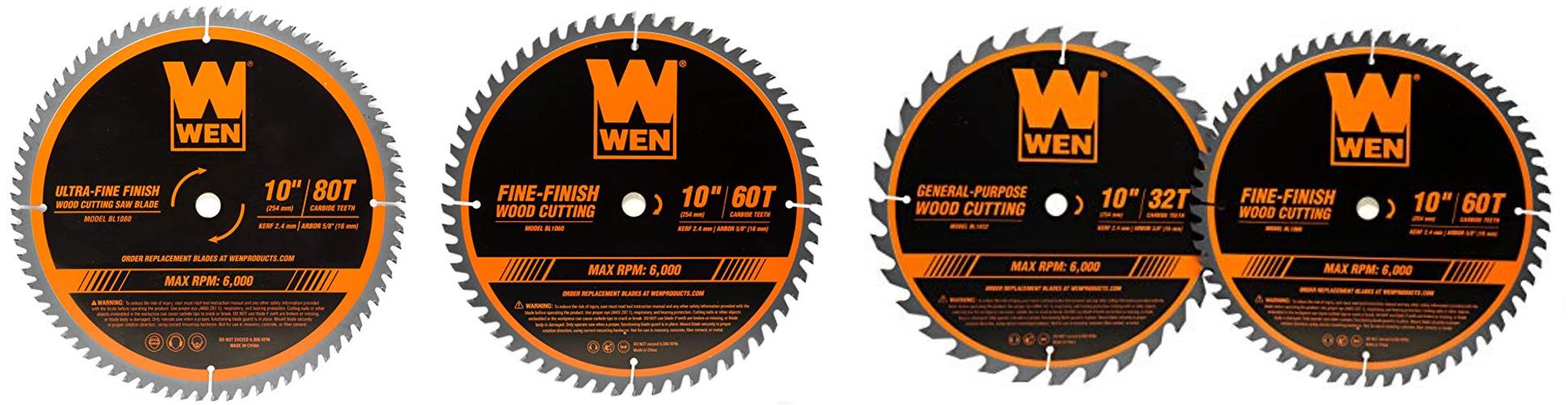
3. WEN BL1032-2 10-Inch 32-Tooth and 60-Tooth Carbide-Tipped Professional Woodworking Saw Blade Set

Rating: 8.6/10
Upgrade your woodworking game with the WEN BL1032-2 10-Inch 32-Tooth and 60-Tooth Carbide-Tipped Professional Woodworking Saw Blade Set. This two-pack gives you the right blade for almost any cutting job. You get a 32-tooth blade for fast, general cuts and a 60-tooth blade for super smooth, fine-finish work. These blades are built tough with carbide tips that last a long time.
What We Like:
- Two blades in one pack: a 32-tooth for quick cuts and a 60-tooth for clean, finished edges.
- They fit most 10-inch miter saws, jobsite saws, and table saws.
- The thin kerf (just 1/10-inch) means less wood dust and easier cutting.
- Carbide tips make the blades strong and keep them sharp for longer.
- They cut through both soft and hard woods with ease.
- Each blade spins up to 6000 RPM, so they are fast and efficient.
What Could Be Improved:
- The 5/8-inch arbor size might not fit every single saw, so check yours first.
- While great for general use, extremely demanding industrial jobs might need specialized blades.
This WEN saw blade set is a solid choice for any woodworker looking for versatility and quality. You’ll get great results on your projects.
4. Diablo Combination Saw Blade for Wood – 10″ Diameter

Rating: 9.3/10
The Diablo Combination Saw Blade for Wood (D1050X) is a powerful tool for any woodworker. This 10-inch blade is designed to handle a variety of wood cutting tasks with impressive precision and durability. It features 50 ATB teeth, a 5/8″ arbor, and a super thin kerf for fast, clean cuts.
What We Like:
- High-Performance TiCo Carbide: This material makes the cutting edge super sharp and long-lasting. It works great for both ripping and crosscutting different kinds of wood.
- Perma-SHIELD Non-Stick Coating: This coating keeps the blade safe from heat, sticky buildup, and rust. This means the blade will last much longer.
- Super Thin Laser Cut Kerf: The thin cut makes for fast, strong, and clean cuts. It’s ideal for remodeling and demolition projects.
- Tri-Metal Shock Resistant Brazing: This special brazing lets the carbide tips handle big impacts without breaking. This makes the blade very tough.
- Hardened Steel Body: The strong steel body ensures the blade stays sharp and performs well over time. It keeps its sharp edge for many different jobs.
What Could Be Improved:
- While excellent for most wood, it may not be the absolute best choice for extremely delicate hardwoods where a blade with a higher tooth count might be preferred.
- The 15° hook angle is versatile but might produce slightly more tear-out on very soft woods compared to blades with a lower hook angle.
This Diablo saw blade is a top-notch option for anyone needing reliable performance. It delivers clean cuts and exceptional durability for a wide range of wood projects.
5. CMT ORANGE TOOLS 250.024.10 ITK RIPPING BLADE 10″x24x5/8″

Rating: 8.8/10
The CMT ORANGE TOOLS 250.024.10 ITK RIPPING BLADE is a fantastic tool for anyone who needs to make fast and clean rip cuts in wood. Its special design helps it glide through soft and hardwoods with ease, making your woodworking projects much smoother. This blade is a great addition to your radial arm saw, miter saw, or table saw, and it even works well on plywood.
What We Like:
- It makes fast rip cuts in both soft and hard wood because it has a thin kerf.
- It works great on radial arm saws, miter saws, and table saws.
- It’s also good for cutting plywood.
- The micrograin carbide teeth last a long time and give you smooth cuts.
- The laser-cut plate has slots that reduce noise and stop vibrations, making it quieter and more stable.
- The thin kerf (0.102 inches) means less material is wasted when you cut.
- The plate thickness (0.071 inches) is sturdy but still allows for easy cutting.
- The 10° hook angle helps the blade grab the wood and cut efficiently.
- The alternate teeth grind provides a clean finish.
What Could Be Improved:
- While it’s great for rip cuts, it might not be the best choice for very delicate crosscuts where an ultra-fine finish is absolutely critical.
- For those new to using ripping blades, understanding the specific setup for optimal performance on different saw types might require a bit of research.
This CMT ORANGE TOOLS ripping blade is a powerful tool that delivers excellent performance for your woodworking needs. It’s built to last and makes cutting wood a much more enjoyable experience.
Choosing the Right Table Saw Blade: Your Ultimate Guide
A good table saw blade makes a huge difference. It cuts wood cleanly and safely. This guide will help you pick the best one for your projects.
Key Features to Look For
1. Tooth Count
The number of teeth on a blade affects the cut. More teeth mean a smoother cut, but it cuts slower. Fewer teeth cut faster, but the wood might be rougher.
- For ripping (cutting with the grain): Use blades with fewer teeth (24-30).
- For crosscutting (cutting across the grain): Use blades with more teeth (60-80).
- For general use: Blades with 40-50 teeth are a good middle ground.
2. Blade Kerf
Kerf is the width of the cut the blade makes. Thinner kerf blades remove less wood. This saves material and uses less power from your saw. Standard kerf blades are thicker and more durable.
3. Blade Diameter
Most table saws use 10-inch blades. Make sure the blade you buy matches your saw’s size.
4. Hook Angle
This is the angle of the teeth. A higher hook angle cuts faster but can be more aggressive and cause tear-out on delicate woods. A lower hook angle cuts slower but is gentler and safer.
Important Materials
1. Blade Body Material
Most blades have a steel body. Look for blades made from high-quality steel. This steel is strong and resists bending.
2. Tooth Material
The teeth are what do the cutting. They are usually made of:
- Carbide: This is the most common and durable material. It stays sharp longer.
- High-Speed Steel (HSS): Less common for table saw blades, HSS teeth are good for cutting very hard materials but dull faster than carbide.
Factors That Improve or Reduce Quality
1. Tooth Grinding
How the teeth are shaped and sharpened matters. Different tooth shapes are good for different cuts:
- Flat Top Grind (FTG): Good for ripping.
- Alternate Top Bevel (ATB): Good for general-purpose cutting and crosscutting.
- High Alternate Top Bevel (Hi-ATB): For very smooth cuts, especially on plywood and laminates.
- Combination (Combo) Blades: Have a mix of tooth types for ripping and crosscutting.
2. Expansion Slots
These are small slots cut into the blade body. They help reduce heat and vibration. This keeps the blade running straight and prevents warping.
3. Anti-Vibration Features
Some blades have special coatings or fillers in the expansion slots. These further reduce noise and vibration for a smoother cut.
User Experience and Use Cases
1. What kind of wood are you cutting?
Softwoods like pine are easy to cut. Hardwoods like oak require sharper blades and often more teeth for a clean finish. Plywood and laminates need blades that prevent chipping.
2. What type of cuts will you make?
If you mostly rip lumber, a low-tooth count blade is best. For projects needing many crosscuts, a high-tooth count blade is a better choice. A combination blade works well if you do both.
3. How important is cut quality?
For fine furniture or visible projects, a blade that leaves a smooth finish is essential. For framing or rough construction, speed might be more important than a perfect finish.
Investing in a good table saw blade is an investment in your projects. It makes your work easier, safer, and produces better results.
Frequently Asked Questions About Table Saw Blades
Q: How often should I replace my table saw blade?
A: You should replace your blade when it starts to dull. This is when you notice rough cuts, burning wood, or need to push the wood harder. For most DIYers, this might be every few years. For heavy use, it could be much sooner.
Q: Can I use a blade with more teeth than recommended?
A: Yes, you can. A blade with more teeth will cut smoother but slower. It might also put more strain on a less powerful saw.
Q: What is the difference between a ripping blade and a crosscutting blade?
A: A ripping blade has fewer teeth (24-30) and cuts fast with the wood grain. A crosscutting blade has more teeth (60-80) and cuts across the wood grain for a smooth finish.
Q: What does “kerf” mean on a saw blade?
A: Kerf is the width of the cut the blade makes. A thin kerf blade is narrower, saving wood and power. A standard kerf blade is wider.
Q: Are more expensive blades always better?
A: Not always. While higher-quality materials and construction often cost more, the best blade for you depends on your specific needs and the type of wood you cut.
Q: How do I keep my table saw blades clean?
A: You can clean blades with a blade cleaner solution and a brush. Keeping them clean prevents pitch and sap buildup, which can affect cut quality.
Q: What is a “hook angle” on a saw blade?
A: The hook angle is the angle of the teeth. A steeper hook angle cuts faster but can be rougher. A shallower angle cuts slower but is smoother and safer.
Q: Can I sharpen my table saw blades?
A: Yes, you can sharpen some blades, but it’s often best left to professionals. Sharpening too many times can weaken the blade.
Q: What is a combination blade?
A: A combination blade has a mix of tooth types and counts. It’s designed to do both ripping and crosscutting well.
Q: Why do some blades have red or blue markings?
A: These are often heat-resistant coatings or expansion slot fillers. They help reduce heat and vibration, leading to a smoother, quieter cut.
In conclusion, every product has unique features and benefits. We hope this review helps you decide if it meets your needs. An informed choice ensures the best experience.
If you have any questions or feedback, please share them in the comments. Your input helps everyone. Thank you for reading.